
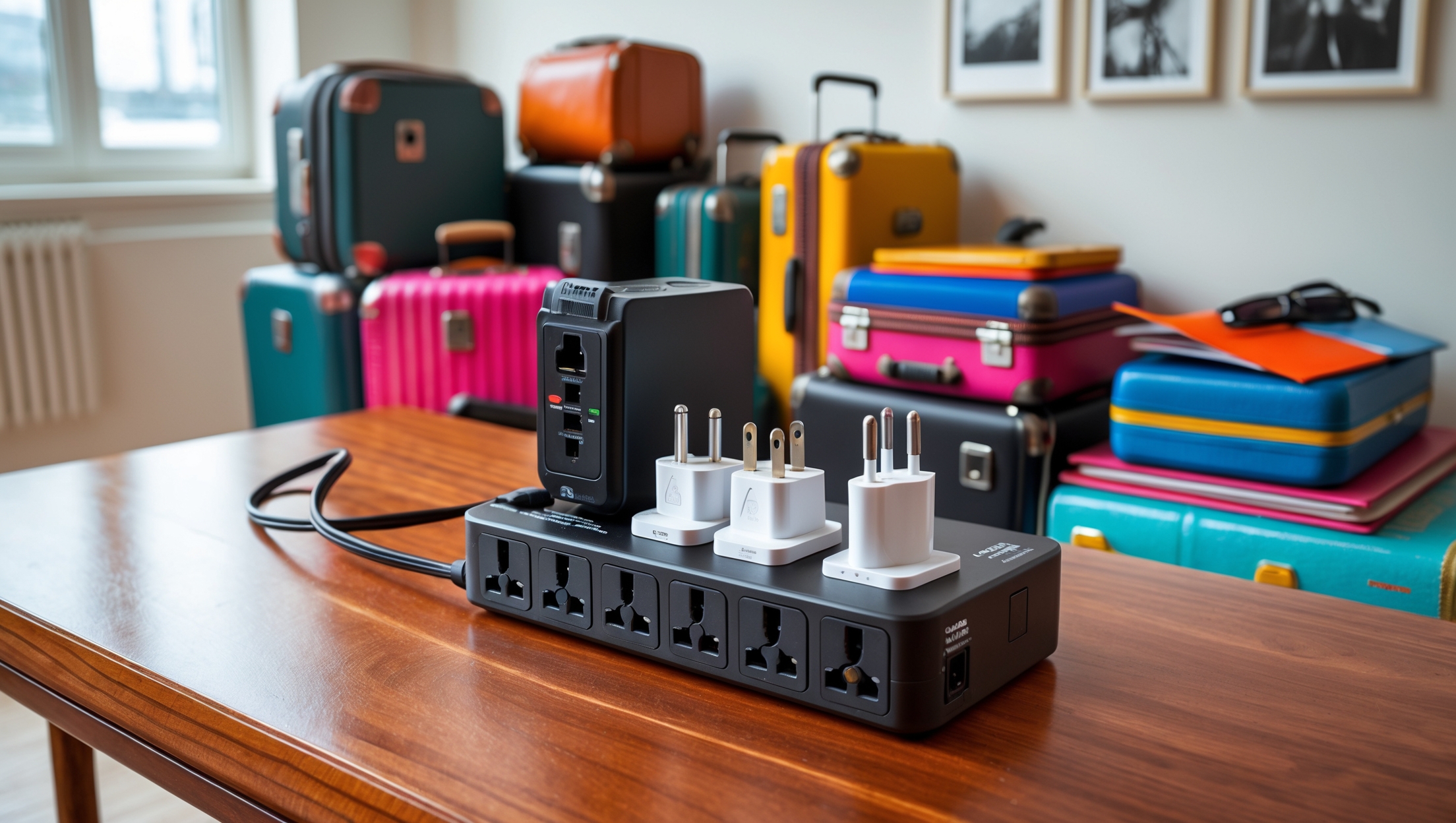
Introduction: Why Appliance Voltage Matters Abroad
Moving or traveling abroad is an exciting adventure filled with new experiences, but it comes with its own set of practical challenges. Among the most overlooked—yet critical—issues is understanding and adapting to local appliance voltage standards. Plugging in your laptop, blender, or even your phone charger without knowing the local voltage can result in anything from a fried device to a tripped circuit or even a house fire. This guide is designed for expats, digital nomads, and long-term travelers who want to avoid costly mistakes, protect their electronics, and make informed decisions on what to bring, buy, or leave behind. We’ll cover the basics of global voltage standards, explain how to identify your appliance’s requirements, demystify plug adapters and transformers, and provide practical, step-by-step advice for safely powering your life abroad. Whether you’re staying in an urban apartment in Europe, a beachside bungalow in Southeast Asia, or anywhere in between, mastering local voltage is essential for a smooth transition and daily peace of mind.
Understanding Global Voltage Standards
What Is Voltage and Why Does It Matter?
Voltage is the pressure from an electrical circuit’s power source that pushes charged electrons (current) through a conducting loop. In simple terms, it’s what makes your appliances work. Different countries use different voltage standards—typically either 110-120V or 220-240V. Plugging an appliance into the wrong voltage can damage it instantly or degrade it over time.
Common Voltage Standards Around the World
- 110-120V (60Hz): Mainly found in North America, parts of Central and South America, and a few Asian countries like Japan and Taiwan.
- 220-240V (50Hz): Standard in most of Europe, Asia, Africa, Australia, and the Middle East.
Some countries, such as Japan and Brazil, have unique or mixed systems. Always double-check before plugging anything in.
Plug Types and Shapes
There are over a dozen plug types globally, labeled A through N. The plug shape often (but not always) corresponds to the voltage standard. For example, the US uses Type A/B (flat prongs, 110-120V), while the UK uses Type G (rectangular prongs, 220-240V). Mismatched plugs and sockets can lead to confusion, so understanding both voltage and plug type is crucial.
Step 1: Identifying Your Appliance’s Voltage Requirements
Check the Appliance Label
Most appliances have a label near the plug or on the device itself. Look for information like:
- Input: 100-240V, 50/60Hz (dual/multi-voltage, safe for global use)
- Input: 120V, 60Hz (single voltage, North America only)
- Input: 230V, 50Hz (single voltage, Europe/Asia/Africa)
If your appliance says 100-240V, it’s compatible worldwide (with the right plug adapter). If it lists only a single voltage, you’ll need a transformer or to leave it behind.
Appliance Categories: Which Are Usually Dual-Voltage?
- Laptops, phones, cameras: Most modern devices and their chargers are dual-voltage.
- Hair dryers, curling irons: Often single-voltage. Check carefully.
- Kitchen appliances: Blenders, coffee makers, toasters are rarely dual-voltage.
- Electric shavers, toothbrushes: Many are dual-voltage, but not all.
When in doubt, consult the manufacturer’s website or manual.
Step 2: Choosing Between Plug Adapters and Voltage Converters
Plug Adapters: For Shape, Not Voltage
Plug adapters simply allow your device’s plug to fit into a foreign socket. They do not convert voltage. Use adapters only if your device is dual-voltage or if the local voltage matches your device.
Voltage Converters (Transformers): For Single-Voltage Appliances
If you need to use a single-voltage appliance in a country with a different standard, you’ll need a voltage converter (step-up or step-down transformer). These devices change the voltage from the wall to match your appliance’s needs. Key considerations:
- Wattage rating: The converter must support at least the wattage of your appliance (add a safety margin of 25-50%).
- Type: Converters are for short-term use (hair dryers, travel irons). Transformers are for continuous use (laptops, CPAP machines).
- Size and weight: Heavy-duty transformers can be bulky and heavy—factor this into your luggage.
Step 3: Selecting the Right Gear for Your Situation
For Short Stays (Travelers)
- Carry a universal plug adapter with surge protection.
- Bring only dual-voltage appliances whenever possible.
- For essential single-voltage items, bring a compact voltage converter rated for your device’s wattage.
For Long-Term Stays (Expats, Nomads)
- Invest in high-quality, reliable transformers for essential single-voltage appliances.
- Consider buying local versions of bulky or sensitive appliances (kitchen gear, heaters, fans).
- Use multi-plug power strips to accommodate multiple devices (ensure they’re rated for the local voltage).
- Label your appliances and adapters to avoid confusion for family or guests.
Step 4: Practical Safety Tips to Avoid Common Mistakes
Double-Check Everything Before Plugging In
- Always verify both the plug type and voltage compatibility before using any appliance.
- Don’t use a plug adapter alone if your device isn’t compatible with the local voltage.
- Never exceed the wattage rating of a converter or power strip.
- Unplug voltage converters and transformers when not in use—they can overheat.
Surge Protection Is Crucial
Electrical surges are common in many countries and can destroy sensitive electronics. Always use surge-protected strips or adapters, especially for laptops, phones, and cameras.
Be Careful With High-Wattage Appliances
Devices like hair dryers, curling irons, or electric kettles draw a lot of power. Many portable converters aren’t designed for continuous or high-wattage use. Consider purchasing these items locally or using travel-specific models designed for global voltage ranges.
Beware of Cheap Universal Adapters
Low-quality adapters can pose fire and safety hazards. Opt for well-reviewed, certified brands. Look for CE (Europe), UL (US), or equivalent safety certifications.
Case Studies: Real-World Voltage Mistakes and Lessons Learned
Case Study 1: The Fried Coffee Maker
Anna, an American expat, moved to France and brought her beloved 120V drip coffee maker. She used a simple plug adapter but not a transformer. The first brew ended with smoke and a ruined machine. Lesson: Plug adapters don’t convert voltage—always check compatibility or use proper transformers for single-voltage appliances.
Case Study 2: The Overloaded Power Strip
Brian, a digital nomad in Thailand, plugged a 120V-rated US power strip into a 220V wall socket using an adapter. The strip overheated and melted, risking an electrical fire. Lesson: Only use power strips rated for local voltage, and never daisy-chain adapters or plug strips into converters unless they’re rated appropriately.
Case Study 3: The Lucky Laptop
Sarah brought her US laptop to Spain. The charger label read 100-240V, 50/60Hz, so she only needed a simple plug adapter. No issues! Lesson: Many modern electronics are dual-voltage—check the label before worrying about converters.
What to Bring, Buy, or Leave Behind: Appliance Decision Checklist
- Bring: Dual-voltage electronics (laptops, phones, cameras), universal plug adapter, surge protector.
- Buy locally: High-wattage or sensitive appliances (hair dryers, heaters, kitchen gadgets).
- Leave behind or store: Single-voltage appliances that are heavy, expensive to convert, or easily replaceable abroad.
- Consider: Renting or borrowing specialty appliances for short-term needs.
Essential Tools and Gear for Safe Appliance Use Abroad
- Universal plug adapter: Covers most global sockets, compact models available.
- Dual-voltage power strip: With surge protection, for charging multiple devices.
- Step-up/step-down transformer: For single-voltage must-have appliances.
- Travel kettle or hair dryer: Designed for global voltage compatibility.
- Label maker or masking tape: For marking voltage and plug type on your gear.
Frequently Asked Questions
Can I use my US appliance in Europe with just a plug adapter?
Only if the appliance is dual-voltage (check the label). Otherwise, you’ll need a transformer.
What happens if I plug a 120V device into a 220V socket?
You’ll likely destroy the device instantly and may trip the circuit or cause a fire.
Are USB chargers dual-voltage?
Almost all genuine USB chargers are dual-voltage (100-240V), but always check the label to be sure.
Is it worth shipping my kitchen appliances abroad?
Usually not, unless they’re expensive specialty items and you invest in a high-quality transformer. Otherwise, buy local models to avoid hassle and risk.
Conclusion: Powering Your Life Abroad with Confidence
Mastering appliance voltage differences may seem daunting, but with a bit of preparation, you can avoid expensive mistakes and keep your daily routine running smoothly wherever you are in the world. Start by understanding your destination’s voltage and plug type, and carefully check each appliance’s label before plugging it in. Invest in a quality universal adapter and surge protector, and if you must use single-voltage gear, choose the right transformer with plenty of safety margin. When in doubt, buying local appliances or travel-specific models can save you both money and headaches. Remember, the cost of a fried laptop or a blown circuit far outweighs the effort of a few minutes of research. By following the steps and best practices outlined in this guide, you’ll not only protect your tech and appliances but also ensure a safer, more comfortable experience abroad. Empower yourself with this knowledge, and you’ll be ready to tackle any voltage puzzle—so you can focus on enjoying your new surroundings, not worrying about what might go up in smoke.
You mentioned the risks of plugging devices into the wrong voltage, but I’m curious about dual-voltage appliances. Are there any telltale signs to identify these, and do they still need a transformer or just a simple plug adapter when moving abroad?
Dual-voltage appliances usually have a label or marking near the power cord or on the device itself, showing something like ‘Input: 100-240V’ or a voltage range. If your device is dual-voltage, you typically only need a plug adapter to fit the local outlet, not a voltage transformer. Always double-check the label to be sure before plugging in abroad.
If I have sensitive electronics like laptops and cameras, is it safer to buy new ones in the country I’m moving to, or are there reliable ways to use my US devices with the different voltage without risking damage?
You don’t necessarily need to buy new electronics. Most modern laptops and cameras have power adapters that support a wide voltage range (like 100-240V). Check the label on your device’s power brick. If it supports the local voltage, you just need a plug adapter, not a voltage converter. For devices that aren’t dual-voltage, use a high-quality voltage converter to avoid damage. Always double-check each device before plugging it in abroad.
Could you explain how to quickly check an appliance’s voltage compatibility before I pack for a trip? I have a mix of devices, and I’m nervous about causing either damage or a fire in a new apartment overseas.
To quickly check an appliance’s voltage compatibility, look for a label or stamp near the plug or on the back of the device. It should state a voltage range, like 110V, 220V, or 100-240V. If it lists a single voltage (such as 120V), you’ll need a voltage converter if your destination’s voltage is different. If it says 100-240V, it’s dual voltage and should work in most countries with just a plug adapter. Always double-check this information to avoid damaging your device or risking safety.