
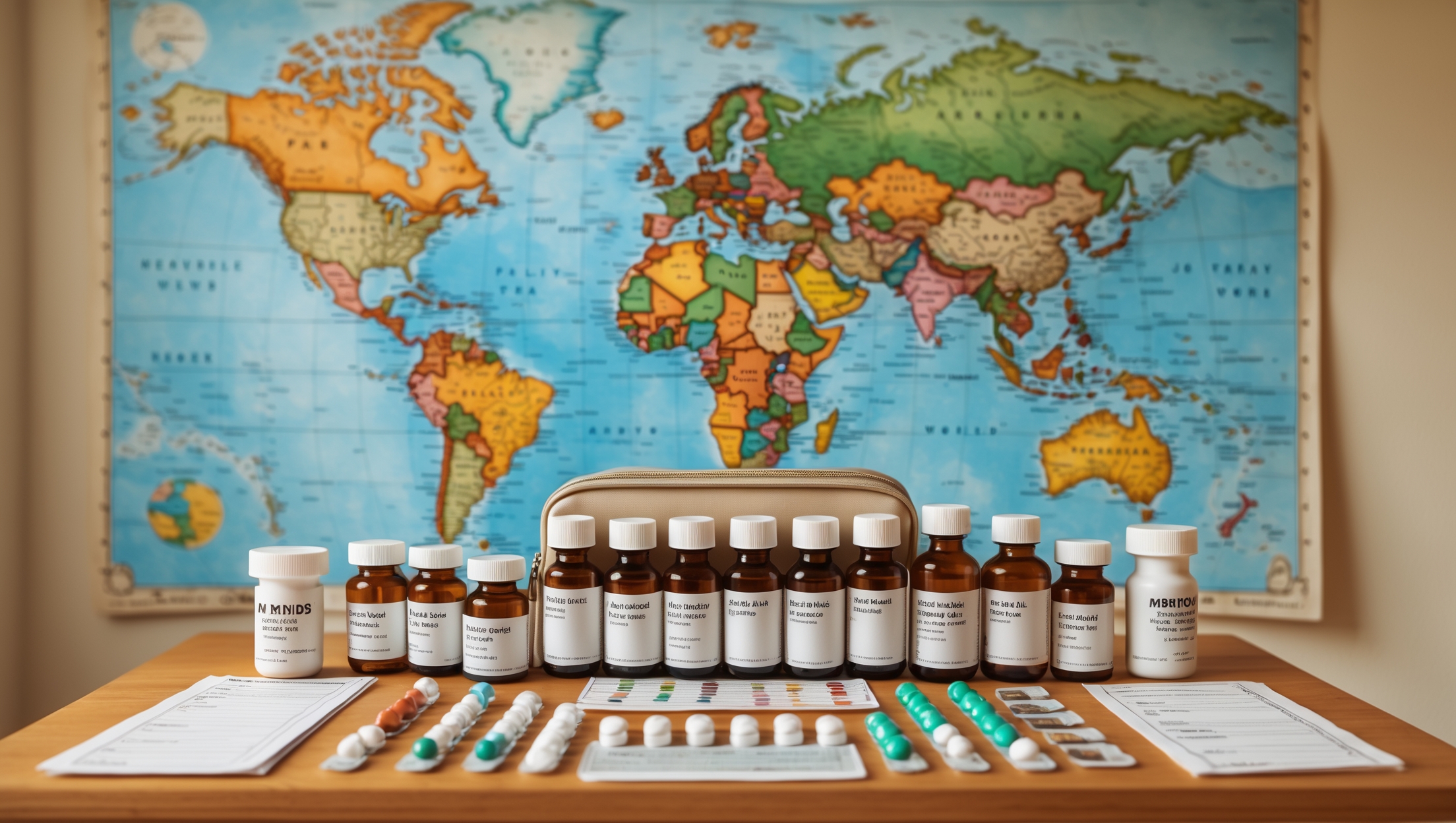
Introduction: The Realities of Traveling with Medication
Traveling is an adventure, but if you rely on prescription or essential over-the-counter medications, it can also bring a unique set of challenges. Whether you’re a digital nomad, a retiree exploring the globe, or a family on an extended vacation, ensuring you have access to your medication—safely and legally—is crucial. From understanding international regulations to budgeting for medication abroad, the details can be overwhelming. Mistakes in planning or compliance can result in confiscated medicines, denied entry at borders, or dangerous interruptions to your health regimen. This comprehensive guide demystifies the process, offering a detailed roadmap to traveling safely and confidently with medication, no matter your destination.
Understanding Travel Medication Regulations: Avoiding Legal Pitfalls
Why Are Medication Laws So Complex?
Every country has its own set of regulations regarding prescription and over-the-counter drugs. Some medications that are common in one country may be tightly controlled or even banned in another. For example, Japan has strict rules against medications containing pseudoephedrine, while the United Arab Emirates enforces rigorous documentation for psychotropics and some painkillers. Ignorance of these laws is not a defense; travelers have been fined, detained, or deported for non-compliance.
How to Research Medication Laws Before You Travel
- Start Early: Research at least one month before your trip to allow time for paperwork.
- Official Sources: Consult embassy websites or government health/travel portals for your destination.
- Contact Airlines: Airlines often supply updated guidance and can flag medications requiring special handling.
- List All Medications: Include prescription, over-the-counter, herbal, and vitamin supplements.
Permits and Documentation: What You Really Need
- Doctor’s Letter: A signed document listing your medications, dosages, and medical necessity.
- Original Prescription: Bring a copy of your prescription and keep it with your medication.
- Medication Packaging: Medications should remain in original packaging with clear labels matching your ID.
- Import Permits: Some countries require you to apply for a special permit before arrival. Do this well in advance.
Budgeting for Medication Abroad: How to Avoid Financial Surprises
Common Cost Variables
Prices for the same medication can vary dramatically worldwide. Factors such as import taxes, local insurance systems, and availability all play a role. In some countries, you may find your medication costs far more—or less—than at home.
Smart Budgeting Steps
- Check Insurance: Does your health or travel insurance cover prescriptions abroad?
- Bulk Buying: If legal, obtain a 90-day supply before departure to save on costs and hassle.
- Generic Alternatives: Research if generics are available and accepted at your destination.
- Local Pharmacy Prices: Contact pharmacies in your destination country for price quotes.
- Emergency Funds: Always budget a cushion for medical emergencies or lost medication.
Real-World Case Study: EpiPens in Europe
One American traveler with a severe peanut allergy found that EpiPens, which cost over $600 in the U.S., were readily available for under $100 in some European countries. However, a prescription was strictly required, and the formulation and brand names differed. The traveler’s preparation—bringing a doctor’s letter and checking local regulations—ensured a smooth experience and significant cost savings.
Packing Medication: Practical and Legal Considerations
Essential Packing Checklist
- All medications in original packaging
- Doctor’s letter and copies of prescriptions
- Import permits if required
- Pill organizer (for daily use)
- List of generic and brand names for each medication
- Small cooler bag if refrigeration is needed
- Contact details for your home doctor and local embassy
Carry-On vs. Checked Luggage: What’s Safer?
Always pack your essential medications in your carry-on. Checked baggage is prone to delays, loss, and temperature extremes that can degrade medicine. If you must bring liquid medication exceeding airline limits, request a medical exemption letter from your doctor and notify your airline in advance.
Temperature-Sensitive Medications
Insulin, certain biologics, and some antibiotics require refrigeration. Invest in a portable medication cooler or insulated bag with reusable ice packs. Confirm with airlines the regulations for carrying cold packs and, if needed, obtain a letter explaining the necessity.
Staying Safe and Healthy: Medication Best Practices on the Road
Adapting to Time Zones and Dosage Schedules
Traveling across time zones complicates medication routines. Work with your doctor to create a schedule that transitions you gradually. For medications with strict timing (like insulin or antimalarials), use smartphone alarms or specialized apps to avoid missed doses.
Finding Replacement Medication Abroad
- Know the Local Names: Medications often have different brand names and formulations overseas.
- Pharmacy Chains: Large, reputable pharmacies are your best bet for authentic medication.
- Emergency Plan: Know the location and contact information for nearby hospitals and clinics.
- Telehealth: Some insurance plans offer international telehealth consultations for prescription refills.
Counterfeit Medications: Risks and How to Avoid Them
Counterfeit drugs are a serious problem in many regions. Always buy from licensed pharmacies and avoid street vendors or online sources without proper credentials. If in doubt, contact your embassy or consult with a local doctor before purchasing replacement medicine.
Compliance Myths Debunked: What Travelers Get Wrong
- Myth: “If I have a prescription, I can bring any medication anywhere.”
Fact: Many countries still ban or restrict certain prescriptions, regardless of documentation. - Myth: “Over-the-counter means it’s legal everywhere.”
Fact: Even basic OTC drugs like codeine, melatonin, or diphenhydramine are controlled in some countries. - Myth: “I can always buy my medication abroad if I run out.”
Fact: Many medications are not available or require a local prescription, which may not be easy to obtain. - Myth: “Mailing my medication is easier than carrying it.”
Fact: Many countries prohibit the import of medication by mail without special permits—seizure is common.
Insurance Essentials: Protecting Your Health and Your Wallet
Key Questions to Ask Your Provider
- Does my policy cover prescription replacement or emergencies abroad?
- Are pre-existing conditions included?
- Is telehealth support available for prescription renewals?
- What documentation is required to file a claim?
Tips for Maximizing Coverage
- Carry your insurance card and policy details at all times.
- Keep digital and paper copies of all receipts for medication purchases.
- Familiarize yourself with the nearest in-network clinics and hospitals.
- Download your insurer’s app for quick support and claims processing.
Step-by-Step: Setting Up a Medication Travel Plan
- Consult Your Doctor: Discuss your travel plans, get necessary letters, and confirm medication supply.
- Research Regulations: Check embassy and official health ministry sites for entry requirements.
- Apply for Permits: Complete any required applications and gather supporting documentation.
- Budget Accordingly: Calculate medication costs, insurance, and emergency funds.
- Pack Properly: Use a checklist and ensure all documentation is accessible.
- Double-Check Before Departure: Review your plan 48 hours before leaving, especially if you have connecting flights or entry points.
Conclusion: Confidently Navigating the World with Your Medication
Traveling with medication doesn’t have to be stressful or risky if you approach it with knowledge and preparation. Understanding each country’s regulations, securing the right documentation, and budgeting for potential extra costs form the backbone of a safe, smooth journey. Never underestimate the importance of compliance—confiscated medication or legal trouble can ruin a trip, but more critically, lapses in your treatment can endanger your health.
By following the steps outlined in this guide, from diligent research to smart packing and insurance planning, you can sidestep common pitfalls that trip up even seasoned travelers. Remember: regulations change, so always check for updates before each journey. If you ever feel unsure, reach out to your healthcare provider or local consulate for guidance.
With thoughtful preparation, you can explore the world, experience new cultures, and maintain your health and peace of mind. Safe travels—and may your next adventure be as healthy as it is memorable!
You mention budgeting for medication abroad—does that mean prescriptions can be much more expensive or hard to refill while traveling? What’s the best way to estimate costs and avoid running out of medication unexpectedly on a long international trip?
Prescription costs and availability can vary widely between countries, and in some places, your usual medication may be more expensive or difficult to get. To avoid surprises, contact your insurance provider and research local regulations at your destination. Estimate costs by checking with local pharmacies online or calling ahead. Ideally, bring enough medication for your entire trip, along with copies of your prescription and a doctor’s note, so you’re not dependent on finding refills abroad.
You mentioned starting research at least a month ahead because of paperwork, but what if we have a last-minute trip? Are there any safe options for travelers who need to arrange medication permits or doctor’s letters on a tight timeline?
If your trip is last-minute, contact your doctor as soon as possible and explain your situation—they can often expedite a letter or prescription summary. For permits, check the embassy or consulate website of your destination; some accept digital copies or can process urgent requests. Carry your medication in original packaging with clear labels, and bring a copy of your prescription just in case. Most countries understand emergencies and will work with you if you communicate clearly.
You suggest starting research at least a month before traveling, but what should I do if a last-minute trip comes up and I don’t have enough time to get permits or a doctor’s letter? Is there any way to expedite the process for essential medications?
If you need to travel last-minute, contact your doctor immediately to request an urgent letter detailing your medications. Many clinics can provide this within a day or two. For permits, check if your destination allows online applications or accepts documents via email. Also, keep medications in original packaging with prescriptions when possible, as this often helps with customs. It’s a good idea to call your airline and the embassy for additional advice.
You mention contacting airlines about updated guidance and special handling for certain medications. In your experience, how far in advance should travelers reach out to airlines, and have you found them to be reliable sources for information on medication restrictions?
Reaching out to airlines at least 2–3 weeks before your trip is a good idea, as this gives them time to check policies or make arrangements for your medication needs. While airlines can provide accurate info about their own procedures and storage options, it’s best to double-check medication-specific restrictions with your destination’s embassy or official customs website, since airline staff may not have detailed knowledge of regulations in every country.
If I’m traveling to a country with strict rules on over-the-counter meds, like Japan and their restrictions on pseudoephedrine, is there a list of common US medications that are typically banned or require extra documentation? Trying to figure out what to check before packing.
It’s smart to check ahead, since several common US medications are controlled in countries like Japan. Japan restricts medications containing pseudoephedrine (like Sudafed), codeine, and some ADHD medications (like Adderall). Products with diphenhydramine (found in Benadryl) sometimes raise issues too. While there isn’t one official list, you can often find guidance from the embassy or consulate websites. Always review your destination’s official government resources for up-to-date information and consider bringing a doctor’s note or prescription just in case.
We’re planning an extended trip abroad with our two kids, and some of their prescriptions include over-the-counter allergy meds and supplements. Do we need separate documentation for all supplements and vitamins, or just the prescription medications? Also, do embassy websites usually specify rules for these kinds of items?
For international travel, you typically need official documentation, like a doctor’s letter or prescription, for any prescription medications. Over-the-counter supplements and vitamins usually don’t require formal paperwork, but it’s wise to keep them in original packaging and bring a list from your doctor just in case. Embassy or consulate websites sometimes mention rules for medications, but they may not always detail requirements for supplements and vitamins, so it’s best to check each destination’s health regulations or contact their embassy directly.
The article notes that some medications may be legal in the US but banned elsewhere. If a medication I rely on is prohibited in my travel destination, do you have recommendations for finding safe and legal alternatives before departure, or should I consult my doctor for substitutes?
If your medication is banned in your destination, it’s best to consult your doctor well before your trip. They can recommend safe, legal alternatives or adjust your treatment plan as needed. Your doctor can also provide documentation or suggest similar medications approved in your travel country. This approach ensures you stay healthy and compliant with local laws.
The article mentions budgeting for medication abroad. Do you have any practical tips or estimates on how much extra medication should be purchased before a trip, or how to anticipate costs if you end up needing to replace medication in a foreign country?
It’s wise to bring enough medication to cover your entire trip, plus at least one or two extra weeks in case of delays. Check with your pharmacy and insurance about refill limits before you leave. Research the local cost of your medication at your destination, as prices vary widely; contacting local pharmacies or expat forums can help with estimates. Always keep prescriptions and a doctor’s note with you in case you need emergency replacements.
You mentioned that some countries like Japan ban specific ingredients like pseudoephedrine. What’s the best way to check if my over-the-counter allergy meds have any banned ingredients for my travel destinations? Is it enough to just check embassy websites or should I consult a pharmacist too?
Checking embassy or consulate websites is a good first step since they usually list restricted medications for travelers. However, ingredient names can vary by country and may not always be easy to identify. Consulting a pharmacist is a smart idea—they can review your medication’s ingredients and help you understand if any might be restricted. This two-step approach helps minimize surprises at customs.
You mentioned budgeting for medication abroad. Are prices for the same prescriptions usually a lot higher in other countries, and is it safer to bring a full supply from home, or try to get refills during travel?
Medication prices can vary widely from country to country—sometimes they are much higher, other times lower, but availability is not always guaranteed. It’s generally safer to bring a full supply of your prescription from home to avoid issues like price differences, unfamiliar brands, or local regulations. Make sure you carry prescriptions and documentation in case customs asks for proof.
How strict are customs officials about vitamins and herbal supplements when traveling internationally? The article mentions listing these along with prescription meds, but do most countries actually care about non-prescription supplements, or is it mainly for safety in case of questions?
Customs officials in many countries generally focus more on prescription medications than on vitamins or herbal supplements, but rules can vary widely. Some countries do have restrictions or require documentation for certain supplements, especially if they contain ingredients not approved locally. Listing non-prescription supplements is mainly for your safety and smooth passage in case officials ask, but it’s wise to check the specific regulations of your destination before you travel.
If you’re traveling to a country that bans a medication you need for a chronic condition, like something with pseudoephedrine for allergies, what are your options? Is it possible to get an alternative approved by the destination’s authorities or should you plan to get a prescription filled locally?
If your medication is banned in your destination country, contact their embassy or health authorities before your trip to ask about approved alternatives. Sometimes, a local physician can prescribe a substitute that’s legally available there. Bringing a letter from your doctor explaining your condition can help, but do not attempt to bring banned medication. Planning to fill a prescription locally is usually the safest route.
You mentioned budgeting for medication abroad—do most insurance plans cover refills in other countries, or should travelers expect to pay full price if they run out while overseas?
Most insurance plans from your home country do not cover medication refills abroad, so travelers usually need to pay the full price out-of-pocket if they run out while overseas. Some international travel insurance plans may offer limited coverage, but it’s rare. It’s wise to bring enough medication for your trip and, if possible, a little extra just in case.
If my child takes a prescription medication that’s allowed in the US but might be restricted in countries like Japan or the UAE, what’s the best way to get official confirmation before we travel? Can my pediatrician’s letter alone prevent issues at the border?
A pediatrician’s letter explaining your child’s prescription can be helpful, but it may not be enough on its own. To avoid problems, always check the official embassy or consulate website of your destination country for their medication rules. Contacting their embassy directly before you travel is the best way to get official confirmation and learn if you need special documentation or prior approval.
If we’re traveling as a family with both prescription medications and over-the-counter kids’ allergy medicine, do we need a doctor’s letter for every item or just for the prescriptions, especially when passing through countries with strict rules like Japan?
For travel to countries with strict medication regulations like Japan, you’ll typically need a doctor’s letter for each prescription medication. Over-the-counter medicines, including children’s allergy meds, usually don’t require a doctor’s letter, but it’s wise to keep them in original packaging and check each country’s specific rules, as some OTC ingredients are restricted. When in doubt, a simple letter from your doctor listing all medications can help avoid confusion at customs.
Since you mentioned that airlines can provide updated guidance on medication requirements, do you recommend contacting them before or after researching embassy guidelines, and have you found that airlines are generally responsive and accurate on these regulations?
It’s usually best to check embassy guidelines first, as they outline the legal requirements for bringing medication into a specific country. After that, contact your airline to confirm any additional in-flight or airport policies. Airlines are typically responsive and provide helpful information, but their knowledge focuses more on transit and onboard rules than on a country’s entry regulations.
You talk about researching medication regulations at least a month in advance. What should I do if I have to book a last-minute international trip and don’t have paperwork from my doctor yet? Are there any expedited ways to get the necessary documentation?
If you’re booking a last-minute trip and don’t have your doctor’s documentation yet, contact your healthcare provider as soon as possible and explain your situation. Many clinics can expedite a signed letter or prescription summary, sometimes within a day. Some doctors may offer to send digital copies through secure email or patient portals, which are often accepted by most authorities. If you use a pharmacy regularly, they may also be able to provide a printout of your medications as supporting documentation.
You mentioned budgeting for medication abroad—do insurance companies usually reimburse costs if we need to buy medicine in another country, or should we always plan to pay out of pocket just in case? I’m trying to avoid surprises during our family trip.
Insurance coverage for medications purchased abroad can vary widely. Some policies reimburse overseas pharmacy costs, but often you’ll need to pay out of pocket and submit receipts for reimbursement later. Others may not cover foreign purchases at all. It’s best to check with your insurer before your trip to understand your specific coverage. Bringing extra medication and budgeting for possible out-of-pocket expenses is a smart precaution.
You mention that some countries have strict rules about certain medications, like pseudoephedrine in Japan and psychotropics in the UAE. If I’m traveling through multiple countries with layovers, do I need separate documentation for each country or just my final destination?
You’ll need to check the medication regulations for every country you pass through, even just for layovers, since some have strict transit rules. It’s safest to carry documentation, such as prescriptions and doctor’s letters, for each country on your itinerary, not just your final destination. This can help prevent issues with customs or security checks during your journey.
I get that some over-the-counter medicines are banned in certain countries, like pseudoephedrine in Japan. If I accidentally bring something like that in my carry-on, what should I do if customs finds it? Would they confiscate only the banned meds or could it affect my entire supply?
If customs discovers a banned medication like pseudoephedrine in your carry-on, they will almost always confiscate just the prohibited item. However, the rest of your medications could be inspected to ensure they’re legal and properly documented. It’s best to keep medicines in original packaging and carry a prescription or doctor’s note if possible to avoid further complications.
You mention budgeting for medication abroad—are there any tips for finding out in advance how much my prescriptions might cost at my destination, or ways to reduce those expenses while still staying compliant with local laws?
To estimate prescription costs abroad, contact pharmacies or clinics at your destination ahead of time and ask about prices for your medication. You can also check with your health insurance to see if they offer international coverage or recommend partner pharmacies. To save money, consider bringing enough medication from home with your doctor’s documentation, but make sure your prescriptions are legal and allowed in the country you’re visiting. Also, generic versions are often cheaper and widely accepted, but confirm their availability and legality beforehand.
When you recommend starting research at least a month before a trip, how much time do you find is typically needed for the paperwork involved in getting permits or doctors’ letters, especially for complex prescriptions? Is there a way to speed up the approval process if you’re pressed for time?
For complex prescriptions, the paperwork like permits or doctors’ letters can take anywhere from a few days up to three weeks, depending on your destination and healthcare provider. To speed things up, book a doctor’s appointment as soon as your trip is confirmed and let them know about your travel timeline. Some embassies or consulates also offer expedited processing—contact them directly to check for urgent options.
You mentioned budgeting for medications abroad—are there resources or tips for estimating costs in different countries, especially if my insurance doesn’t cover international purchases? I’m worried about running out while traveling and not being able to afford replacements.
To estimate medication costs abroad, try checking the websites of major pharmacy chains in your destination or searching for local expat forums where people share recent price information. Some apps and online tools can also compare medicine prices by country. It’s wise to bring extra medication if possible, and ask your doctor for a prescription letter in case you need a refill. Always keep receipts for insurance claims, even if they aren’t guaranteed to be reimbursed.
If I am traveling with both prescription medications and over-the-counter supplements, do I need to list and provide documentation for absolutely everything, or are there exceptions for common supplements like vitamins?
For international travel, it’s best to list and carry documentation for all prescription medications. Over-the-counter supplements, such as common vitamins, usually don’t require documentation, but some countries do have restrictions or limits on certain supplements. To avoid any issues, check the regulations of your destination country and keep supplements in their original packaging. When in doubt, having a list or a doctor’s note can be helpful, though it’s not always mandatory for common vitamins.
If I need to bring both prescription and herbal supplements on an extended trip, how should I prioritize getting permits or documentation for each? The article mentioned having a doctor’s letter, but do certain types of supplements require additional paperwork in some countries?
For extended travel, prioritize getting permits and documentation for your prescription medications first, as most countries have strict regulations about these. A doctor’s letter listing all prescriptions is essential. For herbal supplements, requirements vary: some countries regulate certain herbs or ingredients more strictly and may require import permits or proof of medical need. Check the embassy or official customs website of your destination for specific rules on both prescription and herbal items to avoid complications.
You mention starting research at least a month before traveling. What if I have a last-minute trip coming up in just two weeks—are there any expedited ways to get the necessary paperwork, or should I expect potential problems at customs?
If you have only two weeks before your trip, contact your doctor and pharmacy right away to request prescriptions and any required documentation. Some embassies or consulates can provide guidance or paperwork quickly if you explain it’s urgent. While things can often be expedited, there is still some risk of delays or questions at customs, so carry clearly labeled medications and as much supporting paperwork as possible.
You mentioned budgeting for medication abroad—do insurance companies usually help cover the extra costs if you need to replace or pick up medications while traveling, or is that something you should plan to pay out of pocket?
Insurance coverage for medication replacements abroad can vary widely. Some travel insurance plans include limited coverage for emergency prescriptions, but most standard health insurance policies do not cover routine medication costs outside your home country. It’s wise to check with your insurer before traveling to understand your specific benefits. In most cases, you should be prepared to pay out of pocket and seek reimbursement if your plan allows.
If a medication I need is banned in my destination country, are there official channels to apply for a permit or exception, or should I talk to my doctor about alternatives before the trip? How much advance time is usually needed to handle this paperwork?
If your medication is banned in your destination country, you should first contact that country’s embassy or consulate to ask if they offer any special permits or exceptions for travelers. Processing times can vary, but it’s best to start these inquiries at least 1–2 months before your trip. If an exception isn’t possible, discuss alternative medications with your doctor early to ensure you have a safe replacement in time.
You mentioned that some countries, like Japan and the UAE, have strict rules about specific medications. Is there a reliable way to find out if my over-the-counter allergy medicine contains any restricted ingredients before I travel, besides checking embassy sites?
A useful approach is to check the official government health or customs websites for your destination, as they often list restricted substances. You can also contact your airline’s customer service or an international pharmacy chain for advice. Another option is to consult your pharmacist, who may be familiar with common restrictions. Bringing the original packaging and a doctor’s note can also help clarify your medication’s contents if needed during your trip.
You brought up that some medicines common at home could be banned or tightly regulated abroad, like pseudoephedrine in Japan. If I need to bring such a medication, are there legal alternatives available at my destination, or would I need to find a way to manage without them while traveling?
Countries with strict medication regulations often offer approved alternatives, but these may require a local prescription or differ in formulation. It’s best to consult your destination’s embassy or health authority before traveling to ask about legal substitutes. If your medication isn’t permitted, speak with your doctor about possible alternatives or ways to manage your condition during your trip.
If we’re planning a family trip with prescription meds and over-the-counter supplements, is there a way to find a comprehensive list of medications that are restricted or banned in specific countries? Or do we have to check each country’s embassy website individually?
Currently, there’s no single comprehensive global list for medication restrictions by country. The most reliable way is to check each destination’s embassy or official government health website, as rules can differ widely and change frequently. Some travel clinics or international health organizations may offer general guidance, but for specific medications and supplements, confirming with each embassy is the safest option.
If I’m traveling to multiple countries on one trip and each has different regulations, do I need to get separate doctor’s letters tailored for each country’s rules, or will one general letter listing all my medications be enough?
A single comprehensive letter from your doctor listing all your medications is usually sufficient for most countries. However, since regulations can differ, it’s wise to check each destination’s specific requirements. Some countries may want certain details, such as dosages or explanations for controlled substances. If any country has unique documentation needs, consider customizing your letter for that stop in your itinerary.
The guide suggests starting research a month in advance, but what happens if travel plans are made last minute? Are there any expedited processes for obtaining the necessary permits or doctor’s letters, especially if traveling with medications that are tightly regulated abroad?
If your trip is last minute, contact your doctor immediately to request a letter outlining your medication needs. Some clinics can provide these quickly if you explain your situation. For certain permits, check with your destination’s embassy—they may offer expedited processing or electronic submission options. Keep your medication in original packaging, and bring copies of your prescriptions to help streamline customs checks at short notice.
You mention researching medication laws at least a month in advance and consulting embassy websites or airline guidance. In your experience, have you found embassy responses to be timely and reliable, or are there other sources travelers should prioritize when time is tight?
Embassy websites usually provide good baseline information, but direct responses to individual inquiries can sometimes be slow or inconsistent. If you’re short on time, it’s wise to check official government health or customs websites of your destination and consult your airline, as they often have up-to-date, practical guidance on medication policies. A travel clinic or your healthcare provider can also offer advice tailored to your specific medication.
If I’m traveling for work and need to bring both prescription medicine and herbal supplements, do I need separate types of documentation for each, or will a single doctor’s letter covering everything usually be enough to satisfy customs officials?
A single doctor’s letter that clearly lists all your prescription medications and herbal supplements is usually sufficient for most customs officials. Make sure the letter specifies each item, dosage, and reason for use. However, check the rules of your destination country, as some places have stricter requirements for herbal products and may request additional documentation or restrict certain supplements.
The article talks about researching medication laws at least a month before travel and gathering paperwork like a doctor’s letter. If my travel plans come together last minute, what are the best steps to take on a short timeline to still stay compliant and avoid having my medicine confiscated at the border?
If you’re preparing last minute, prioritize getting a doctor’s letter that clearly states your prescription and its purpose. Bring medications in original packaging with labels matching your ID. Check official embassy or government websites for any urgent restrictions on your specific medication. Pack only the amount needed for your trip, and keep everything in your carry-on. These steps will help reduce the risk of issues at the border, even with limited time.
You mention budgeting for medication abroad—do you have tips on estimating costs or getting reimbursements if our insurance doesn’t cover prescriptions purchased in another country? This is a big concern for families trying to avoid unexpected expenses.
To estimate medication costs abroad, check prices at local pharmacies online or contact them directly at your destination. Bring a list of your medications and ask your doctor about generic alternatives, which are often cheaper. For reimbursements, keep detailed receipts and a doctor’s note or prescription. Some insurance plans may allow you to file a claim for out-of-network purchases, so contact your provider before your trip to clarify their process and required documentation.
Can you clarify what should be included in a doctor’s letter to satisfy both airline and foreign customs requirements? I want to make sure my paperwork covers all the necessary details before traveling with prescription medications.
A doctor’s letter for traveling with prescription medications should include your full name, a brief medical summary, the names and dosages of all prescribed medications, the reason for each medication, and confirmation that these medicines are necessary for your treatment. The letter should be on official letterhead, signed and dated by your doctor, and ideally mention both generic and brand names of the drugs. Including your doctor’s contact details is also recommended in case authorities need to verify the information.
The article suggests starting research at least a month ahead to handle paperwork for medication travel. If someone needs a medication refill while overseas, are there tips for budgeting or finding affordable, safe options abroad without running into legal trouble?
If you need a medication refill while abroad, check if your prescription is recognized in your destination country and ask your home doctor for a copy of your prescription and a letter explaining your need for the medication. For budgeting, compare prices at local pharmacies and avoid buying from unlicensed sellers to ensure safety. You can also contact your embassy for a list of reputable pharmacies. Always keep medications in original packaging and carry documentation to avoid legal issues.
When you mention contacting airlines about medications that need special handling, what kind of information should I provide them ahead of time? Do airlines have different requirements from the immigration authorities at the destination?
When contacting airlines about medications that need special handling, let them know the medication type, whether it requires refrigeration, and if you need to carry syringes or other medical devices. Ask about in-flight storage options and documentation requirements. Airlines and immigration authorities often have different rules, so always check both. Airlines focus on safety and in-cabin regulations, while immigration cares about import restrictions and documentation like prescriptions.
If I’m traveling to multiple countries on one trip, how do I handle regulations that might be different in each place? Should I get separate documentation for each country, and is there a way to streamline the paperwork process?
When traveling to several countries, it’s wise to check each destination’s regulations for your medication in advance, as requirements can differ. Bring a detailed doctor’s letter listing your medications and their necessity—ideally in English and, if possible, translated for key destinations. While one comprehensive letter often suffices, some countries may require additional forms. Keeping medications in original packaging with prescriptions helps, and carrying digital copies of documents can streamline the process if you’re asked for proof.
If a destination country bans a medication I need, like something with pseudoephedrine, what should I do before my trip? Are there approved alternatives that can be arranged in advance, or is it usually necessary to change travel plans?
If your medication is banned in your destination, consult your doctor as early as possible. They can suggest approved alternatives or adjust your treatment plan. Bring a letter from your doctor specifying your medical needs, and check with the embassy about specific rules. In most cases, alternatives are available, so changing travel plans is rarely necessary unless no substitutes suit your health needs.
You mention researching medication laws at least a month before traveling. How often do these regulations change, and is there a recommended way to stay updated in case new restrictions are put in place between the time I research and when I actually travel?
Medication regulations can change without much notice, especially in response to health or security concerns. While most rules remain stable, some countries may update their lists of controlled or prohibited medications more frequently. To stay current, check official government travel advisories and the embassy websites of your destination both when you plan and again just before you leave. If you’re unsure, contacting the embassy directly for the latest information is a good idea.
You mention the risk of medication being confiscated at borders. If that happens, what steps can I take immediately to replace my medicine while abroad, especially if it’s something I need daily?
If your medication is confiscated at a border, visit a local doctor or clinic right away with your prescription details and a letter from your doctor, if possible. They can help you get a local prescription. Contact your embassy for additional assistance if there are language barriers or legal issues. Also, inform your travel insurance provider, as they may guide you to approved healthcare facilities or help cover replacement costs.
If our medication is confiscated at customs due to a local restriction we missed, what immediate steps should we take to avoid dangerous gaps in treatment while abroad? Also, are there resources for obtaining replacements quickly in a foreign country?
If your medication is confiscated, visit a local healthcare provider or clinic as soon as possible to explain your situation and request a prescription for a legal alternative. Bring any medical records or prescriptions you have with you to help the process. Embassies and consulates can sometimes help you find reputable doctors and pharmacies. Many countries also have 24-hour pharmacies or emergency services that can assist with urgent medication needs.
I noticed you mentioned that some over-the-counter medications can be banned in countries like Japan. How do you recommend small business owners who travel frequently keep up with changing regulations in different countries, especially if their destinations change last minute?
One practical approach is to regularly check official government travel advisories before each trip, as they often update medication regulations by country. Also, consider keeping a list of essential medications and their generic names, and consult your doctor or pharmacist about alternatives. Using travel apps or contacting embassies can provide up-to-date information, which is especially useful if travel plans change suddenly.
The guide says to research medication laws at least a month before leaving. If I find out late that a medication is restricted at my destination, what’s the fastest way to get the necessary permits or documentation to avoid issues at the border?
If you discover close to your departure that your medication is restricted, contact the embassy or consulate of your destination country immediately—they can give you the most accurate guidance on permits or alternative options. Also, ask your doctor to write a detailed letter explaining your prescription. Keep all documents with your medication for border checks, and consider carrying extra copies just in case.
I noticed the guide suggests starting research a month in advance, but what if you’re traveling on short notice and need permits or doctor letters quickly? Are there any practical steps for speeding up the paperwork process in those situations?
If you’re traveling on short notice, contact your doctor and pharmacy as soon as possible—they may be able to provide letters or documentation digitally within a day or two. For permits, reach out directly to the embassy or consulate of your destination, as some offer expedited services or can advise on temporary solutions. Carry copies of your prescriptions and keep all medications in original packaging to help with security checks if official paperwork is delayed.
The article mentions that some countries like Japan and the UAE have very strict rules about certain medications. How can I find out if any of my over-the-counter supplements or vitamins might cause problems at customs, especially if they’re not prescription drugs?
To check if your supplements or vitamins might cause issues at customs, contact the embassy or consulate of your destination country before traveling. You can also review their official government health or customs websites, which often list restricted substances. Even if something is over-the-counter at home, it may be regulated elsewhere, so keep all items in original packaging and bring a copy of ingredient lists if possible.
If a medication I use regularly is legal in the US but banned in a country I want to visit, are there usually alternative medications available abroad, or would I need to work with my doctor to find a substitute before traveling?
If your medication is banned in your destination country, you usually need to work with your doctor before traveling to find a safe and legal alternative. While some alternatives may be available abroad, it’s not guaranteed they will be exactly the same or easily accessible. It’s best to sort out a substitute with your healthcare provider in advance and discuss how to transition safely.
You mentioned starting research at least a month before travel for permits and documentation. What happens if our travel is last-minute due to a family emergency—are there any expedited options for getting the proper paperwork for medication?
If you have to travel suddenly for a family emergency, it’s still important to gather as much documentation for your medication as possible. Contact your doctor for a letter describing your prescriptions and check with the embassy or consulate of your destination for any urgent permit options. Some countries may offer expedited processes for emergencies, but it’s best to call ahead and explain your situation. Bringing original packaging and clear prescriptions can also help smooth the process at customs.
You mentioned that some countries like Japan have strict rules about certain ingredients in medications. If I have a prescription that contains pseudoephedrine, what steps should I take to get permission, or should I ask my doctor for an alternative before traveling?
If your prescription contains pseudoephedrine, it’s important to know that Japan has very strict restrictions on this ingredient and often prohibits its import, even with a prescription. It’s safer to ask your doctor for an alternative medication that doesn’t contain pseudoephedrine. If an alternative isn’t possible, you should contact the Japanese embassy or consulate well in advance to learn about any special permissions or documentation you could apply for, though approval is rare.
You mention that some countries, like Japan, ban certain over-the-counter medicines such as those with pseudoephedrine. Do you have any tips for travelers who aren’t sure if their everyday cold or allergy meds are restricted? Is there a resource that lists up-to-date banned medications by country?
If you’re unsure whether your usual cold or allergy medicine is allowed in your destination, it’s wise to check official embassy or consulate websites for the most accurate and current rules. Many countries publish lists of banned or restricted medications online. You can also contact your airline or travel agent, as they often have experience with these questions. Double-checking before you travel helps avoid surprises at customs.
The article mentions budgeting for medication abroad—do you have any advice on whether it’s usually cheaper to buy a backup supply in the US before leaving, or is it sometimes more cost-effective (and legal) to purchase refills at international destinations?
It often depends on your medication, destination, and insurance. For many travelers, buying a backup supply in the US ensures quality and avoids legal issues, though it can be pricier. Some medications might be cheaper abroad, but local regulations can limit what you can purchase, and quality may vary. Check if your medication is available and legal at your destination, and always consult your doctor before considering refills overseas.
You mentioned budgeting for medication abroad—do you have tips on estimating the cost or finding local pharmacies at my destination in case my supply runs low? I want to avoid running into dangerous interruptions to my health regimen.
To estimate medication costs abroad, research prices using local pharmacy websites or reach out to expat forums for recent information. You can also ask your doctor or pharmacist if they know the international brand names or equivalents. For finding pharmacies, check maps and online reviews near your accommodation before you travel. Always carry a prescription and, if possible, a translated copy to make purchasing easier and safer.
You mentioned that certain countries have really strict regulations, like Japan and the UAE. Is there a reliable way to estimate the extra costs or hidden fees involved in getting the required paperwork or permits for bringing medication into these places?
Estimating extra costs for medication permits can be tricky because fees vary by country and sometimes even by the type of medication. Official embassy websites usually list permit application fees, if any. In general, paperwork costs are modest—often under $50—but you may also need to pay for notarized translations or doctor’s notes. Consulting the consulate directly is the best way to get up-to-date cost information for your specific situation.
We’re planning an extended family trip overseas and my spouse and I both take several daily prescriptions. How far in advance should we start the research and paperwork process to avoid last-minute problems or running out of medication while traveling?
It’s a good idea to start your research and paperwork about two to three months before your trip. This will give you enough time to check medication rules for your destination, request extra supplies from your doctor, handle prior authorizations with your insurance, and get any needed documentation. Starting early helps ensure you won’t run into issues with refills or customs while traveling.
I see you recommend starting research about a month ahead of travel to handle medication paperwork, but what happens if my travel plans change last-minute and I don’t have all the documents? Are there emergency options or ways to get proper approval on short notice?
If your travel plans change unexpectedly and you don’t have all the necessary medication paperwork, contact your doctor and pharmacy right away—they may be able to provide digital copies or rush documents. Some embassies or consulates can also assist with urgent documentation. While it’s best to have originals, carrying clear, labeled medication in original packaging with a prescription printout can help at customs. Double-check the rules for your destination to avoid problems.
If you have a combination of prescription medication, herbal supplements, and over-the-counter meds, do all of them need to be listed on the doctor’s letter for travel, or are some treated more leniently at customs?
For international travel, it’s safest to include all prescription medications on your doctor’s letter. Customs officials are typically stricter with prescription drugs, but some countries may also question herbal supplements or over-the-counter meds, especially if they contain restricted ingredients. Listing everything can help avoid misunderstandings and delays. For non-prescription items, having original packaging and a clear explanation of their use is also recommended.
Can you clarify what kind of paperwork is needed if my prescription is for a controlled substance, and how early I should start the process if I’m traveling to several countries in one trip?
For controlled substances, you’ll generally need a doctor’s letter explaining your prescription, a copy of your prescription, and possibly official documentation from your country’s health authority. Some countries may ask for an import permit or require translations. It’s best to start gathering paperwork at least 6–8 weeks before your trip to allow time for approvals and clarifications from embassies if needed.
I understand that Japan and the UAE have particularly strict medication laws, but how do you typically find out which countries also have unusual restrictions on common over-the-counter drugs? Have you ever run into problems even after checking embassy websites?
To check for unusual restrictions, I usually consult embassy websites, official government health pages, and international travel advisories. Some travelers also contact the airline or ask their doctor for up-to-date guidance. Occasionally, even after checking official sources, people have encountered issues at customs, so it’s smart to carry prescriptions and original packaging, and print documentation showing your medication is legal in your home country.
You mention the importance of budgeting for medication abroad. Are there reliable ways to estimate or reduce out-of-pocket costs for prescriptions if I run out or lose my medication while overseas?
To better estimate or reduce out-of-pocket medication costs abroad, start by checking with your insurance about overseas coverage or reimbursement. Some countries offer government-subsidized pharmacies, which can be more affordable. You can also ask local pharmacists about generic alternatives, which are typically less expensive. Planning ahead by researching average medication prices in your destination can help you budget more accurately.
You mention that travelers should start researching medication regulations at least a month in advance. If someone needs to travel on short notice, what steps should they prioritize to avoid running into legal issues with their prescription medications?
If you must travel on short notice, focus first on checking the medication regulations for your destination country, either through their embassy or official website. Carry your medications in original packaging along with a copy of your prescription and a doctor’s note explaining your need for them. Make sure to pack these in your carry-on luggage, and only take the amount needed for your trip. Prioritize contacting your airline and the embassy for any urgent guidance.
I see the article mentions starting research at least a month before your trip to allow time for paperwork. Have you found that embassies actually respond quickly enough to specific medication questions, or is there a better way to speed up the process if you have a tight timeline?
Embassy response times can vary widely, and they aren’t always quick, especially for medication-specific questions. If you’re short on time, consider checking the official government or customs websites of your destination, as they often list medication rules. You can also ask your airline or contact your doctor, who may have up-to-date information or connections. For urgent cases, calling the embassy directly rather than emailing can sometimes yield faster answers.
When you mention budgeting for medication abroad, do prices usually go up significantly in other countries, or is it better to try and bring your full supply from home? How do you handle insurance or unexpected refill costs when traveling long-term?
Medication prices can vary widely between countries—some places may be much more expensive, while others are cheaper than your home country. It’s often safer to bring your full supply, as finding your specific medication abroad can be risky or costly. For long-term travel, check if your insurance covers international refills or look into travel insurance that includes prescription coverage. Always carry a doctor’s note and prescription, and plan ahead for any unexpected refill needs.
You mention that some countries require rigorous documentation for certain medications, like the UAE and Japan. If you have layovers in countries with stricter rules but are not staying overnight, do these regulations still apply, or is simply transiting through the airport less risky for medication compliance?
Even if you are just transiting through an airport and not staying overnight, countries with strict medication regulations may still apply their rules to passengers in transit. Security checks can occur during layovers, so it’s important to have all required documentation for your medications, such as prescriptions and a doctor’s note. Carry medications in their original packaging and check the specific rules for each country on your itinerary.
You mentioned that countries like Japan and UAE have really strict rules about certain medications. If I take a medication with pseudoephedrine and have a doctor’s letter, will it still get confiscated at customs or is there a way to get pre-approval before traveling?
Japan and the UAE do have strict rules regarding medications containing pseudoephedrine, and bringing such medicines can result in confiscation even if you have a doctor’s letter. However, both countries offer a way to seek pre-approval: you can apply for an import certificate or permit before your trip. It’s essential to contact their embassies or relevant health authorities well in advance to understand the process and required documentation. Approval must be granted before you travel to avoid issues at customs.
I’m curious about budgeting for medications when traveling internationally, especially if you run out or lose your prescription. Are there any strategies or resources for estimating costs or handling insurance coverage abroad?
When traveling internationally, it’s smart to research medication costs in your destination ahead of time—local pharmacies or embassy websites often provide price info. Consider contacting your insurance provider to ask about overseas coverage or emergency refills. Carrying extra medication and a copy of your prescription is always wise. Some travelers use apps or forums to compare prices abroad. For emergencies, check if your credit card offers travel medical benefits.
The article mentions that some countries like Japan and the UAE have strict rules about certain medications. If I have a layover in a country with these restrictions but don’t leave the airport, do I still need to comply with their medication laws?
Even if you remain in the airport during a layover, you are still technically subject to the local laws of that country, including medication restrictions. Airport security or customs officers may check your baggage, so it’s wise to ensure your medication complies with their regulations, is in original packaging, and accompanied by a prescription or doctor’s letter. Double-check the specific rules for your layover country before you travel.
Can you clarify what should be included in the doctor’s letter you recommend? Aside from listing medications and dosages, is there certain language or official formatting that makes it more likely to be accepted by customs or border authorities?
The doctor’s letter should be on official letterhead with the doctor’s signature and contact information. It should clearly state your name, your medical condition, all prescribed medications with dosages, and the reason you need them. Phrases like ‘medically necessary’ or ‘for personal therapeutic use’ can help. Mentioning generic and brand names of drugs is also wise. Clear, formal language and a recent date increase the letter’s credibility.
I travel regularly for work and sometimes my itinerary changes at the last minute. How do I handle medication laws in countries I wasn’t expecting to visit—are embassy websites updated quickly enough for short-notice trips, or is there another reliable resource for urgent legal guidance?
For short-notice trips, embassy websites are helpful but not always updated instantly. You can also contact the embassy or consulate of your destination directly by phone or email for urgent advice on medication laws. Some airlines and international pharmacy chains may provide basic guidance too, but always try to carry a copy of your prescriptions and a doctor’s note, just in case.
You mentioned Japan’s strict rules against medications containing pseudoephedrine. If I have allergies and usually rely on those decongestants, is there a suggested alternative to bring, or should I see a Japanese doctor for a local prescription once I arrive?
It’s best not to bring any medication containing pseudoephedrine into Japan, as these are strictly prohibited. For allergy relief, you could consider bringing antihistamines that do not contain banned ingredients—make sure to check their legality before traveling. Alternatively, visiting a Japanese doctor after you arrive is a safe option, as they can prescribe suitable, approved medications locally.
You mentioned that each country can have really different laws about over-the-counter meds and even vitamin supplements. If I’m traveling through multiple countries in one trip, do I need to get separate doctor’s letters tailored for each destination, or is there a way to streamline the documents so they’re accepted everywhere?
It’s best to get one detailed doctor’s letter listing all your medications (including generics), doses, and reasons for use. While this general letter works for most countries, some places have stricter rules or require specific formats. Before you leave, check embassy or consulate websites for each country you’ll visit to see if they have extra requirements, and tailor your letter accordingly if needed.
The article mentions that some countries strictly regulate even common medications like pseudoephedrine. If you need to bring a medication that falls into this category, what is the best way to verify if a specific brand or ingredient is allowed, and what should you do if the rules are unclear on embassy websites?
To check if your medication is allowed, start by contacting the embassy or consulate of your destination directly—email or phone calls usually get the most up-to-date answers. If online resources are unclear, try reaching out to that country’s health or customs authority as well. In all cases, carry your prescription and a doctor’s note describing your need for the medication, just in case you’re questioned during travel.
I noticed you mentioned that some countries like Japan and the UAE have really strict rules about medications people normally take in the US. If I’m not sure exactly which ingredients might be banned, is there a reliable way to check this for multiple countries before my trip?
If you’re unsure about specific medication ingredients, the best way to check is to contact the embassies or consulates of each country you plan to visit. They can provide up-to-date lists of banned or controlled substances. You can also ask your doctor or pharmacist for advice, as they sometimes have access to international medication guidelines. Double-checking ahead of time will help you avoid any issues during your travels.
The article mentions starting research at least a month before traveling to allow time for paperwork. In your experience, how long does it typically take to obtain required permits or special documentation from a doctor and foreign embassy, especially for medications that are tightly controlled?
Obtaining permits or special documentation for tightly controlled medications can vary quite a bit, but generally, it can take anywhere from 2 to 6 weeks. Doctors usually provide the necessary paperwork within a week or two, but embassies or consulates might require additional processing time, especially if translations or official stamps are needed. Starting at least a month in advance is wise, but for certain countries, planning even earlier is recommended to avoid last-minute issues.
The article mentions budgeting for medication abroad, but what if a medication I need is unavailable or much more expensive at my destination? Do you have tips for planning costs or safely sourcing refills while traveling long-term?
If your medication might be unavailable or costly abroad, it’s wise to bring enough for your entire trip, along with a copy of your prescription and a doctor’s note. Research your destination’s rules on importing medicine. For long-term travel, ask your doctor about larger supplies or mail-order options, and check if your medication has a safe, approved equivalent locally. Always use licensed pharmacies and avoid buying from street vendors to ensure safety.
You mention that some countries have really strict rules about medications like pseudoephedrine and psychotropics. If a doctor prescribes a medication that’s banned in my destination, what are my options? Should I ask for an alternative prescription before the trip, or can I apply for a special permit?
If your prescribed medication is banned in your destination, you typically have two main options. First, ask your doctor if there’s a legal alternative you can use while traveling. If no suitable substitute exists, some countries let travelers apply for a special permit to bring restricted medications. Check with the embassy or health authority of your destination well in advance to learn about their requirements and processing times, as permits can take several weeks to approve.
You mentioned researching at least a month ahead for paperwork, but what happens if our doctor can’t provide documentation in time? Are there any emergency measures or alternatives if we get stuck at customs without all the right paperwork?
If your doctor can’t provide documentation in time and you find yourself at customs without the necessary paperwork, remain calm and explain your situation to the customs officers. Carry your medication in original packaging with pharmacy labels, as this often helps. If possible, show digital records or prescription details from your pharmacy app. Some countries allow you to contact your doctor or pharmacy for verification. In rare cases, your medication may be held temporarily until proof is provided, so try to have emergency contact details for your doctor handy.
Could you provide more details about budgeting for medications abroad? For example, if my insurance doesn’t cover prescriptions outside the US, are there any tips for minimizing costs or finding reliable local pharmacies in other countries?
If your insurance doesn’t cover prescriptions abroad, consider bringing enough medication for your entire trip and asking your doctor for a longer prescription if needed. Check if generic versions of your medication are available in your destination, as they’re often much cheaper. When buying locally, use well-known or hospital-affiliated pharmacies for safety. Some countries have government-run pharmacies with transparent pricing. Always ask for the medication’s original packaging and documentation, and save all receipts in case you need to make a claim later.
If I’m traveling to multiple countries on one trip, do I need separate documentation or doctor’s letters for each country, or is it usually okay to use one set of papers throughout the journey?
In most cases, one set of documentation or a doctor’s letter in English is sufficient for your entire trip, as long as it clearly lists your medications and their necessity. However, some countries have stricter rules or require translations, so it’s wise to check the regulations for each destination. Carry extra copies just in case, and consider getting translations if you’ll visit non-English-speaking countries.
If I’m planning a last-minute trip and don’t have a full month to gather paperwork for my meds, what’s the fastest way to get the right documentation without risking issues at the border?
If you’re short on time, contact your doctor right away and ask for a letter summarizing your prescriptions, doses, and their medical necessity. Most clinics can provide this quickly, often within a day or two. Also, bring medications in original packaging with clear labels. Check your destination’s embassy website for any specific requirements, and print out any relevant regulations to show if questioned by border officials.
You mentioned that Japan bans medications containing pseudoephedrine and the UAE requires documentation for certain painkillers—how strict is enforcement in practice, especially for travelers just passing through on a layover? Is it enough to keep medications in original packaging if you stop over in these countries?
Enforcement in both Japan and the UAE can be quite strict, even for travelers on layovers. Authorities may conduct random checks, and being in transit doesn’t always exempt you from the rules. Keeping medications in original packaging is important, but for banned or controlled substances, you should also have a doctor’s note or prescription, and in some cases, prior approval from authorities. If possible, avoid carrying restricted medications through these countries unless absolutely necessary.
I noticed the article talks about different rules for common medications in places like Japan and the UAE. If a prescription I need is banned in one of my stops, are there safe ways to legally carry a substitute or get an approved alternative while traveling?
If your prescription is banned in a country you’ll visit, consult your doctor before your trip for possible alternative medications that are approved in your destination. Request a letter explaining your medical need and the substitute. You can also contact the embassy or health authority of that country to confirm what’s allowed and how to bring it legally. Avoid bringing banned substances, as penalties can be severe.
If I need a doctor’s letter for my medications, does it need to be in the language of the country I’m visiting or is English usually accepted? Also, how far in advance should I apply for any required permits if I’m planning a multi-country trip?
English is widely accepted for doctor’s letters, but some countries may require the letter in their official language or a certified translation, especially if the medication is controlled. Check embassy or consulate websites for each country you’ll visit. For permits, start the process at least 6–8 weeks before your trip, since requirements and processing times vary between countries.
The article says airlines sometimes provide updated guidance on medications requiring special handling. In your experience, do airlines typically need advance notice if you are traveling with controlled substances, or is it handled at check-in? How far in advance should travelers reach out?
Airlines generally appreciate advance notice if you’re traveling with controlled substances, especially if you need special handling like refrigeration or extra documentation. Contacting the airline at least 1–2 weeks before your flight gives them enough time to advise you on their policies and make any necessary arrangements. At check-in, staff may verify paperwork, but advance coordination helps avoid surprises and ensures a smoother process.
If a medication I use daily is banned in the country I’m visiting, what options do I have to legally continue my treatment while traveling? Would a doctor’s letter or embassy approval make any difference in such situations?
If your medication is banned in your destination country, a doctor’s letter or embassy approval typically will not override local laws. Your best options are to consult the embassy of the country before your trip, ask your doctor about legal alternatives, or arrange for a suitable substitute medication. Never attempt to bring banned substances, as penalties can be severe.
The article suggests budgeting for medication when traveling abroad. Do you have any tips or resources for estimating how much common prescriptions might cost in other countries, especially if my insurance doesn’t cover international purchases?
To estimate prescription costs abroad, start by checking the official websites of major pharmacies in your destination country, as many list common medication prices online. Online forums and expat communities often share up-to-date pricing experiences, too. You might also contact your medication’s manufacturer for local pricing information. Remember to ask your doctor if generic versions are available, since these can be much more affordable internationally.
You mentioned budgeting for medication abroad—are there any tips for estimating how much extra you might need to spend if your prescription isn’t available in your destination country or if you have to get a local substitute?
If your exact medication isn’t available abroad, it’s wise to research the average cost of local substitutes in your destination before you travel. Contacting local pharmacies or checking government health websites can give you price estimates. Also, factor in potential doctor visit fees for new prescriptions. As a safety margin, budget at least 25-50% more than your typical monthly medication cost to cover possible price differences and unexpected expenses.
If my family takes both prescription and herbal supplements, how strict are customs officials in different countries about carrying herbal remedies? The guide touches on listing all types, but I wonder if we should expect the same level of scrutiny as for prescription drugs.
Customs officials generally focus more on prescription medications than herbal supplements, but regulations can vary widely by country. Some places do restrict certain herbs or require documentation, especially if substances are controlled or banned locally. It’s wise to declare all supplements, keep them in original packaging, and bring a list with details. Although scrutiny is usually less intense than for prescription drugs, being prepared can help avoid delays or confiscation.
You mentioned that travelers should start researching medication laws at least a month before their trip. In your experience, have you ever run into situations where that still wasn’t enough time to get the proper paperwork or permits, especially for destinations with stricter controls?
Yes, there have been cases where even a month wasn’t enough, particularly for destinations with very strict regulations or when controlled substances are involved. Some countries require lengthy approval processes or extra documentation that can take several weeks, especially if translations or medical attestations are needed. It’s always wise to start as early as possible and check directly with embassies if you suspect any hurdles.
You mentioned that some countries like Japan have strict rules against medications containing pseudoephedrine. How can I find a reliable list of substances that are banned or restricted in different countries before I travel?
To find reliable information about banned or restricted substances in different countries, start by checking the official government or embassy websites of your destination. Many embassies provide specific guidance for travelers regarding medications. You can also consult the International Narcotics Control Board (INCB) for general rules, but always cross-check with the country’s health ministry or customs authority for the most up-to-date and detailed lists.
If I’m traveling with both prescription and herbal supplements, do embassy or airline resources typically distinguish between them in their guidance, or should I assume the strictest documentation applies to everything in my suitcase?
Most embassy and airline guidelines focus primarily on prescription medications, but herbal supplements can also be restricted, especially if they contain ingredients banned in certain countries. It’s safest to apply the strictest documentation standards to both prescriptions and supplements—carry original packaging, a doctor’s note for prescriptions, and ingredient lists for supplements. This approach helps avoid issues during customs or security checks.
If I’m planning a last-minute business trip and don’t have a full month to prepare, what are my best options to quickly find out if my prescription medications are allowed in my destination country?
If you’re short on time, contact the embassy or consulate of your destination country for the most accurate information about your medications. You can also check the official government health or customs websites. Your doctor or pharmacist may have resources or contacts they can consult quickly. Be sure to carry your medication in the original packaging and bring a copy of your prescription or a doctor’s note just in case.
If I’m traveling to multiple countries with different medication laws, how can I best stay organized and make sure my doctor’s letter and permits will be recognized at each border? Is there a standard format or should I bring multiple letters tailored to each country’s requirements?
To ensure smooth travel, research the medication regulations for each country you’ll visit, since requirements can vary widely. It’s wise to prepare separate doctor’s letters tailored to each country’s official language and specific guidelines if possible. There’s no universal format, so customizing your documents improves recognition. Carry original prescriptions, and keep medications in original packaging to further support your documentation at borders.
You advise starting research a month before traveling to allow time for paperwork. For travelers on short notice, are there any expedited options for getting necessary documentation or permits, or is it risky to travel without them even for common over-the-counter meds?
For travelers with little time before departure, some embassies or consulates offer expedited processing for medication permits, especially with proof of urgent travel. Working closely with your doctor can also help speed up gathering necessary documents. However, even for common over-the-counter meds, it’s risky to travel without proper documentation, since some countries have strict regulations. When in doubt, check with the destination’s embassy for guidance on acceptable alternatives or emergency options.
When researching medication laws for travel, is it usually enough to check embassy and government websites, or do you recommend actually contacting consulates directly to confirm the most current policies, especially for less common prescriptions?
Checking embassy and official government websites is a solid starting point, as they often provide updated guidance. However, for less common or controlled prescriptions, it’s wise to contact the consulate directly. Rules can change or be interpreted differently, so confirming details with an official representative helps prevent surprises and ensures you meet all requirements.
You mention checking embassy websites and government portals to research medication laws, but these sources sometimes have outdated or confusing information. Are there any alternative resources or professional services you’d recommend to double-check current regulations before I travel?
You’re right—embassy and government websites can sometimes be unclear or outdated. To double-check current medication regulations, consider contacting the airline’s medical desk or a travel medicine clinic. You can also reach out to the country’s consulate directly by phone or email for up-to-date advice. Some travelers use specialized medical travel agencies or services that offer personalized guidance on medication rules for specific destinations.
You mention budgeting for medication abroad. Are there any strategies for keeping costs down if I end up needing to buy a medication overseas due to delays or restrictions, or should I try to bring everything I’ll need for the whole trip?
It’s always best to bring enough medication for your entire trip if possible, as buying medicine abroad can be expensive and challenging. If you do need to purchase medication overseas, consider using generic versions, checking if local pharmacies accept your insurance, or asking for smaller quantities. Researching local prices before your trip and carrying a prescription from your doctor can also help manage costs.
When you mention contacting airlines for updated medication guidance, do airlines typically provide specific forms or documentation requirements, or do they just refer you to the destination country’s regulations? I want to make sure I’m not overlooking paperwork that could be requested at boarding.
Airlines themselves usually don’t issue special forms for traveling with medication, but they can advise on their own policies, like carrying meds in original packaging or labeling. For official documentation, they often direct you to the destination country’s embassy or health authority to check specific requirements. It’s wise to have a doctor’s note and a copy of your prescription, as these are commonly requested by airport or customs officials in various countries.
I noticed you mention that even over-the-counter medications and supplements need to be included in your documentation. Have you found that customs officers in certain countries actually check or question things like vitamins or herbal supplements, or do they mainly focus on prescription meds?
Customs officers’ attention to over-the-counter medications and supplements varies by country. In some places, officers may ask about any pills or supplements, especially if they are unfamiliar brands, large quantities, or herbal remedies. However, prescription medications usually attract the most scrutiny. It’s safest to keep all items in original packaging and have documentation handy, just in case you’re asked to explain them at customs.
You mention that airlines sometimes flag medications requiring special handling. Can you clarify how this works in practice? Do we need to get advance approval from the airline for carrying certain prescription meds, or is documentation from our doctor usually sufficient?
Airlines generally don’t require advance approval for most prescription medications, but there are exceptions for items like liquid medicines above standard limits or injectable drugs. In practice, carrying medication in its original packaging along with your doctor’s prescription or a letter is usually enough. If your medication needs refrigeration or special handling, it’s best to notify the airline ahead of time so they can accommodate your needs. Contacting your airline directly before your trip is always a good idea for specific requirements.
If I’m bringing both prescription medication and herbal supplements on a trip, do I need separate documentation for each, or can my doctor include everything in one letter? Also, do embassies typically provide templates for this kind of paperwork?
Your doctor can usually include both prescription medications and herbal supplements in a single letter, as long as each item is clearly listed with relevant details. Make sure the letter specifies all medication names, dosages, and why you need them. Embassies rarely provide templates for this type of letter; it’s best to ask your doctor to use their standard format and ensure it’s signed and on official letterhead.
The article talks about budgeting for medication abroad, but how can I estimate extra costs if I need to purchase my prescription in another country? Are there resources or websites you recommend for figuring out medication prices at different international destinations?
To estimate medication costs abroad, you can check reliable websites like PharmacyChecker or Medigo, which compare prescription prices in various countries. Additionally, try contacting local pharmacies at your destination directly by email or phone for current pricing. Always check with your insurance to see if they offer international coverage or reimbursement for purchases made overseas.
I’m planning to travel to a few different countries on the same trip. Do you have any tips for managing multiple sets of medication rules and documentation, especially if the requirements change between countries?
When visiting several countries, keep your medications in original packaging with clear labels, and carry copies of your prescriptions and a doctor’s letter listing your medications and dosages. Research entry requirements for each country well in advance, as rules can differ. Organize your documents in a folder or digital format for easy access, and check for updates to regulations before and during your trip. This helps avoid issues at borders and ensures you have the right paperwork for every destination.
You mention starting research at least a month before traveling. In situations where trips come up more suddenly, are there any shortcuts or emergency steps for quickly getting the required paperwork and avoiding issues at customs?
If you need to travel on short notice, contact your doctor or pharmacist immediately to request a letter explaining your medication. Many clinics can provide this quickly if you explain the urgency. Print prescriptions and keep original packaging. For customs, check official embassy or consulate websites for destination-specific rules. Carrying only the amount you need for your stay and having documents handy can help prevent delays.
If I’m traveling to several countries in one trip, do I need a separate doctor’s letter or documentation for each country’s regulations, or is there a standard format that’s widely accepted by multiple border authorities?
Most countries accept a standard doctor’s letter stating your need for the medication, ideally in English and including your name, medication details, and doctor’s contact information. However, requirements do vary, so it’s wise to check the regulations for each country you’re visiting. In some cases, you might need specific wording or extra documents for certain countries. Bringing a clear, comprehensive letter will cover most situations, but researching each destination’s rules is the safest approach.
You mentioned that having the wrong medication documentation can get you denied entry or even deported. If I’m planning a multi-country trip, do I need separate paperwork for each country, or is there a way to get a single document that works everywhere?
Each country has its own rules for medication documentation, so a single document that works everywhere isn’t available. It’s best to research the requirements for each country you’ll visit. Often, carrying a doctor’s letter and prescriptions in English, along with official translations if needed, helps. Double-check with embassies or consulates to ensure you meet all entry requirements for your medications.
You mention that some countries have strict rules around common over-the-counter medications. Are there resources you recommend for checking these specific ingredients by country, or is embassy guidance the only reliable source? I’m worried about missing something subtle and having problems at the border.
Embassy guidance is usually the most reliable because regulations can change quickly and aren’t always published elsewhere. However, some government health agencies and international organizations publish lists of restricted substances by country, which can be helpful for initial research. It’s wise to confirm any findings with the destination embassy before you travel, especially for medications with ingredients that appear in multiple drug classes or names.
I see you recommend checking with airlines regarding medications that might need special handling. Could you clarify what kinds of medications typically require this, and what specific steps travelers should take if they have to carry such medication through security and customs?
Medications that often require special handling include injectable drugs like insulin, liquid medications over standard size limits, and those needing refrigeration or sharp objects like needles. Travelers should carry a copy of the prescription, keep medication in its original packaging, and declare it at security and customs. It’s also smart to bring a doctor’s note explaining the need for the medication and to check with the airline in advance for any additional requirements.
The article mentions budgeting for medication abroad—can you share any tips on how to estimate costs ahead of time or if there are ways to get reimbursements for prescriptions purchased in a foreign country?
To estimate medication costs abroad, check pharmacy websites or contact local pharmacies in your destination to compare prices. You can also ask your doctor or pharmacist if there are generic versions available, which tend to be cheaper. For reimbursements, keep all receipts and check with your health insurance provider before your trip to see if they cover foreign prescriptions and what documentation is needed for claims.
You mention starting research about a month before traveling to allow for paperwork. If I discover last minute that one of my medications is restricted at my destination, what are my options for getting the necessary permits or alternate solutions on short notice?
If you find out last minute that your medication is restricted, contact your embassy or consulate at your destination immediately—they may be able to advise on urgent permit procedures. You can also ask your doctor if there’s an alternative medication that’s allowed or can be prescribed for travel. If possible, carry an official letter from your doctor explaining your need for the medication, as this can sometimes help with customs or border officials.
You mentioned medications being confiscated at borders if regulations aren’t followed. For families traveling with both prescription and herbal supplements, how detailed does the doctor’s letter need to be, and do all supplements need to be listed even if they are widely available in the US?
For international travel, it’s best for the doctor’s letter to be as detailed as possible. List every prescription medication and supplement, including herbal ones, even if they’re common in the US. The letter should include the name, dosage, and purpose for each item, and ideally be signed on official letterhead. Some countries have restrictions on common supplements, so thorough documentation can help avoid issues at customs.
When researching medication regulations for different countries, have you found embassy websites to be more reliable than health portals, or is it best to check both? I’m trying to avoid any last-minute surprises with my prescriptions at the border.
It’s wise to check both embassy websites and official health portals when researching medication regulations. Embassy sites often provide up-to-date rules specific to entry and customs, while health portals can give broader information about medicine legality and safety. Comparing both will give you a clearer, more comprehensive picture and help minimize surprises at the border.
For travelers who are on extended trips, how do you recommend handling medication refills abroad, especially considering that the article says some medicines are banned or need special permits in certain countries? Are there practical tips for budgeting and sourcing meds safely while traveling?
When traveling for an extended period, research destination-specific medication rules before you go. Carry a doctor’s note and extra prescriptions, and check if your medicine requires permits or is restricted. For refills, consult with local pharmacies or international clinics, but always verify their credentials to avoid counterfeit drugs. Budget for potential higher costs by estimating monthly needs and setting aside extra funds. Consider travel insurance that covers medication replacement for added security.
I’m curious about the budgeting aspect you mentioned when planning medication for overseas travel. Have you found that it’s typically more cost-effective to buy all the meds you need before leaving the US, or is it sometimes cheaper or more practical to fill prescriptions abroad?
The cost-effectiveness of buying medication before traveling versus abroad depends on your destination and the specific medication. In many cases, purchasing all required medication in the US ensures quality and reliability, though it can be more expensive. Some countries offer lower prices, but availability and safety standards may vary, and your prescription might not be accepted. For chronic or essential meds, it’s usually safer and more practical to buy them before leaving, but for short-term or over-the-counter items, local purchase abroad can sometimes save money.
I’m curious about what you’d recommend if your medication gets confiscated at a border, despite having a doctor’s letter and proper documentation. Are there backup steps or resources you can suggest for getting necessary medication replaced abroad?
If your medication is confiscated at a border, first contact the local embassy or consulate—they can help connect you with local healthcare providers and may advocate on your behalf. Visit a local doctor as soon as possible to get a new prescription, bringing all your documentation. International hospitals or clinics in major cities often assist travelers in these situations. Travel insurance with medical coverage can also be a valuable resource for both guidance and reimbursement.
If I’m traveling to multiple countries with very different medication laws, is it advisable to get separate doctor’s letters tailored for each destination, or is a single comprehensive letter usually sufficient for customs officials?
A single comprehensive doctor’s letter is usually sufficient for most customs officials, provided it clearly lists all your medications, dosages, and medical reasons. However, if you know some destinations have stricter or unique regulations, it can be wise to ask your doctor to tailor separate letters for those specific countries. Always check entry requirements in advance, and if needed, have translations or additional documents ready.
As a parent who has to manage both prescription meds and vitamins for my family, I’m wondering how detailed the list of medications should be when consulting embassy websites. Should I include things like children’s allergy medication and supplements, or just prescriptions?
When consulting embassy websites, it’s safest to include all medications your family intends to bring, not just prescription drugs. This means you should list children’s allergy medication and any supplements or vitamins. Some countries have restrictions on over-the-counter medications, so providing a complete list helps you avoid issues at customs. Always check if documentation, like a doctor’s note, is needed for non-prescription items.
You mentioned researching medication laws at least a month before the trip. What if my itinerary changes last minute—are there reliable ways to get up-to-date rules quickly, or would it be risky to travel without enough lead time for paperwork?
If your plans change last minute, you can try contacting the embassy or consulate of your new destination for the latest medication rules—many provide guidance by phone or email. Check official government websites for updates as well. However, some countries require advance paperwork or pre-approval, so there is always some risk if you don’t have enough lead time. When possible, carry extra documentation from your doctor and keep medications in original packaging to help smooth the process.
If I’m traveling with my child’s prescription and some over-the-counter allergy medicine, should I get a doctor’s letter for both, or just for the prescription meds? Also, are vitamin supplements likely to cause issues at customs in places like Japan?
You should definitely get a doctor’s letter for your child’s prescription medication, as this can help avoid issues at customs. For over-the-counter allergy medicine, a letter isn’t usually required, but bringing original packaging and a copy of the product leaflet helps. In Japan, vitamin supplements are generally allowed for personal use if in reasonable amounts, but it’s wise to check the latest rules and carry them in their original containers, just in case.
You mention researching medication regulations through embassy websites and official portals, but sometimes the information can be outdated or unclear. Have you found any reliable strategies or contacts for clarifying confusing drug laws when planning travel to less common destinations?
When official websites aren’t clear, I’ve found that directly contacting the destination country’s embassy or consulate by phone or email yields the most up-to-date answers. You can also ask your airline, as they often have experience with these issues. For less common destinations, consider reaching out to international travel clinics or expat forums, where seasoned travelers may share recent experiences with medication regulations.
You note that travelers should research medication laws at least a month in advance and get documentation such as a doctor’s letter. Are there any expedited options if someone’s trip is last minute and they haven’t started this process soon enough?
If your trip is last minute, contact your doctor right away to request a letter, as many can provide documentation within a day or two if needed. Some embassies or consulates offer guidance on medication rules and may respond quickly to urgent inquiries. Also, check airlines’ and your destination’s official websites for basic medication entry requirements, as these are often summarized for travelers.
You mentioned contacting airlines for guidance on traveling with medication, especially if special handling is needed. How detailed should my list of medications be when I reach out to the airline, and do airlines provide specific documentation I need to show at the airport or customs?
When contacting the airline, provide a clear, detailed list including each medication’s name, dosage, form (pill, liquid, injection), and any storage requirements (like refrigeration). This helps the airline advise you accurately, especially for special handling. Airlines typically don’t provide their own documentation, but they may recommend carrying a doctor’s letter and original prescriptions to show airport or customs officials if asked.
When budgeting for medication abroad, are there strategies for small business owners who might travel frequently and need ongoing prescriptions? I’m curious if bulk purchasing or working with certain pharmacies can help reduce costs and compliance headaches while overseas.
For small business owners who travel often and need ongoing prescriptions, you might consider talking to your doctor about prescribing larger supplies, such as 90-day refills. Some international or mail-order pharmacies can offer bulk purchasing, which may lower costs. It’s also helpful to establish a relationship with a major pharmacy chain that operates in multiple countries, as they may have programs to simplify refills abroad. Always check local regulations to ensure your medication is allowed in your destination.
You mention that some over-the-counter or even herbal supplements can be restricted or banned in certain countries. Are there reliable sources that provide up-to-date lists for these lesser-known restrictions, or is it best to contact each country’s embassy individually every time?
While some official government and international travel websites provide information on medication restrictions, specifics about over-the-counter or herbal supplements can be hard to find and may change frequently. The safest approach is to directly contact the embassy or consulate of your destination country before you travel. This ensures you get the most accurate and current information for your particular supplements.
You mentioned that mistakes in compliance can lead to confiscation or denied entry. If a traveler’s essential medication is confiscated at a border, what immediate steps should they take to manage their health and try to recover or replace the medication abroad?
If your essential medication is confiscated at a border, notify local authorities or border officials right away to clarify the situation. Visit a local doctor or hospital as soon as possible to get a new prescription and explain your medical needs. Carry your prescription, doctor’s note, and any supporting documents, as these can help local healthcare providers understand your requirements. Contact your embassy or consulate for additional support if necessary, as they may assist with translation, local healthcare navigation, or emergencies.
I saw you mentioned that even over-the-counter medications can run into legal issues abroad. How do you budget for possible extra costs like permits or bringing alternative meds if your usual brand isn’t allowed in your destination country?
It’s smart to plan for potential extra costs. Start by researching your destination’s medication rules to see if permits or doctor’s notes are needed, and factor in possible application fees. If you might need alternatives, check prices for equivalent meds locally or buy enough at home (if allowed). Adding a buffer in your travel budget for unexpected pharmacy or paperwork expenses can help you stay prepared.
You recommend starting research at least a month before traveling, but what happens if last-minute travel comes up and there isn’t enough time for embassy paperwork or doctor’s letters? Are there any emergency steps or resources for small business owners who travel often at short notice?
If you need to travel last minute and can’t complete embassy paperwork or get a doctor’s letter, gather your medication in its original packaging and bring a copy of your prescription or a photo of it on your phone. Ask your pharmacy for an emergency printout detailing your medication. Consider contacting your airline or destination airport to check their specific requirements, and look up local embassy websites for any rapid advice. Travel clinics can sometimes provide expedited documentation or advice for frequent travelers.
You mentioned budgeting for medication abroad—do you have any tips or examples on how much extra businesses should set aside if a team member’s prescription has to be filled while overseas, in case theirs gets lost or confiscated?
When budgeting for medication replacements abroad, it’s wise for businesses to set aside at least two to three times the usual cost of a prescription, since prices can vary by country and may be higher for foreign travelers. For example, if a monthly supply at home costs $50, budgeting $100–$150 extra per traveler is a safe starting point. Also consider potential added costs like doctor visits for new prescriptions or handling fees.
You mentioned starting research at least a month before a trip, but what happens if there’s a last-minute change to my prescription? How do people handle updates when traveling soon?
If your prescription changes close to your departure date, contact your doctor and pharmacist immediately to request an updated prescription and enough medication for your trip. Ask your pharmacy if they can expedite the refill or provide an emergency supply. Also, carry a doctor’s note explaining the change, and keep medication in its original packaging for customs. Many travelers handle last-minute updates by acting quickly and keeping copies of new prescriptions with them.
You mention that travelers should research at least a month in advance for paperwork. What happens if you have a last-minute trip and need to bring prescription meds—are there any expedited options for getting the correct permits or documentation?
If you have a last-minute trip, it’s still possible to travel with prescription medications, but you’ll need to act quickly. Contact your doctor and pharmacy right away to get a signed letter and copies of your prescription. Some embassies or consulates can process permits faster if you explain your situation, but this varies by country. Keep medications in original packaging and bring as much supporting documentation as possible, as this can help with customs if you don’t have all the ideal paperwork.
You mention that it’s best to start researching medication laws about a month before traveling. In your experience, is that usually enough time to secure the necessary paperwork, like a doctor’s letter or permits, or have you seen cases where the process takes longer?
In most cases, starting about a month ahead gives you enough time to get documents like a doctor’s letter or prescriptions, especially if you contact your healthcare provider early. However, if your medication is controlled or requires special permits, some embassies or agencies may take longer to process requests. For rare medications or less common destinations, starting even earlier—six to eight weeks—can help avoid last-minute issues.
If I find out that one of my prescription meds is banned or highly regulated in my destination about a month before departure, what are the realistic steps I can take to either get temporary approval or safely switch medications in time for my trip?
If you discover your medication is banned or highly regulated, contact your destination country’s embassy or consulate to ask about special permissions or import permits. If approval isn’t possible, speak with your doctor immediately about alternative medications that are allowed and start a switch as soon as possible. One month is usually enough time to adjust, but close supervision by your healthcare provider is important to ensure your safety and treatment continuity.
If we travel through multiple countries with different medication laws, do we need separate documentation or permits for each, and how far in advance should we start gathering official paperwork to avoid last-minute issues?
Yes, when traveling through several countries, it’s wise to check each destination’s specific medication regulations. You may need different documentation or permits for each country, depending on their laws. Start gathering paperwork at least 4 to 6 weeks before your trip. This allows enough time for doctor’s letters, prescription translations, and any embassy approvals you might need.
We’re planning a family trip this summer and I saw the recommendation to research medication laws a month in advance. How do I handle a situation where a country suddenly changes its regulations right before our trip? Is there a backup plan you suggest?
If regulations change just before your trip, contact the embassy or consulate of your destination immediately for updated guidance. Carry a letter from your doctor listing all medications and why you need them. Also, pack enough medication for extra days in case of delays. As a backup, ask your doctor about local alternatives or options to fill prescriptions abroad if necessary.
I see that you recommend reaching out to embassies or government portals a month in advance when researching medication laws abroad. If my travel plans are more last minute, is there any way to expedite getting the required paperwork or documentation from my doctor and the authorities?
If your travel is last minute, contact your doctor or clinic right away and explain your urgent timeline—they can often prioritize documentation for travel. For official paperwork from authorities, check if your country offers expedited services, or see if you can submit digital copies online instead of by mail. Embassies may also provide guidance by phone or email for urgent cases, so it’s worth reaching out to them directly.
For destinations with particularly strict medication rules, like Japan or the UAE, what’s the best way to get information on banned or restricted drugs if official embassy websites don’t list every specific medication? Are there any reliable third-party resources travelers should consider?
If embassy websites don’t cover all medications, consider contacting the destination country’s health ministry or customs authority directly by email or phone. Some travelers also consult international organizations like the International Narcotics Control Board for guidelines. Additionally, major airlines and reputable travel clinics sometimes provide updated information. Still, always check with a qualified healthcare provider before travel, as advice may change and rules can be very specific.
How strict are customs officials when it comes to herbal supplements or vitamins? Are those checked as closely as prescription meds, or is there usually more flexibility in bringing them across borders?
Customs officials are generally less strict with herbal supplements and vitamins than with prescription medications, but this can vary by country. Some places do have specific rules about certain herbs or supplements, so it’s wise to keep them in their original packaging and carry a list of their ingredients. If you’re traveling somewhere with strict import regulations, check the local guidelines to avoid any surprises at the border.
If I’m traveling to multiple countries on one trip, do I need a separate doctor’s letter for each country’s requirements, or is one letter usually enough as long as it’s detailed? I’m nervous about paperwork delays and want to make sure I do this right.
One detailed doctor’s letter is usually enough for most countries, as long as it clearly lists your medications, dosages, and the medical reasons for each. However, some countries have specific requirements or language preferences. It’s a good idea to check the rules for each destination ahead of time and, if needed, have translations prepared to avoid any confusion or delays at customs.
As a parent planning a family trip abroad, I’m wondering how to handle medication for my child that includes both prescription and over-the-counter products. Should I get a doctor’s letter for everything, including vitamins and herbal supplements, or just for the prescriptions?
For international travel, it’s best to get a doctor’s letter for all prescription medications your child needs. For over-the-counter products, vitamins, and herbal supplements, a letter isn’t always required, but it can help avoid misunderstandings at customs. Keep all items in original packaging and carry copies of prescriptions and any relevant documentation to make the process smoother.
You mention that some countries like Japan have really specific bans on certain meds. How do you recommend handling situations where a medication is essential but not allowed at a destination—are there safe alternatives to request from a doctor before the trip?
If your medication is prohibited in your destination country, it’s important to consult your doctor well in advance. Ask about alternative medications that can treat your condition and are permitted where you’re traveling. Your doctor may be able to prescribe an equivalent that’s legal internationally. Also, consider requesting a doctor’s letter explaining your needs, which can help with border discussions if exceptions exist.
You mention budgeting for medication abroad. Do you have suggestions on how to estimate extra costs if I need to buy medicine overseas unexpectedly, or is it usually better to bring enough for the whole trip even if it means extra documentation?
Estimating extra medication costs abroad can be tricky, as prices and availability vary by country and brand. Generally, it’s safer and often more economical to bring enough medication for your entire trip, even if it involves extra paperwork or prescriptions. If you must estimate, contact pharmacies at your destination ahead of time, check online price resources, and factor in possible higher prices or insurance limitations. Always carry documentation, like prescriptions and a letter from your doctor, in case customs or local regulations require proof.
I noticed you mentioned that even over-the-counter supplements and vitamins should be listed and researched before traveling. Have you encountered any unexpected issues with herbal supplements at customs, and how did you handle the paperwork for those compared to prescriptions?
Herbal supplements can sometimes raise questions at customs, especially if they contain ingredients restricted or banned in certain countries. While I haven’t personally faced major issues, I have been asked to explain or show documentation for some supplements. For paperwork, I carry the original packaging and a list of the supplements, along with a note from my doctor if possible. Unlike prescriptions, customs may not require official paperwork for supplements, but clear labeling and transparency help avoid misunderstandings.
You mention that Japan has strict rules about pseudoephedrine—do you know if the packaging size or formulation affects whether it’s allowed, or is it a blanket ban no matter what? I’m worried about carrying my allergy meds on a layover there.
Japan enforces a blanket ban on medications containing pseudoephedrine, like certain allergy and cold medicines, regardless of packaging size or formulation. Even small amounts or over-the-counter types are prohibited. If you have a layover in Japan, it’s safest not to bring these medications with you, as possession can lead to confiscation or legal issues.
We’re planning a family vacation to Europe and my child needs daily medication that’s considered a controlled substance in some countries. If embassy websites have conflicting information compared to airline advice, which source should I trust to make sure we don’t run into problems at customs?
When there’s conflicting information, always prioritize the official guidance from government or embassy sources over airline advice. Embassy sites reflect current regulations for their country’s customs and legal requirements. For your child’s medication, carry an official prescription and, if possible, a doctor’s note. Double-check with the embassy closest to your travel destination for the most reliable instructions to avoid any customs issues.
You mentioned that travelers have been fined or even deported for not following medication laws. If I’m bringing something as common as Advil or allergy meds, how can I confirm they’re allowed in another country, especially when rules aren’t always clear on embassy websites?
To be sure your over-the-counter medications like Advil or allergy medicines are allowed, check the official government health or customs websites of your destination, not just embassy pages. If the information is unclear, contact the country’s consulate directly for written confirmation. Also, carry medications in their original packaging and bring a copy of your prescription or a doctor’s note if possible, even for routine drugs.
You mention researching medication laws a month in advance, but what if I have to travel last minute for a family emergency? Are there any resources or shortcuts for quickly finding out if our medications will be a problem in another country?
If you need to travel urgently, the quickest ways to check medication rules are to contact the embassy or consulate of your destination country and ask about specific medications. You can also consult your airline, as they often have guidelines for common medicines. For some countries, government health websites or travel clinics can provide updated advice. Bring prescriptions and original packaging to minimize issues at customs.
The article mentions that medication mistakes can lead to confiscation or even being denied entry. What steps do you recommend if someone realizes mid-trip that they forgot to bring required documentation for a prescription medication? Is it possible to get the needed paperwork while abroad?
If you realize mid-trip that you forgot your prescription documentation, try contacting your doctor or pharmacy back home to request an electronic copy or a fax of your prescription. Many countries accept digital records if they’re official. You can also reach out to your embassy or consulate for guidance if you’re facing issues at customs or with local authorities. Always keep digital backups, if possible, for future trips.
You mention needing a doctor’s letter listing medications and dosages for travel. How detailed does this letter need to be, and do most countries require it to be translated into their official language, or is English usually enough?
The doctor’s letter should include your full name, the list of medications (both brand and generic names), dosages, and the medical reason for each. It’s best if the letter is on official letterhead and signed. While English is often accepted in many countries, some countries may require a translation into their official language, especially for controlled substances. It’s a good idea to check the specific regulations of your destination before you travel.
You mention starting research at least one month before traveling. If I find out last minute that my medication is restricted in my destination country, are there any emergency options for getting the necessary paperwork or alternative medications in time?
If you discover last minute that your medication is restricted, contact your doctor and your destination’s embassy or consulate immediately. They might advise on expedited permits or official letters explaining your medical need. In some cases, your doctor could recommend alternative medications that are allowed. Pharmacies or travel clinics might also provide guidance for urgent situations.
You mentioned researching medication laws at least a month in advance, but what if our trip is last-minute? Are there any ways to speed up getting the necessary paperwork or permits, especially for essential medications my family can’t skip?
If you’re traveling on short notice, contact your doctor and the embassy or consulate of your destination immediately. Doctors can sometimes provide expedited documentation, like a signed letter and prescription details. Embassies may offer guidance on urgent permit requests. Also, carry medications in original packaging and keep them in your carry-on. Some countries accept prescriptions and documentation at entry, but always check their official websites or hotlines for emergency procedures.
If I’m traveling to multiple countries on one trip, do I need separate doctors’ letters tailored to each destination’s regulations, or is one general letter usually accepted by customs officials in different places?
A single general doctor’s letter listing your prescribed medications is usually accepted in most countries, as long as it’s detailed and in English. However, some countries have specific regulations or may require additional documentation, so it’s wise to check the official requirements for each destination ahead of your trip. Bringing copies of your prescription and keeping medications in original packaging can also help avoid issues at customs.
You mention budgeting for medication when traveling abroad. Are there any tips for minimizing costs if I need to refill a prescription while overseas, especially in places where my insurance might not work?
If you need to refill medication abroad where your insurance isn’t accepted, consider bringing a copy of your prescription and its generic name, as generics are often much cheaper. Ask local pharmacists about lower-cost alternatives. Some countries allow you to buy certain medications over the counter at a lower price. Also, check if any local clinics offer prescription services for travelers at discounted rates, and keep receipts in case your insurer allows post-trip reimbursement.
If I’m traveling to multiple countries on one trip, do I need to research and follow the medication laws for every single country I enter, even if I’m just transiting through some of them? I’m a bit worried about layovers and connecting flights where I might not even leave the airport.
Yes, it’s important to check the medication laws for every country you’ll enter, including those where you only have layovers. Some countries have strict rules about medications, even for transit passengers. If possible, carry your medications in original packaging with prescriptions, and keep important documents handy in case authorities need to check. This helps you avoid unexpected issues during your journey.
The article mentions needing to get documentation like a doctor’s letter for traveling with certain medications. How recent does this letter have to be, and do you know if it needs to be officially notarized or just signed by a doctor?
The doctor’s letter should be as recent as possible, ideally dated within the last few months before your trip, to show it accurately reflects your current prescriptions and health needs. It usually just needs your doctor’s signature on their official letterhead; notarization is not generally required unless a specific country’s embassy or consulate asks for it. Always double-check the entry requirements of the country you’re visiting.
You mention starting research at least a month before traveling for paperwork, but what should parents do if they have a last-minute trip or emergency travel plans? Is there a way to expedite required permits or documentation for medications in those cases?
If travel is last minute or due to an emergency, parents should immediately contact their doctor and the embassy or consulate of their destination country to explain the urgency. Some countries offer expedited processing for medical documentation or permits. Bring a doctor’s note, prescriptions, and medication in original packaging, and keep records handy. Airlines and customs officials are usually understanding in emergencies, especially with clear medical proof.
You mentioned that some countries require extensive paperwork for certain medications. Do you have any tips on how to budget for unexpected costs like official translations or permits, especially if you find out about these requirements close to your departure date?
If you discover last-minute paperwork or translation needs, try contacting your local embassy or consulate first—they may guide you to affordable, official services. Set aside a small emergency fund in your travel budget specifically for these surprises. Ask if your healthcare provider can help with documentation or if online translation services are accepted, as these can sometimes be more cost-effective than in-person translations.