
Introduction: Why a Safety Checklist Matters for Solo Travelers
Traveling solo is a thrilling way to explore the world, embrace new cultures, and grow personally. Whether you’re backpacking across continents, embarking on a solo city break, or tackling a once-in-a-lifetime adventure, the freedom and flexibility of setting your own itinerary is unmatched. However, solo travel also comes with unique safety challenges—without a companion to watch your back, prepare logistics, or help in unexpected situations, you need to be extra diligent about your security. A well-prepared traveler is a confident traveler, and the right safety checklist is your best companion. This guide details proven steps, practical tools, and essential best practices to help you avoid common pitfalls and ensure your journeys remain secure, enjoyable, and memorable. From pre-departure planning to navigating unfamiliar streets, managing documents, and staying healthy on the road, every solo adventurer will benefit from a meticulous approach to safety. Let’s break down the must-do actions and expert tips that empower you to travel with peace of mind—no matter where in the world you roam.
Pre-Departure Preparation: Laying the Groundwork for Safety
Researching Your Destination
Before booking flights or accommodations, dive deep into understanding your chosen destination. This step is crucial for anticipating risks and adapting your plans.
- Check Government Travel Advisories: Consult your country’s official travel advisories for up-to-date risk levels, health alerts, and entry requirements.
- Local Laws and Customs: Learn about local laws, especially those concerning dress codes, public behavior, and photography. Ignorance can lead to fines or legal trouble.
- Neighborhoods to Avoid: Use online forums, expat blogs, and official crime maps to identify areas with higher risks.
- Emergency Services: Make note of local emergency numbers (police, ambulance, fire), and the address of your country’s embassy or consulate.
Health Precautions
- Vaccinations and Medications: Check for required or recommended vaccines. Bring a basic travel medical kit, and ensure you have enough prescription medication for your trip length, plus a little extra.
- Travel Insurance: Secure comprehensive travel insurance that covers medical emergencies, evacuation, and theft. Check fine print for exclusions.
- Travel Health Apps: Install apps that provide local health alerts and access to telemedicine services.
Documentation and Backups
- Multiple Copies: Photocopy your passport, visa, insurance, and critical documents. Store physical copies separately from originals and keep digital scans in encrypted cloud storage.
- Emergency Contacts: Prepare a list of emergency contacts, both local and back home, accessible offline.
- Secure Digital Access: Enable two-factor authentication for email and banking, and use a password manager.
Packing Smart: Gear and Tools for Solo Safety
Choosing the Right Luggage
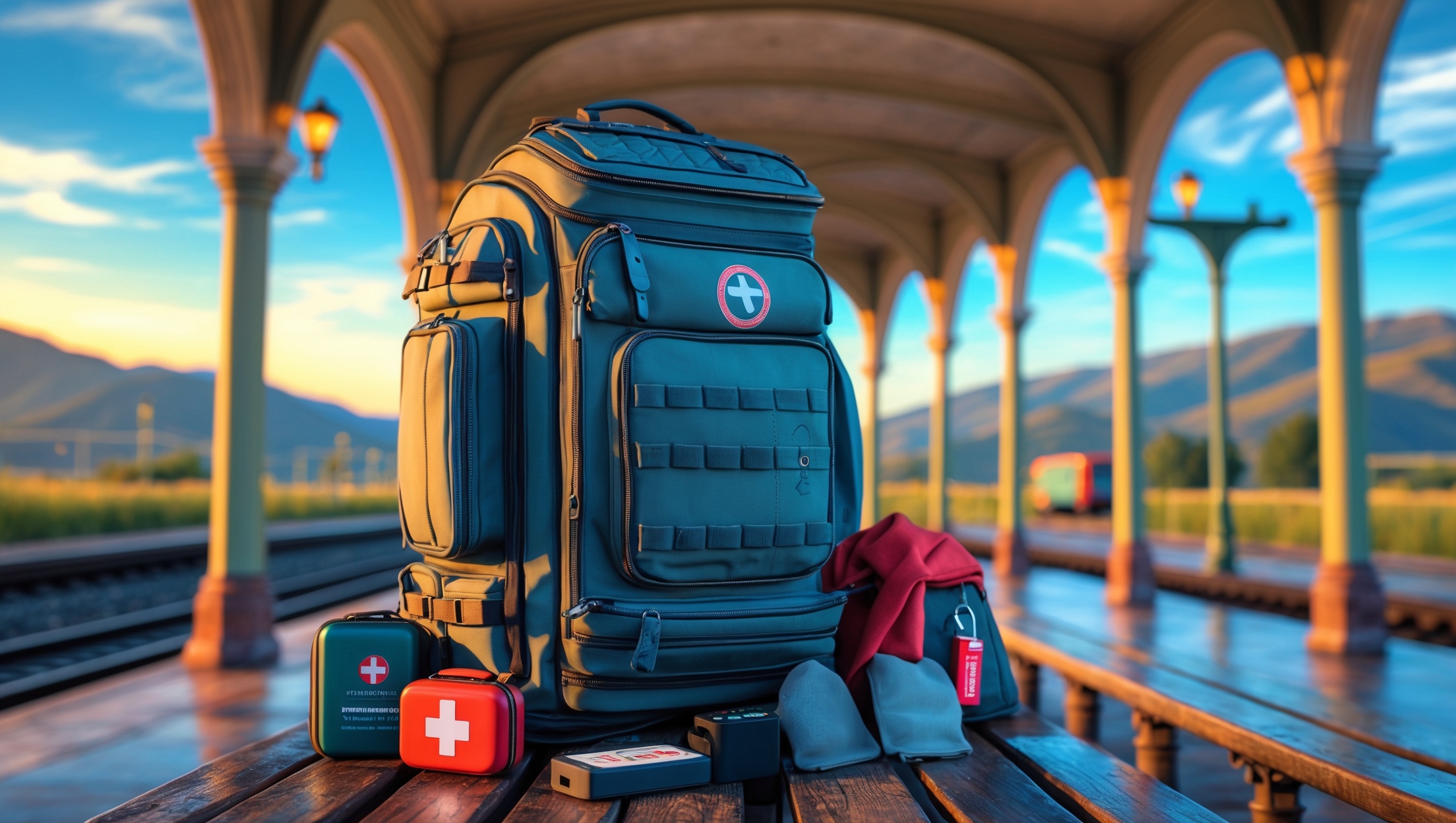
- Anti-Theft Bags: Opt for bags with lockable zippers, slash-proof straps, and RFID-blocking pockets. They deter pickpockets and keep valuables secure.
- Daypack Essentials: Use a small, secure daypack for daily outings—enough for essentials, but not so big you’re weighed down.
Personal Safety Devices
- Door Alarms and Portable Locks: Lightweight devices add extra security to hostel or hotel rooms, especially in accommodations with questionable locks.
- Personal Alarm: A loud, easily activated alarm can deter attackers and attract attention in emergencies.
- Travel Flashlight: Useful for dark streets, power outages, or signaling for help.
- GPS Tracker: Some travelers use personal GPS trackers that loved ones can monitor remotely.
First Aid and Health Gear
- Comprehensive First Aid Kit: Include wound care, painkillers, antiseptics, rehydration salts, and insect repellent.
- Water Purification: Portable water filters or purification tablets are critical in areas with questionable tap water.
On the Move: Transportation and Accommodation Safety
Getting There Safely
- Arrive During Daylight: Aim to reach new cities in daylight to navigate safely and find your accommodation more easily.
- Official Transport Only: Use licensed taxis or reputable ride-sharing apps. Avoid accepting rides from strangers or unmarked vehicles.
- Monitor Your Route: Track your location using offline maps. Download your route in advance and share your live location with a trusted contact.
Staying Secure in Accommodations
- Room Selection: Request rooms above the ground floor but not too high to jump in an emergency. Avoid isolated areas or poorly lit corridors.
- Check for Security Features: Inspect locks, peepholes, and emergency exits upon arrival. Use your portable lock or doorstop for added peace of mind.
- Valuables Storage: Utilize in-room safes for passports and electronics, or use a portable travel safe if none is available.
Hostels and Shared Spaces
- Secure Lockers: Bring your own sturdy padlock for hostel lockers.
- Meet Your Roommates: Introduce yourself to others to gauge the environment and foster a sense of community without divulging too much personal information.
Street Smarts: Navigating Cities and Rural Areas Alone
Blending In
- Dress Modestly: Observe local norms to avoid drawing unwanted attention. Neutral colors and covered shoulders/knees are often safest.
- Confident Demeanor: Walk with purpose and avoid looking lost. If you need to check maps, duck into a café rather than lingering on the street.
Managing Money Safely
- Divide Cash and Cards: Don’t keep all your money in one place. Use a money belt or hidden pouch for the bulk, and carry a small amount in your wallet.
- ATM Safety: Use ATMs inside banks or shopping centers during daylight. Shield your PIN and be wary of card skimming devices.
Handling Unwanted Attention
- Polite but Firm Responses: If approached, use confident, assertive language. Don’t feel obliged to engage in conversations that make you uncomfortable.
- Trust Your Instincts: If a situation feels wrong, remove yourself immediately. Don’t worry about offending others—your safety comes first.
Staying Connected
- Local SIM Card or eSIM: Ensures you’re always reachable and can access maps or call for help.
- Check-In Routine: Arrange regular check-ins with family or friends. Use location-sharing apps when possible.
Managing Emergencies: What to Do When Things Go Wrong
Losing Documents or Valuables
- Report Immediately: Notify local police and your embassy if your passport is lost or stolen. Use your digital backups for processing replacements.
- Cancel Cards: Contact your bank to freeze or replace lost cards quickly.
Handling Illness or Injury
- Seek Trusted Medical Facilities: Use travel insurance helplines or embassy resources to find reputable clinics.
- Keep Emergency Info Handy: Carry a card with your blood type, allergies, and emergency contacts in the local language.
Responding to Threats or Crime
- Stay Calm and Comply if Threatened: Valuables can be replaced—your life cannot. Report incidents to authorities as soon as possible.
- Use Safe Words: Set up a code word or phrase to signal distress when communicating with loved ones.
Technology and Digital Security for Solo Travelers
Protecting Your Devices
- Strong Passwords: Use unique, complex passwords for all devices and accounts. Enable biometrics where possible.
- Remote Wipe: Set up the ability to erase your phone or laptop remotely in case of theft.
- VPN Use: Always connect to public Wi-Fi through a reputable VPN to protect personal data.
Travel Apps for Safety
- Offline Maps: Essential for navigation without data. Apps like Maps.me or Google Maps offline can be lifesavers.
- Translation Apps: Overcome language barriers quickly in emergencies.
- Local Alert Apps: Many countries have apps for weather, natural disaster alerts, or local crime updates.
Socializing Safely: Making Friends Without Risks
Meeting New People
- Group Tours and Events: Organized activities are a great, secure way to meet others.
- Share Plans Selectively: Don’t reveal your accommodation or itinerary details to casual acquaintances.
Going Out at Night
- Limit Alcohol Intake: Stay aware and able to make good decisions.
- Arrange Transportation in Advance: Book a taxi or ride-share to get home safely, and avoid walking alone in unfamiliar areas after dark.
Solo Travel Safety Checklist: Quick Reference
- ✔️ Check travel advisories and register with your embassy
- ✔️ Scan and back up all documents
- ✔️ Secure comprehensive travel insurance
- ✔️ Pack a first aid kit and health essentials
- ✔️ Use anti-theft bags and locks
- ✔️ Arrange safe airport transfers and arrive in daylight
- ✔️ Share your itinerary and check in regularly
- ✔️ Use strong digital security practices
- ✔️ Trust your instincts and act confidently
- ✔️ Know emergency contacts and procedures
Conclusion: Empowering Your Solo Journeys
Solo travel is more than a journey across physical landscapes—it’s a voyage of self-discovery, resilience, and adventure. With the right safety checklist, you’re not just protecting yourself from threats, but enabling the freedom to experience the world on your own terms. Preparation, awareness, and adaptability are the pillars of secure solo exploration. By carefully researching your destination, equipping yourself with practical tools, and cultivating an instinct for prudent decision-making, you lay the groundwork for smooth and satisfying adventures. Remember, safety isn’t about paranoia or limiting your experiences; it’s about giving yourself the confidence to say yes to new opportunities, meet inspiring people, and navigate challenges with grace. When you know you’ve taken every reasonable precaution, you’re free to immerse yourself in the beauty, diversity, and spontaneity that make travel so rewarding. Use this checklist as your ongoing companion—review it, adapt it to each new destination, and share it with fellow solo travelers. In doing so, you contribute not only to your own well-being but to a supportive community of explorers who look out for one another. Safe travels, and may your solo adventures be as secure as they are unforgettable.
If I’m traveling solo and have a medical condition, what are the most important documents or preparations you’d recommend before departure to make sure I can access emergency healthcare easily in a foreign country?
Before you travel, pack a summary of your medical history, a list of your medications and dosages, and copies of your prescriptions. Carry your health insurance information and a document stating your condition, ideally translated into the local language if possible. Also, bring emergency contact information and consider wearing a medical alert bracelet. These preparations will help ensure you get prompt care if needed.
When researching local laws and customs for a destination, are there specific resources or websites you recommend for getting reliable and up-to-date information, especially for things like dress codes or photography rules?
For accurate details on local laws, dress codes, and photography rules, official government travel advisories—such as those from your country’s foreign affairs department—are a reliable starting point. Also, embassy websites and tourism boards for your destination often provide updated guidance on cultural norms and restrictions. For more practical tips, recent travel forums and reputable guidebooks can help, but always double-check with official resources.
Do you have any suggestions for how solo travelers can keep digital copies of important documents secure but easily accessible while on the move? I’m a bit worried about online security and losing access if something happens to my phone.
A good approach is to save encrypted copies of your documents in a trusted cloud storage service with two-factor authentication enabled. Also, consider sharing access to these files with someone you trust at home in case you lose your phone. For offline access, you can use a secure password manager app that keeps encrypted files locally, allowing you to retrieve them even without internet access.
The article talks about checking crime maps and forums to identify risky neighborhoods. As a business owner who travels for conferences, how far in advance should I start this kind of research, and is it best to adjust accommodations if the safety profile of an area changes closer to my travel date?
You should start researching crime maps and forums as soon as you begin planning your trip, ideally a few weeks before booking accommodations. Check for updates again a week or so before your departure in case local conditions change. If you find the safety profile of your chosen area worsens closer to your stay, it’s wise to consider changing your accommodations to a safer neighborhood, even if it means some extra cost or effort.
You mentioned noting local emergency numbers and embassy addresses before traveling solo. Do you have tips on securely storing this information so it’s easy to access if my phone dies or gets lost?
Writing down key emergency numbers and embassy addresses on a physical card or small notebook is a reliable option. Keep it in a secure but easily accessible spot, like your wallet or passport holder. You might also consider leaving a copy with someone you trust at home, so you can retrieve the details if needed. This way, you’ll have the information even if your phone isn’t available.
As a parent planning a solo trip for the first time, I’m wondering how far in advance I should start checking government travel advisories and researching local laws. Does the timing make a big difference if there are frequent updates or changes?
It’s wise to start checking government travel advisories and researching local laws as soon as you start planning, ideally a few months before your trip. Since advisories and local regulations can change unexpectedly, check them again a month before departure and once more in the week leading up to your trip. Staying updated helps you adapt to any new safety information or requirements.
Your article emphasizes checking government travel advisories and learning about local laws before a trip. I’m curious, do you have recommendations for reliable sources or specific government websites that solo travelers from the US should prioritize for the most accurate and timely safety information?
For US travelers, the most reliable source for travel advisories is the US Department of State’s official website, where you can find up-to-date country-specific safety information and alerts. Additionally, the Smart Traveler Enrollment Program (STEP) is highly recommended—it lets you receive updates and helps the embassy contact you in emergencies. For local laws, the country information pages on the State Department site are also very useful.
When looking into local laws and customs before a solo trip, are there certain online resources you’ve found particularly reliable for getting accurate information, especially about dress codes or social behavior?
For accurate information on local laws, customs, dress codes, and social behavior, official government travel sites such as your country’s foreign affairs department are trustworthy sources. Additionally, the websites of local embassies or consulates offer reliable guidance. For cultural specifics, the Culture Crossing Guide is useful, and travel forums like TripAdvisor can provide real-world insights, but always double-check with official sources for the most up-to-date rules.
The article suggests making note of emergency numbers and your embassy’s address before traveling. Do you have any tips for keeping this information easily accessible while on the go, without having to rely solely on your phone in case it gets lost or runs out of battery?
A good option is to write the emergency numbers and your embassy’s address on a small card and keep it in your wallet or with your ID. You can also place a copy in your luggage or inside a travel document holder. Some travelers jot down key info on a piece of paper and tuck it into their shoe or money belt for extra backup.
I noticed you emphasized researching local laws and customs before traveling solo. Have you ever encountered situations where something that’s normal back home turned out to be an unexpected issue abroad? It’d be great to hear some real-life examples or tips on what to watch for.
Absolutely, cultural differences can catch solo travelers off guard. For example, in some countries, certain hand gestures or clothing choices that are fine at home might be considered rude or disrespectful. Even taking photos in specific places can be restricted or frowned upon. One tip is to always check guidelines on dress codes, public behavior, and photography rules before arriving. Observing locals and asking hotel staff for advice can also help you avoid unintentional misunderstandings.
When researching neighborhoods to avoid, do you have tips on how to verify if information from forums or blogs is still current? Sometimes those sources seem dated or even contradictory, so I want to make sure I am relying on the most recent details.
To confirm if neighborhood safety info is current, check the date of each post or comment first. Cross-reference with recent news articles or local police updates for that area. You can also look at traveler forums with frequent activity, or reach out to locals on social media for up-to-date perspectives. Comparing several sources usually helps spot outdated or inaccurate advice.
When researching neighborhoods to avoid, how do you weigh advice from expat forums versus official crime maps? I sometimes find the information can contradict each other, so I wonder which source you prioritize for safety planning.
Both expat forums and official crime maps offer valuable perspectives. Official crime maps provide factual, up-to-date data, but expat forums can highlight concerns not reflected in statistics, like scams or unreported incidents. I recommend starting with crime maps for an objective overview, then using forum insights as a secondary check for recent experiences and local tips. If they contradict, consider the type of risk mentioned and favor official sources for serious crime, but don’t ignore firsthand experiences from expats.
You mention using crime maps and expat blogs to figure out which neighborhoods to avoid. Are there any particular websites or resources that are reliable for this kind of research, especially for someone planning their first solo trip?
For crime maps, websites like Numbeo and the local police department’s official site often provide updated neighborhood safety data. For expat insights, forums such as Expat Exchange and Reddit’s travel communities are helpful for first-hand experiences. Combining official statistics with expat forums gives you a well-rounded view of safe and less safe areas for your trip.
You mention checking government travel advisories and learning about local laws before booking. Is there a centralized resource you recommend for finding this information efficiently, especially when planning trips to multiple countries?
For efficient trip planning across multiple countries, the best approach is to use your own country’s official travel advisory website, such as the US Department of State or the UK Foreign Office, as these sites provide up-to-date safety, health, and legal information for nearly every destination. For local laws and cultural tips, embassy websites and the official tourism sites of your destination countries are also helpful resources.
For someone planning their first big solo trip, how far in advance should I start researching safety advice and preparing documents? Is there an ideal timeline to make sure I have everything ready without scrambling at the last minute?
It’s smart to start your safety research and document preparation at least two to three months before your trip. This gives you time to read up on destination-specific advice, get any required visas or vaccinations, and check that your passport is valid. Start booking accommodations and planning your itinerary about six weeks ahead, and aim to finalize documents and copies two weeks before departure.
I travel a lot for work, and sometimes my destinations change last minute. Do you have tips for efficiently researching local laws and customs on short notice, especially if I have only a couple of days to prepare?
When you’re short on time, focus on official government travel websites, which often provide concise legal and safety information by country. Skim local embassy pages for quick cultural dos and don’ts. Apps like Google Translate and TripLingo can help with language or etiquette questions on the go. Also, try searching for recent travel forums or expat groups for any up-to-date local quirks or restrictions.
When the article mentions making note of local emergency numbers and embassy addresses before traveling solo, what’s the best way to keep that information handy while still keeping it secure? Do you have any tips for digital versus printed copies?
It’s wise to have both digital and printed copies of emergency numbers and embassy addresses. For digital storage, use a secure notes app or password-protected document on your phone. For printed copies, keep one in your wallet and another in your luggage. Avoid labeling them as ’emergency contacts’ to reduce risk if lost. This way, you stay prepared but also protect your personal information.
When you research neighborhoods to avoid before a trip, do you have any favorite websites or forums that consistently provide reliable, up-to-date info? Sometimes official crime maps are lacking detail, so I’m curious what resources experienced solo travelers actually use in practice.
Many solo travelers like to check resources such as Reddit travel communities, TripAdvisor forums, and local Facebook groups to get personal and up-to-date info about neighborhoods. These platforms often have recent discussions about safety and specific areas to be cautious in. You might also find it helpful to read traveler blogs focused on your destination, as they often share firsthand experiences that crime maps might miss.
When researching local laws and customs for a new destination, do you have any tips for finding reliable sources or websites, especially for countries where information might not be as easily accessible in English?
For countries with limited English resources, start by checking official government travel advisories from your own country, as these often summarize key laws and customs. You can also contact the embassy or consulate of your destination for advice. For additional insights, look for expat forums or recent travel blogs, but try to verify information with multiple sources. Translating local news sites using reliable translation tools can also help.
The article talks a lot about pre-departure preparation like checking local laws and customs. For someone with limited time before their trip, which steps from the checklist would you say are most critical and which could be skipped or handled on arrival?
If you’re short on time, focus on researching local emergency contacts, ensuring your travel documents are in order, and sharing your itinerary with a trusted person. These are crucial for your safety and can’t be handled once you arrive. Tasks like learning basic local phrases or mapping out sightseeing routes can wait until you’re at your destination. Prioritize anything related to safety and legal requirements before you leave.
I’m curious about managing important travel documents like passports and emergency numbers while solo. Do you have suggestions for apps or physical ways to organize this info in a way that’s both secure and easy to access when needed?
Keeping your documents secure and accessible is key for solo trips. Consider using a secure digital vault app, such as a password manager or dedicated document storage app, to store scans of your passport and emergency contacts. Physically, keep photocopies in a separate part of your luggage from the originals. A small, RFID-blocking travel wallet can help protect your passport and cards from theft and digital pickpocketing.
When learning about local laws and customs, how in-depth should solo travelers go? For example, is it necessary to research detailed regulations like photography restrictions in every country, or are there general guidelines that usually keep you out of trouble?
It’s best to start with general guidelines, like respecting local etiquette, dress codes, and privacy in sensitive areas. However, some countries have strict rules—especially about photography near government buildings, religious sites, or military zones. Checking for any specific restrictions in your destination can help you avoid unintentional issues. A quick review of official travel advice and local customs is usually enough for most places.