
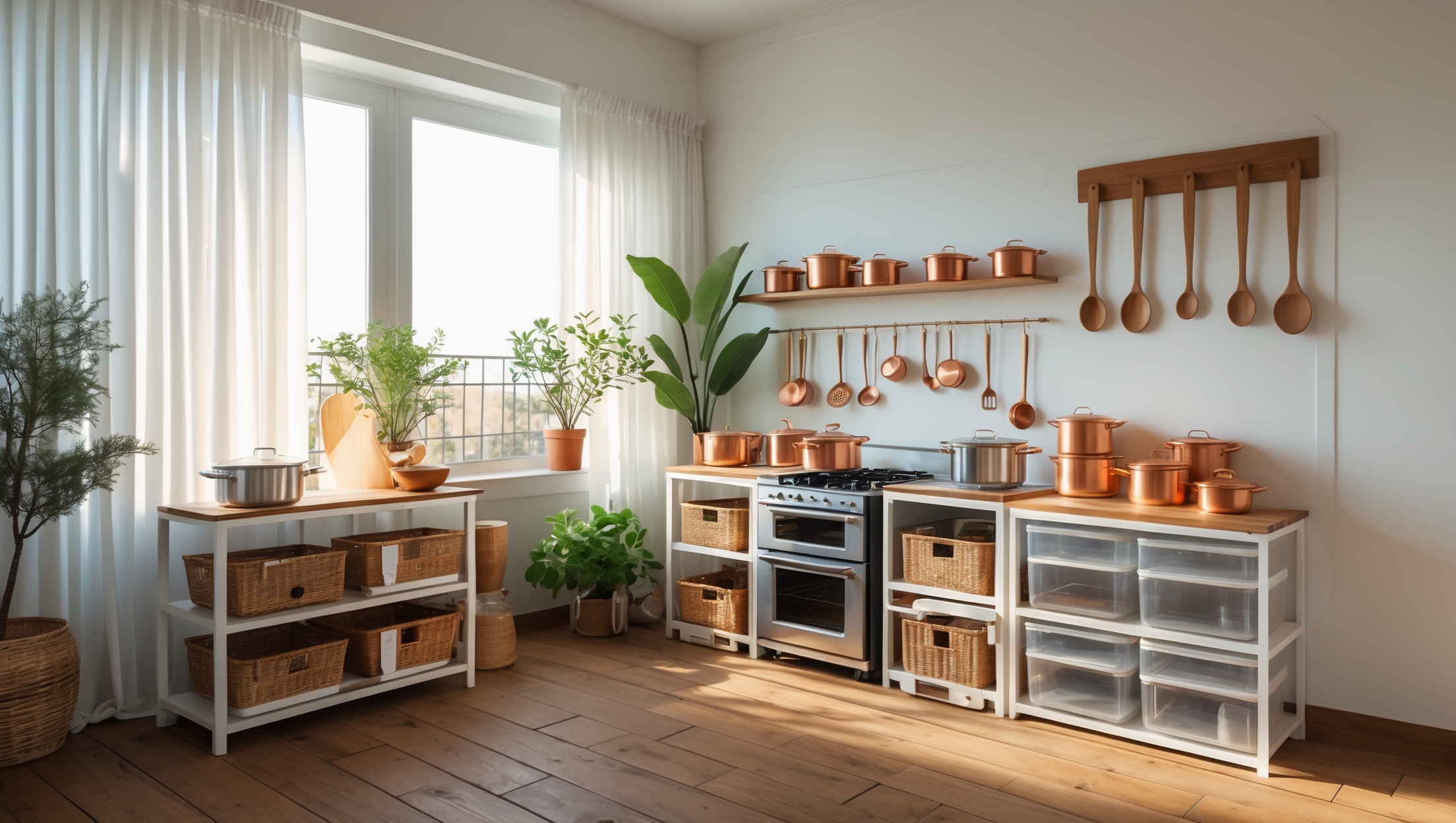
Introduction: The Challenge and Joy of Temporary Kitchens Abroad
Whether you’re an expat settling into a new city, a digital nomad hopping between Airbnbs, or a long-term traveler savoring local living, one daily reality quickly surfaces: the need to cook and eat comfortably, wherever you are. But unlike the fully-stocked kitchens of home, temporary accommodations abroad rarely come with everything you need. From missing basics like a decent knife or a reliable stovetop to the unfamiliarity of new appliances and local power standards, the challenge is real—and it can make or break your daily routine, budget, and health.
Yet, with the right tools and a bit of preparation, you can transform any kitchenette, rental corner, or makeshift space into a functional hub for preparing meals. In this comprehensive guide, we’ll walk you through what you really need (and what you don’t), how to source or pack smart equipment, and strategies to adapt to local quirks. Whether your stay is a few weeks or several months, mastering your temporary kitchen means more flexibility, better nutrition, and a deeper connection to your new locale. Let’s dive in and set you up for delicious, stress-free living abroad!
Assessing Your Kitchen Needs: Start With Your Lifestyle
Evaluate Your Cooking Habits
Before buying or packing anything, honestly assess your kitchen usage:
- Frequency: Do you plan to cook daily, or only for breakfast and the occasional meal?
- Complexity: Will you be preparing simple dishes or multi-course meals?
- Dietary Needs: Are there dietary restrictions or preferences (vegetarian, gluten-free, etc.) that require special equipment?
- Local Cuisine: Are you planning to experiment with local ingredients, or stick to familiar recipes?
Understand Your Space Constraints
Temporary kitchens come in all shapes and sizes. Consider:
- Counter space: Is there enough room for prep and appliances?
- Storage: Are there cupboards, shelves, or just a suitcase?
- Appliances provided: Does your rental include a stovetop, microwave, fridge, or oven?
- Power and plug types: Is voltage compatible with your electronics?
Core Equipment: The Must-Have Essentials
1. Cooking Appliances
- Portable Induction or Electric Hot Plate: Ideal for places without a stove. Compact, energy-efficient, and safe for most rentals.
- Electric Kettle: For boiling water, quick soups, and even some pasta dishes.
- Microwave or Toaster Oven: If space allows, these expand your cooking options significantly. Many rentals include at least one.
2. Cookware
- Non-stick Fry Pan (Medium Size): Versatile for eggs, stir-fries, pancakes, and more.
- Medium Saucepan: For boiling, simmering, pasta, and grains.
- Collapsible or Nesting Pot Set: If you’re packing your own, look for sets designed for campers or small apartments.
3. Utensils and Tools
- Chef’s Knife: Invest in a good-quality, lightweight knife. Consider a blade cover for safe transport.
- Cutting Board: Thin, flexible boards are easy to pack and clean.
- Wooden Spoon & Silicone Spatula: For stirring and sautéing.
- Serving Spoon & Tongs: Multi-use for serving and turning food.
- Can Opener & Bottle Opener: Often overlooked, always needed.
- Peeler: For prepping fruits and vegetables.
- Small Grater: For cheese, zesting, or grating vegetables. Choose a flat or foldable design.
4. Tableware and Storage
- Reusable Plates, Bowls, Cups, and Cutlery: Consider lightweight, non-breakable materials like bamboo or BPA-free plastic.
- Collapsible Food Containers: For leftovers and meal prep, these save space in luggage and cupboards.
- Water Bottle: Insulated bottles keep drinks hot or cold and reduce waste.
5. Cleaning Supplies
- Compact Dish Soap & Sponge: Travel-sized bottles and quick-dry sponges are ideal.
- Microfiber Dish Towel: Lightweight, fast-drying, and multi-purpose.
Smart Packing Tips: What to Bring vs. What to Buy
Maximize Space: Multi-Use Tools
Choose items that serve more than one function. For example, a saucepan can double as a mixing bowl; a silicone spatula can handle both cooking and scraping bowls; a chef’s knife can be used for most cutting tasks. Avoid single-use gadgets unless absolutely necessary for your diet or preferences.
Lightweight and Collapsible Options
Opt for nesting cookware, collapsible strainers, and folding cutting boards. Backpacking and camping brands offer compact, durable solutions that work perfectly in temporary kitchens.
Local Sourcing Strategies
- Buy Used: Explore local flea markets, thrift shops, or online classifieds for gently-used kitchenware.
- Rental or Borrow: Some expat communities offer kitchen kits or rental options for newcomers.
- Discount Stores: Inexpensive shops (like dollar stores or their local equivalents) are great for picking up basics without breaking the bank.
Items to Always Pack
- Chef’s knife with blade guard
- Flexible cutting board
- Collapsible containers
- Travel-size dish soap and scrub sponge
- Reusable water bottle
- Universal power adapter (if you plan to use electric appliances)
Adapting to Local Quirks: Appliances, Power, and Supplies
Electricity and Plug Types
Before plugging in any appliance, check the local voltage and outlet type. Many countries use 220-240V, while others (like the US and parts of Japan) use 110-120V. Bringing a universal plug adapter is essential, but if your appliance isn’t dual voltage, you’ll need a voltage converter as well. For heat-generating devices (like kettles or hot plates), it’s often easier and safer to buy locally.
Shopping for Groceries and Staples
Local grocery stores and markets may not carry familiar brands or packaging. Learn the local words for basic ingredients, and be ready to adapt recipes. Many cities have international or specialty shops catering to expats, but embracing local staples can make shopping easier and more affordable.
Water Safety and Filtration
In some countries, tap water may not be safe to drink or use for cooking. Consider:
- Boiling water with an electric kettle
- Packing a portable water filter or UV purifier
- Stocking up on bottled water for cooking and cleaning produce
Safety and Hygiene Best Practices
Sanitizing Your Space
Not all rentals are cleaned to your standards. Upon arrival, wipe down surfaces, appliance handles, and utensils. Carry disinfectant wipes and a small bottle of hand sanitizer for quick cleanups.
Food Storage and Pest Prevention
- Store dry goods in airtight containers to avoid attracting insects.
- Refrigerate perishables promptly—even if the fridge is small.
- Clean up crumbs and spills immediately.
- Use resealable bags to portion and protect snacks.
Safe Cooking Practices
- Never leave portable appliances unattended while in use.
- Use heat-resistant mats or trivets to protect surfaces.
- Keep a small fire extinguisher or fire blanket if possible.
- Know where the nearest emergency exit is located in your building.
Cost Breakdown: Budgeting for Your Temporary Kitchen
Initial Investment vs. Ongoing Costs
Setting up a functional kitchen can be affordable with smart choices. Here’s a sample breakdown for a two-month stay:
- Basic cookware & utensils set: $30-50
- Portable hot plate: $20-40
- Electric kettle: $10-25
- Reusable tableware (2 people): $15-25
- Collapsible containers: $10-15
- Cleaning supplies: $5-10
- Total estimated initial setup: $90-165
Ongoing costs include groceries and occasional replacement of supplies. Buying second-hand or borrowing can reduce this further. If you’re staying longer or plan to move frequently, investing in compact, high-quality gear pays off over time.
Case Study: From Empty Studio to Chef-Ready Kitchen in Lisbon
After relocating to Lisbon for a three-month work assignment, Emma found her rental studio’s kitchen limited to a tiny sink, a half-sized fridge, and a single electric burner. By prioritizing a high-quality chef’s knife, a collapsible pot, and just two versatile utensils, she quickly adapted. Shopping at local markets, she sourced fresh vegetables and discovered a nearby flea market for a gently used hot plate and microwave. With a collapsible dish rack and smart storage containers, Emma cooked full meals, tried local recipes, and even hosted a small dinner for friends—all without clutter or overspending. Her key lesson: less is more, and local solutions are often the smartest.
Maintenance and Storage: Keeping Your Kit Ready
Regular Cleaning and Inspection
- Wash and dry all items promptly to prevent mold and odors.
- Inspect appliances for frayed cords or damage before each use.
- Store sharp items in blade covers or wrapped in towels for safety.
End-of-Stay Tips
- Gift or donate unused equipment to incoming expats or local charities.
- Sell portable appliances online or at local markets.
- Pack collapsible and essential tools for your next destination.
Quick-Reference Checklist: Your Temporary Kitchen Starter Kit
- Chef’s knife & blade cover
- Flexible cutting board
- Non-stick fry pan
- Medium saucepan
- Wooden spoon & silicone spatula
- Serving spoon & tongs
- Peeler & grater
- Can/bottle opener
- Plates, bowls, cups, cutlery (2 sets minimum)
- Collapsible food containers
- Travel-size dish soap & sponge
- Microfiber dish towel
- Reusable water bottle
- Portable hot plate (if not provided)
- Electric kettle or similar appliance
- Universal plug adapter
- Disinfectant wipes & sanitizer
Conclusion: Empower Your Travels With a Functional Kitchen
Living or traveling abroad doesn’t mean sacrificing home-cooked meals or settling for takeout monotony. With thoughtful planning and a well-curated selection of tools and equipment, you can enjoy healthy, budget-friendly, and satisfying dishes—no matter where you unpack your bags. The key lies in prioritizing versatile, compact, and locally-adapted solutions that fit both your lifestyle and your temporary living space.
Remember, your kitchen kit is an investment in daily comfort and cultural connection. Cooking local produce, experimenting with new flavors, or sharing a meal with new friends enhances your travel experience in profound ways. By following the practical tips, checklists, and case study insights in this guide, you’ll be equipped to handle the quirks and challenges of any temporary kitchen abroad. So pack smart, shop local, and savor the adventure—one meal at a time.
I’m moving abroad for a few months and will mostly have just a suitcase for storage. Do you have any tips for prioritizing which kitchen tools are truly essential versus what can be improvised or bought locally, especially if I’m cooking most days?
Since space is limited, focus on packing lightweight, versatile essentials like a good chef’s knife, a small cutting board, a spatula, a travel-friendly can opener, and maybe a compact pot or pan if you know you’ll need one. Items like measuring cups, mixing bowls, and utensils are usually easy to find or improvise locally. Also, consider your cooking habits—if you rely on a specific tool daily, bring it; otherwise, wait and see what you can buy or borrow once you arrive.
You touched on the importance of assessing your cooking habits before packing or buying equipment. For someone staying just a few weeks, do you recommend buying new kitchen tools locally, or are there specific multipurpose items worth bringing from home to save space?
For a short stay of just a few weeks, it’s often more practical to bring a few versatile, multipurpose tools from home—like a good chef’s knife, a compact cutting board, and a heat-resistant spatula. These cover most basic cooking needs and save you from buying everything locally. Larger or bulky items can usually be borrowed or rented, so focus on lightweight essentials that you’ll actually use.
I usually travel for 2-3 months at a time and mostly cook simple meals, but sometimes host friends for a bigger dinner. How do you suggest balancing the need for versatile tools with limited storage and suitcase space in temporary kitchens?
For your situation, focus on packing a few multi-purpose essentials like a quality chef’s knife, a small cutting board, a compact nonstick skillet, and a collapsible pot or pan. Choose utensils that can handle several tasks, such as a slotted spoon and tongs. Lightweight nesting bowls and stackable containers can save space. For occasional group dinners, consider borrowing or buying bigger items locally as needed rather than carrying them.
You mention adapting to different local appliances and power standards, which is something I worry about a lot. Are there any reliable multi-use gadgets or adapters you suggest for families who want to avoid constantly buying new equipment in each country?
A universal travel power adapter with multiple outlets and USB ports is really helpful for families, as it works in most countries and lets you plug in several devices at once. For cooking, a portable induction cooktop with adjustable voltage can be very versatile and safer to use. Also, consider a compact rice cooker or electric kettle with dual voltage—they’re great for many meals and snacks.
You mentioned considering local power standards and unfamiliar appliances when setting up a temporary kitchen abroad. How do you figure out what kind of adapter or voltage converter is safe for common kitchen appliances like a kettle or blender before you arrive, especially if you’re in a rush to prepare meals for kids?
To find the right adapter or voltage converter, check the labels on your appliances for their voltage and wattage ranges. Most kitchen appliances from the US need 110–120V, while many countries use 220–240V. Research your destination’s power standards online, then choose a converter that matches both the voltage and the wattage required. Universal plug adapters are helpful, but only a voltage converter will protect devices that aren’t dual-voltage. If you’re in a hurry, pack a dual-voltage travel kettle or blender—they’re designed for multiple countries and make things much easier.
When you talk about assessing your cooking habits before packing, what are your must-have tools for families who need to prepare frequent meals but only have suitcase space? I’d love suggestions for balancing a limited kitchen set-up and a busy family schedule.
For families needing to prepare frequent meals abroad with limited space, focus on versatile basics: a good chef’s knife, a small cutting board, a compact nonstick skillet, a pot with lid, a spatula, and a mixing spoon. Collapsible measuring cups and a can opener are also handy. These essentials allow you to cook a variety of meals while keeping your packing light. Planning simple, one-pot or skillet meals can save both time and space.
I’m trying to figure out exactly what counts as an essential tool for a temporary kitchen, since I tend to cook pretty simple meals for myself most days. Are there a few multipurpose items you’d recommend that won’t take up much space or weigh down my luggage?
For simple, everyday cooking in a temporary kitchen, some highly versatile tools include a chef’s knife, a small cutting board, a compact nonstick frying pan, a heat-resistant silicone spatula, and a collapsible colander. These items cover most basic meal prep, are lightweight, and don’t take up much space in your luggage. You might also consider a multipurpose pot if you like soups or pasta.
When it comes to sourcing kitchen tools locally versus packing them from home, what should travelers prioritize if they have limited luggage space and a tight budget? Are there certain items that are usually much harder or more expensive to find once you’re abroad?
If luggage space and budget are limited, it’s best to pack lightweight but essential items that can be expensive or hard to find abroad, such as a good chef’s knife, a universal lid, or specialty utensils you rely on. Most basic tools like pots, pans, and cutlery are usually available locally, often at reasonable prices, so you can source those at your destination. Prioritize quality and personal must-haves when packing.
You mention adapting to local power standards when setting up a kitchen abroad. Could you share some tips or must-have equipment for safely using small appliances in countries with different voltage and plug types?
To safely use your small appliances abroad, bring a universal plug adapter that fits local outlets and a voltage converter if your devices aren’t dual voltage. Always check your appliance labels—some can handle both 110V and 220V, but others may be damaged without a converter. For added safety, pack a portable surge protector, as power fluctuations can be common in some countries.
I’m curious about sourcing basic tools like a reliable knife or good pots when you arrive in a new country. Do you recommend buying inexpensive local options, or is it better to pack a few essentials from home in terms of cost and convenience?
Bringing a few essentials from home, like a reliable knife and a small pot, can save you hassle and ensure you have quality tools right away. However, in many countries you can find decent, affordable kitchen basics at local markets or supermarkets. If you have limited luggage space, consider packing just your must-haves and picking up other items locally as needed.
When you mention adapting to local power standards in temporary kitchens, do you have any tips on choosing appliances or adapters that work safely with different voltages and plug types? I’ve run into issues with this in Europe and would love to avoid ruining my gear next time.
To avoid damaging your appliances, first check the voltage and frequency used in your destination country—Europe is often 220–240V at 50Hz. Choose travel appliances labeled ‘dual voltage’ or ‘110–240V’. For plug compatibility, use a reliable adapter, but remember adapters don’t convert voltage. If your device isn’t dual voltage, use a step-down voltage converter. Always check the wattage limits of converters and avoid high-draw items like hairdryers unless the converter supports them.
When it comes to adapting to local power standards, especially with appliances like a kettle or blender, do you recommend investing in dual-voltage devices or relying on local purchases and rentals for longer stays?
For longer stays abroad, it’s usually best to purchase or rent local appliances, since they’ll be fully compatible with local power standards and eliminate the need for adapters or converters. Dual-voltage devices are handy for short trips or if you need to bring specific items, but local options are generally more reliable and easier to replace or repair if needed.
As a small business owner who often travels for trade shows, I’m curious if you have recommendations for compact or multi-purpose kitchen tools that are easy to pack and meet most basic needs, especially since my stays are usually just a week or two at a time.
For short-term stays and travel, you might find a compact nesting cookware set very useful, as it saves space and lets you cook a variety of meals. A small electric hot plate or induction cooktop is portable and works in most locations. Consider a multipurpose utensil like a spork, a folding chef’s knife, and a collapsible cutting board. A French press or collapsible coffee maker can also double for tea or hot drinks. These essentials cover most basic needs without overpacking.
I travel a lot for work with my two kids and often end up in places with barely any kitchen tools. From your experience, which three items should I absolutely pack to handle most meals, considering space is super limited in our suitcases?
If space is tight, I’d suggest packing a sturdy multipurpose chef’s knife (with a blade cover for safety), a compact cutting board, and a lightweight nonstick skillet. These three essentials will help you prep and cook a wide variety of meals, from breakfast to dinner, with minimal hassle. They’re versatile, easy to clean, and make a huge difference when kitchen options are limited.
You mention adapting to local quirks in the kitchen setup—could you share examples of kitchen tools or equipment that travelers often overlook but end up needing due to regional differences in appliances or cooking methods?
Certainly! Travelers often forget to bring small but crucial items like universal plug adapters or voltage converters for their kitchen appliances, since outlets and voltage standards vary widely. Other commonly overlooked tools include lightweight cutting boards, multipurpose knives, and collapsible strainers, which are helpful when local kitchens lack familiar equipment. In some regions, even basics like can openers or measuring cups may not be standard, so packing compact versions of these can make adapting much easier.
Could you give specific recommendations for compact cooking appliances that work well with different local power standards? I’m worried about blowing fuses or damaging my gear when cooking in countries with different voltages.
Absolutely, choosing the right appliances matters. Look for travel-friendly induction cooktops and electric kettles that have dual voltage (110–240V) compatibility; brands like Tefal and Philips offer these features. Always use the correct plug adapters, not just shape converters, and avoid high-wattage appliances unless you’re sure of the circuit’s capacity. For extra safety, consider a portable voltage converter if your appliance isn’t dual voltage. This will help protect your gear from power issues abroad.
When considering space constraints and limited storage in temporary kitchens, what are your top priorities for multi-purpose tools or compact gear? I usually travel for a month at a time and don’t want to overpack but still want to cook decent meals.
For temporary kitchens with limited space, I recommend bringing a compact nonstick skillet, a small pot, a foldable cutting board, and a good chef’s knife with a sheath. A silicone spatula and a set of nesting measuring cups can also be very handy. Choose tools that serve multiple purposes, like a pot that doubles as a mixing bowl, and prioritize lightweight, easy-to-clean items. This way, you can prepare a variety of meals without overpacking.
When you talk about packing smart equipment for a temporary kitchen, do you have any suggestions for lightweight, kid-friendly tools that are still durable enough to handle daily use? We’re traveling with little ones who like to help out, but space in our luggage is always tight.
For kid-friendly and lightweight tools, consider silicone spatulas, small nylon or plastic mixing bowls, and child-safe nylon knives—they’re light, safe for small hands, and surprisingly durable. Collapsible measuring cups and spoons can save space, and a compact, sturdy cutting board works well for everyone. These tools pack easily, hold up to frequent use, and make it easy for your little helpers to get involved in meal prep.
I noticed you mentioned adapting to local power standards in temporary kitchens. Have you found it essential to bring your own voltage converter or adapters for appliances, or are there specific portable kitchen tools that work universally without worrying about local power differences?
Bringing your own voltage converter or plug adapters is usually important if you plan to use appliances from home, since power outlets and voltages can differ widely between countries. However, many portable kitchen tools like manual grinders, collapsible bowls, or hand-powered coffee makers work universally and don’t rely on electricity at all. Battery-operated gadgets can also be a good alternative to avoid power compatibility concerns.
The article touches on adapting to local power standards, which I’ve found tricky when traveling. Are there certain small appliances you’d recommend that work well internationally, or tips for making sure your equipment is compatible with outlets and voltages in different countries?
When choosing small appliances for international use, look for models labeled as dual voltage (110-240V), as they can handle both US and European standards. Universal plug adapters are helpful, but they don’t convert voltage, so always check if your appliance is dual voltage before plugging it in. For essentials like kettles or coffee makers, compact travel versions often support a range of voltages and plug types, making them a safer bet abroad.
Your section about evaluating cooking habits really spoke to me, since I usually stick to basic meals when traveling for business. If I only plan to cook breakfast and simple dinners, what are the absolute essentials I should prioritize packing to keep things minimal and efficient?
For basic breakfasts and simple dinners, focus on packing a compact frying pan, a small pot, a multipurpose spatula, a sharp knife, and a lightweight cutting board. Include a travel mug or bowl, a fork and spoon, and a few resealable containers for leftovers. Bring a small bottle of dish soap and a sponge for easy cleanup. These basics should cover most simple meals without taking up much space.
For someone planning to stay less than a month in a furnished rental, would you recommend buying any essential kitchen tools locally or just making do with what’s provided? It would be helpful to know which items are most worth sourcing temporarily versus packing in a suitcase.
For a stay under a month in a furnished rental, it’s usually best to make do with what’s provided, especially since most basics should be available. However, if you cook often, consider sourcing inexpensive essentials like a sharp knife, a nonstick pan, or a cutting board locally, as these are often lacking or low quality in rentals. Packing small favorites like a spatula or a can opener can also be handy without taking up much suitcase space.
You mention paying attention to local power standards when choosing appliances for a temporary kitchen, but what are some practical ways to check compatibility before buying or bringing something from home? Have you ever run into issues with voltage or plug types yourself?
To check compatibility, start by looking at the appliance’s label for voltage and frequency ratings—most countries use either 110-120V or 220-240V. Compare this with your destination’s standard, which you can find through travel guides or official websites. Also, check plug shapes, since even compatible voltages can have different plug types. Personally, I’ve had issues with US appliances in Europe due to voltage mismatches, which can damage devices. Using a voltage converter or universal adapter can help, but always confirm the specs to avoid surprises.
I’m a bit worried about fitting all the basics into a really tiny rental kitchen since you mention space constraints. Are there any specific tools or multi-purpose gadgets that are especially useful for saving space while still letting me cook decent meals?
Absolutely, for a tiny rental kitchen, it’s smart to focus on compact and multi-purpose tools. A good chef’s knife covers most cutting needs, and a foldable cutting board saves space. Consider a nesting set of mixing bowls and measuring cups, and a skillet that can double as a saucepan. A hand-held immersion blender is handy for soups and sauces without needing a bulky blender. With these essentials, you’ll be able to prepare a wide range of meals efficiently.
I’m getting ready for a six-month work stay in Europe, and most rentals I’m looking at only provide basic utensils. Based on your suggestions, is it usually better to buy inexpensive gear locally or try to bring certain specialty items from home, especially considering luggage space and local power differences?
For a six-month stay, it’s usually easiest to buy inexpensive everyday items like pots, pans, and utensils locally to save luggage space. For specialty items you use often—like a good chef’s knife or unique tools—you might want to bring them from home, as quality and familiarity can make a difference. Be careful with electric appliances due to voltage and plug differences in Europe; it’s often better to buy those locally to avoid compatibility issues.
I’m planning a six-month stay abroad and I’m not sure how much equipment I should buy versus what I should try to source locally once I arrive. Do you have tips for balancing what to pack and what to wait and find at my destination, especially when it comes to basics like knives and cookware?
For a six-month stay, it’s usually smart to bring a few compact, high-quality essentials you rely on, like a favorite chef’s knife or small set of measuring spoons. Bulky or heavy items such as pots and pans are better sourced locally—most destinations have affordable options. Check ahead to see if your accommodation includes any basics. This approach saves luggage space and ensures you have what you need without overpacking.
You mentioned dealing with unfamiliar local power standards when setting up your kitchen. Have you ever run into issues with voltage differences or plug types, and if so, what’s the safest approach to using small appliances in different countries without damaging them?
Yes, voltage differences and plug types can be a challenge when working abroad. The safest approach is to check both the voltage and plug type of each country before you go. Always use a voltage converter (not just a plug adapter) if your appliance’s voltage doesn’t match the local standard. For plug compatibility, bring a universal adapter. It’s also wise to pack appliances with dual voltage capability, as they can safely handle different standards without extra equipment.
I noticed you mentioned the challenge of dealing with unfamiliar appliances and local power standards. Do you have any tips for safely using or adapting electrical kitchen gadgets from the US when you’re living abroad, especially in countries with different voltages?
Using US kitchen gadgets abroad does require extra care. First, check both the voltage and plug type in your destination country. Many US appliances are 110V, while some countries use 220V. For single-voltage gadgets, use a reliable step-down voltage converter—not just a plug adapter—to avoid damaging your device. If possible, choose dual-voltage appliances, which only need a plug adapter. Always check wattage limits for converters, and avoid using high-wattage items like microwaves unless specifically rated for conversion.
When it comes to adapting to local power standards mentioned in the article, do you recommend investing in universal kitchen appliances or is it more practical to buy basic tools once you arrive? I’m wondering what works best for travelers on a tighter budget who might stay several months.
For travelers on a tighter budget staying several months, buying basic kitchen tools locally is usually more practical and cost-effective. Universal appliances can be expensive and may still have compatibility issues. Local options are often cheaper, readily available, and suited to the area’s power standards, saving you both money and hassle during your stay.
When it comes to evaluating space constraints in rentals, are there specific compact or multipurpose tools you’ve found especially useful for people planning to stay just a few weeks versus several months? I’m wondering how to balance packing efficiency with practicality.
For short stays, I recommend prioritizing compact, multipurpose tools like a folding cutting board, a small nonstick pan, and a combined spatula-tongs utensil. These save space and handle most basic prep. For longer stays, consider adding a collapsible colander, a multi-use electric kettle, and nesting food storage containers. This way, you balance packing efficiency with real-day practicality, adapting your setup based on your length of stay.
When assessing my cooking habits, is it realistic to try making more complex meals like I would at home, or do you recommend sticking mostly to simple recipes in a temporary space to avoid buying extra equipment? I’m just not sure how to strike that balance.
It depends on your comfort level and the space available, but most people find it easier to stick with simpler recipes in a temporary kitchen. This avoids the need to buy or carry lots of extra gear. You can still enjoy a few more complex meals by planning ahead and choosing dishes that use the equipment you already have or can easily improvise. Mixing simple daily meals with occasional special dishes is a good way to balance convenience and variety.
When you mention adapting to local power standards in temporary kitchens, do you have any specific recommendations for simple appliances that work well across different countries, or ways to avoid burning out devices from back home?
To avoid burning out your devices, it’s best to use appliances with dual voltage capability (usually marked as 110-240V), since they can handle different power systems. For basic needs, travel-friendly kettles, immersion heaters, and compact rice cookers often come in dual voltage versions. Always use sturdy plug adapters rather than converters when possible, as converters can sometimes fail with high-powered appliances. Double-check the appliance label before using it abroad to ensure compatibility.
You mentioned assessing your cooking habits and space constraints, but what about budget? Is it more cost-effective to pack a few quality tools from home or to buy cheap basics on arrival, especially if your stay is just a few weeks?
For a short stay of just a few weeks, it’s usually more cost-effective to buy inexpensive basics locally, since you won’t need them long-term and it saves room in your luggage. However, if there are small, versatile tools you rely on or know you’ll use again elsewhere, bringing those from home makes sense. Consider how much space and weight you can spare, and if the comfort of using your own quality tools outweighs the savings of buying basics at your destination.
When you mention adapting to local power standards for kitchen appliances, do you have suggestions for affordable, travel-friendly cooking devices that work well across different countries? I’m worried about buying something that might not be compatible or safe in a new location.
When traveling internationally, it’s smart to choose kitchen appliances that are dual voltage (often labeled 110–240V), as these work in most countries with only a plug adapter. Compact electric kettles, immersion heaters, and travel rice cookers are good options. Always check the voltage rating before buying, and avoid high-power appliances unless you’re sure your destination’s outlets can handle them. For maximum flexibility, manual tools like a French press or hand whisk don’t require electricity at all.
I’m curious about your advice for sourcing essential kitchen tools once you’re abroad. Is it usually better to buy affordable basics locally, or should I prioritize packing certain items from home to save money and hassle on short-term stays?
For short-term stays, it’s often easiest to buy affordable basics like utensils, pots, and pans locally, since most destinations have budget-friendly options. However, if you have favorite small tools (like a good chef’s knife or a lightweight peeler) that you use daily or can’t easily replace, packing them from home can save you both money and frustration. Bulky or specialized items are usually best left at home unless you have specific needs.
When adapting to local power standards in a temporary kitchen abroad, do you recommend bringing your own voltage converters or is it usually better to buy plug adapters and small appliances locally? I’m trying to figure out which approach is safer and more cost-effective for a several-month stay.
For a stay of several months, it’s typically safer and more cost-effective to buy small appliances locally, since they’ll match local voltage and plug types. Plug adapters are fine for low-power devices, but voltage converters can be bulky and may not suit all appliances. Local purchases help avoid compatibility issues and reduce the risk of damaging your equipment.
I usually travel with my family and we all have different dietary needs, like vegetarian and nut-free. Are there certain essential tools you definitely recommend packing for these kinds of restrictions, or is it better to try sourcing things locally once we arrive?
For families with special dietary needs, it’s wise to pack a few essentials that might be hard to find or are crucial for safe meal prep, like a compact cutting board, a sharp knife, a set of clearly labeled food storage containers, and your own utensils. Bringing a small, dedicated pan or pot can also help avoid cross-contamination. For basics like peelers, measuring cups, or colanders, you can usually source those locally, but having your core items will give peace of mind.
Could you give some examples of kitchen tools that offer the most value when packing light for stays of just a few weeks? I’m trying to strike a balance between being prepared and not overpacking, especially since some rentals provide only the basics.
For short stays, versatile tools are key. Consider packing a good chef’s knife, a small cutting board, a multipurpose spatula, a heat-resistant spoon, and a compact nonstick skillet. A foldable colander or silicone measuring cups can also be handy without taking up much space. These items handle most cooking needs and supplement the basics often found in rental kitchens.
You mentioned adapting to local quirks and sourcing equipment abroad. As someone who tries to keep costs down, do you have tips for finding affordable, reliable kitchen tools in a new country, or should I focus on packing certain essentials from home?
It’s often smart to pack lightweight, multipurpose essentials like a good chef’s knife, measuring spoons, and a silicone spatula, since these are compact and reliable. For bulkier items, check out local markets, discount stores, or second-hand shops for deals. Asking expats or local residents for recommendations can also help you find trusted places with reasonable prices.
I’m about to spend three months in Europe living in short-term rentals, and most of them have limited storage and almost no kitchen gear. Do you have a shortlist of must-have tools I should prioritize that are lightweight and versatile for cooking pretty much any basic meal?
Absolutely, traveling with a compact kitchen kit makes a huge difference! Prioritize a sharp chef’s knife, a small cutting board, a silicone spatula, a collapsible colander, a set of measuring spoons, a compact nonstick skillet, and a heatproof spoon. Adding a reusable storage container and a lightweight pot with a lid covers most basic cooking needs, and these items are easy to pack or carry in a tote.
How do you recommend handling kitchen tools that might not be allowed in carry-on luggage if you are flying to your temporary destination? Should you buy them locally or is it better to find rentals for certain essentials?
For kitchen tools not allowed in carry-on luggage, it’s usually best to check if your destination offers rentals for essentials like knives or blenders, especially if you only need them for a short stay. Otherwise, buying affordable versions locally can save the hassle and ensure you have exactly what you need. Always check local regulations and availability before you travel.
How do you recommend balancing the need for reliable equipment with airline baggage restrictions, especially when it comes to packing kitchen basics like knives or small appliances for a longer stay abroad?
Balancing equipment needs with airline baggage restrictions can be tricky. Prioritize versatile, lightweight items like a chef’s knife with a blade guard, collapsible bowls, and a compact cutting board. Check airline and destination regulations for carrying knives—sometimes it’s easier to buy one locally. For small appliances, consider what’s absolutely essential and check if your accommodation already provides them to avoid extra weight and voltage compatibility issues.
When evaluating what kitchen equipment to pack versus source locally, how do you suggest balancing limited luggage space with the risk of not finding necessary items abroad, especially for those with specific dietary needs or cooking habits?
Prioritize packing items that are hard to find or essential for your dietary needs, such as specialized utensils, small gadgets, or non-standard measuring tools. For common cookware and appliances, it’s usually better to source them locally. Consider the weight and size of each item, and pack only what you can’t easily replace. Making a list of local stores or markets in advance can also help reduce the risk of missing important kitchen tools.
In your experience, if I’ll only be abroad for a couple of months and have limited luggage space, which kitchen basics are actually worth packing from home versus trying to source locally? I’m mostly cooking simple meals and breakfasts.
For a short stay with limited luggage, it’s best to pack just the essentials you can’t do without or might be hard to find locally, like a favorite sharp knife, a compact cutting board, or travel-size utensils. Most basics—pots, pans, and dishes—are usually easy to source or borrow locally. Consider bringing a few spices or specialty items if they’re crucial to your meals.
I mostly cook simple breakfasts and occasional dinners, so I don’t need a big setup. Based on your guide, what are the top three kitchen tools you think are absolutely essential for someone staying just a month in a rental with limited space and storage?
For a simple setup during a one-month stay, I’d recommend bringing a medium-sized nonstick skillet for versatile cooking, a sharp chef’s knife for food prep, and a compact cutting board. These three essentials will let you handle breakfasts and occasional dinners without taking up much space or needing extra storage.
I like the point about adapting to local appliances and power standards. How do you recommend finding out what cooking appliances will be available or compatible in a new country before arrival, especially if the rental listing is vague about kitchen details?
To find out about available appliances and power compatibility, try contacting your host or landlord directly with specific questions about the kitchen setup. If they’re unsure, ask for recent photos of the kitchen. You can also join local expat or travel forums to hear from others who’ve stayed in similar rentals. Research the country’s common plug types and voltage so you can pack suitable adapters or plan to buy compatible appliances on arrival.
When assessing storage in a temporary kitchen, especially if you’re limited to just a suitcase or minimal cupboards, what are your go-to solutions for organizing essential equipment? I’m curious if you recommend packing collapsible tools or buying local, especially for stays longer than a month.
When space is tight, collapsible and multi-use tools are excellent options—they save space and are easy to pack in a suitcase. For longer stays, I suggest bringing just a few compact essentials, then buying or borrowing bulkier items locally as needed. Stackable containers and bags with compartments also help keep things organized in limited cupboard space.
You mention evaluating how often you’ll cook and what type of meals you’ll prepare. If I’m planning to stay only a month and mostly eat out, what are the absolute minimum tools I should pack or look for so I can still have a few basic meals at home?
If you’ll be eating out most of the time and just want to prepare occasional simple meals, stick to the basics. A small pot or saucepan, a frying pan, a multipurpose knife, a cutting board, a serving spoon, and a bowl or plate should cover most needs. You might also want a mug and a fork or spoon. These essentials will let you make quick breakfasts, sandwiches, or simple pasta easily.
I’m curious about balancing limited counter and storage space when setting up a temporary kitchen. Are there specific compact tools or multi-purpose equipment you recommend that can handle both simple and more involved meals without cluttering up a tiny area?
For a small temporary kitchen, look for nesting mixing bowls, a collapsible colander, and a set of stackable measuring cups. Multi-purpose tools like a chef’s knife, a cutting board that doubles as a tray, and an induction cooktop can cover most meal types. Consider a pot with a steamer insert and a skillet with a lid for versatility. These choices save space while allowing you to prepare both quick and more complex dishes efficiently.
I’m curious about sourcing or packing smart equipment—are there specific tools you recommend bringing from the US that are hard to find or expensive abroad, especially considering different power standards for appliances?
When traveling abroad, compact tools like good-quality measuring cups and spoons, silicone spatulas, and a reliable chef’s knife are worth packing since they can be hard to find or pricey in some countries. For appliances, stick to dual-voltage or USB-powered options like immersion blenders or small coffee grinders. Always check plug adapters and power compatibility before bringing any electrical appliances to avoid damage or incompatibility issues.
You mentioned the importance of adapting to local power standards when setting up a kitchen abroad. Do you have tips on what kind of voltage adapters or plug converters are most versatile, especially if you plan to carry small appliances from the US?
When bringing US appliances abroad, look for a voltage converter that supports both 110V (US standard) and 220-240V (most other countries). Choose a converter with enough wattage for your appliances—kitchen gear like blenders or kettles may need higher capacity. For plug type compatibility, a universal plug adapter that works in multiple regions is handy. If you travel often, kits with interchangeable plugs and built-in surge protection offer great flexibility and safety.
You mention evaluating your cooking habits and the storage situation before packing kitchen gear. For someone traveling for just a few weeks versus several months, are there specific tools you’d recommend leaving behind to save space, or is it generally worth having a full kit either way?
If you’re traveling for just a few weeks, it’s usually best to pack only the true essentials—like a small knife, multipurpose utensil, collapsible bowl, and maybe a compact cutting board. For several months, bringing extra tools like a small pot, pan, and storage containers can make cooking easier and more enjoyable. In most short-term cases, a full kit isn’t necessary and can take up valuable luggage space.
I usually travel with two kids, so I’m curious if you recommend any specific lightweight kitchen tools or equipment that work well for making quick, healthy meals in really tiny spaces. Any tips for family-friendly setups would be really helpful!
For families traveling with kids, a compact electric kettle, a small nonstick frying pan, and a collapsible silicone colander can be really useful. Consider a set of nesting bowls with lids for prepping and storing snacks. A mini cutting board and a good paring knife are great for prepping fruits and veggies. Also, look for utensils that double up, like a spatula-tongs combo, to save space. Pack a few resealable bags or containers for leftovers—they keep meals organized and kid-friendly even in tiny kitchens.
I’m curious about how to handle local power standards when bringing small appliances from the US. Have you found certain travel adapters or voltage converters work better for kitchen gear like blenders or coffee makers in temporary rentals abroad?
When bringing US kitchen appliances abroad, check both the plug type and voltage. Many US appliances run on 110V, while many countries use 220-240V. For high-powered items like blenders or coffee makers, a heavy-duty voltage converter (not just a plug adapter) is essential—look for one rated higher than your appliance’s wattage. Brands like BESTEK and Foval are known for reliable converters, but always verify the wattage capacity. Some travel adapters work well for low-wattage devices but aren’t suitable for kitchen gear, so check specs before use.
The article mentions adapting to local quirks, which got me wondering—are there specific types of portable equipment you find essential for places with unpredictable power standards? I want to avoid buying items that end up being incompatible or unnecessary for multi-week stays.
For locations with unpredictable power standards, focus on equipment that’s universally compatible or non-electric. A portable gas stove is a good option since it doesn’t rely on local electricity. Manual tools like a hand-operated coffee grinder, can opener, and food chopper also come in handy. If you bring any electric items, choose ones with dual voltage and pack plug adapters or converters to match local outlets.
You mentioned adapting to different local power standards when setting up a temporary kitchen abroad. Do you have recommendations for compact or dual-voltage appliances that work well in a range of countries, or tips for safely using adapters with cooking equipment?
Look for compact appliances labeled as dual-voltage (usually marked 110–240V) like travel kettles, small rice cookers, or immersion blenders—these work well across many countries. Some global brands even make dual-voltage hot plates. When using adapters, make sure they’re rated for the wattage of your cooking equipment. Avoid simple plug adapters with high-power devices unless they’re paired with a proper voltage converter if your appliance isn’t dual-voltage. Always check both your appliance and local outlet specs before plugging in.
How would you suggest adapting the essential equipment list if I have very limited luggage space and plan to cook mostly local dishes while living abroad for a few months?
If luggage space is tight and you’ll focus on local dishes, consider packing only the basics you can’t easily find or substitute—like a good knife, a compact cutting board, and a multipurpose utensil. For other items, plan to buy or borrow locally. Most temporary kitchens abroad can be supplemented with inexpensive local cookware, and using what locals use can enhance your cooking experience and help you fit right in.
I’m curious about sourcing equipment locally versus packing your own when setting up a temporary kitchen abroad. How do you decide which basics are better to buy on arrival and which are essential to bring from home, especially considering different power standards and space limitations?
When deciding what to pack versus what to buy locally, think about your essential, hard-to-replace items first—like a good chef’s knife or specialized tools you trust. For everyday basics like pots, pans, and utensils, it’s often easier and more cost-effective to buy at your destination. Also, electrical items should match local power standards, so unless your appliances are dual voltage and you have the right adapters, it’s best to purchase those locally to avoid compatibility issues. Consider your luggage space and prioritize items you can’t easily replace abroad.
For someone planning to stay just a few weeks in a rental, what are the absolute essentials you recommend packing versus sourcing locally, especially if counter and storage space are really limited?
If you’re only staying a few weeks and space is tight, pack compact essentials you use daily, like a favorite chef’s knife, a small cutting board, and a versatile spatula. For other basics—like pots, pans, dishes, or an electric kettle—it’s easier to source them locally or use what’s provided in your rental. Foldable or nesting items are great if you need to bring your own.
When it comes to adapting to unfamiliar appliances or different power standards overseas, do you have any advice on what to look out for or pack ahead of time? I’ve had trouble in the past with voltage differences and oddly sized plugs making my usual kitchen gadgets useless.
Dealing with voltage and plug differences can definitely be a challenge. Before you travel, check the voltage and plug type used in your destination country. Bring a universal adapter and, if your appliances aren’t dual voltage, consider packing a reliable voltage converter. Sometimes it’s easier to buy or rent basic appliances locally rather than risk damaging your own. Compact, multi-use gadgets designed for travel can also be a great addition to your kit.
I noticed you mention adapting to local power standards when setting up a temporary kitchen abroad. Could you provide some specific advice or examples on what to look out for with appliances, especially regarding voltage differences or plug adapters?
When setting up a temporary kitchen abroad, check both the voltage and plug type used at your destination. Many countries use 220–240V, while North America and parts of Asia use 110–120V. If your appliances aren’t dual voltage, you’ll need a voltage converter to avoid damaging them. Also, research which plug shape fits local outlets and bring appropriate plug adapters. Some multi-country adapter kits are a convenient solution for multiple locations.
When you mention adjusting for local power standards, do you recommend packing a universal adapter or are there specific kitchen appliances you’ve found work better in most countries? I’m worried about my slow cooker and blender frying out while traveling.
It’s smart to think about power compatibility for your slow cooker and blender. While a universal adapter is useful for plug shapes, the real issue is voltage differences—many countries use 220-240V instead of 110V. Unless your appliances are dual voltage (check the labels), you risk damaging them. Consider buying dual-voltage appliances or small kitchen gadgets locally. If you must bring yours, use a voltage converter in addition to a plug adapter.
The article mentions adapting to local quirks when setting up a kitchen abroad. Would you recommend buying kitchen tools locally rather than bringing them from home, especially considering luggage space and potential differences in availability or quality?
Buying kitchen tools locally can be a smart choice. It saves luggage space, and you’ll likely find items better suited to the local cooking style, stove types, or ingredient availability. Quality may vary, so basic tools like a good knife might still be worth bringing, but for most items, local shops or markets should have what you need at reasonable prices.
You mention having to adapt to local power standards and unfamiliar appliances in temporary kitchens abroad. For someone from the US, what’s the best way to figure out which small appliances are worth bringing versus buying locally, especially for short-term stays?
For short-term stays, it’s usually simpler to buy or rent small appliances locally to avoid dealing with voltage and plug differences, which can damage US devices or require bulky adapters. Consider only bringing compact, dual-voltage items like a travel kettle or coffee maker if you really need them. Otherwise, make a list of essentials and check local options before your trip—you’ll often find what you need at second-hand shops or rental services.
You mention adapting to local power standards when setting up a temporary kitchen abroad. Could you provide advice on safely choosing or converting small kitchen appliances to match different countries’ electrical systems, especially if you’re traveling to several places with varying voltage?
When traveling to countries with different voltages, always check your appliances’ voltage compatibility. Devices labeled ‘dual voltage’ (such as 110V/220V) can be used worldwide with just a plug adapter. For single-voltage appliances, you’ll need a voltage converter rated for your device’s wattage. Avoid using high-wattage appliances like kettles with converters—they can overheat. Purchase plug adapters and converters from reputable brands, and always check the local sockets and standards before plugging in.
You mention the importance of adapting to local power standards in temporary kitchens. Could you elaborate on what types of portable appliances or adapters are safest and most effective to pack, especially for destinations with frequent voltage differences?
When traveling to destinations with different voltage standards, it’s best to bring dual-voltage portable appliances, like electric kettles or induction cookers that work with both 110V and 220V. For adapters, use sturdy plug adapters specific to the country’s socket type, and if your appliance is single-voltage, pack a reliable voltage converter. Always check that appliances and adapters have safety certifications to prevent electrical hazards.
When you talk about evaluating your own cooking habits before packing, do you have any tips for someone who wants to try local ingredients but isn’t sure what tools will be useful? I’m worried about bringing too much stuff and not actually needing it.
If you want to experiment with local ingredients, it helps to focus on versatile tools. Pack basics like a good knife, a cutting board, a small nonstick pan, and a pot—these cover most cooking styles. Once you arrive, observe what’s commonly used in local markets or ask locals for recommendations. That way, you only add tools if you genuinely need them, keeping your kit light and practical.
You mentioned adapting to local power standards. Are there certain appliances you recommend avoiding or essential adapters to bring along so common kitchen devices work safely in different countries?
It’s wise to avoid bringing high-powered appliances like microwaves or electric kettles, as voltage differences can damage them or require bulky transformers. For smaller items like blenders or coffee makers, pack universal plug adapters and double-check voltage compatibility. A good quality voltage converter is essential if your devices aren’t dual voltage. Always check local standards before plugging anything in to protect both your equipment and safety.
I’m a little confused about local power standards you mentioned. How do I figure out if my small appliances from the US will work safely in a new country, or if I need special adapters or voltage converters for them?
To check if your US appliances will work abroad, look at the voltage and plug type used in your destination country—many countries use 220-240V instead of the US 110-120V. Check the appliance label for ‘110-240V’; if it lists only 110V, you’ll need a voltage converter. Most places also require a plug adapter, as socket shapes differ. Always use the correct converter or adapter to avoid damaging your appliances.
As a parent, I often have to prepare allergy-friendly meals for my kids. When staying somewhere with limited storage and basic equipment, what are your recommendations for essential tools that can help accommodate dietary restrictions without taking up too much space in our luggage?
To prepare allergy-friendly meals while minimizing luggage space, focus on compact, multi-use tools. A sharp folding knife, a small flexible cutting board, and collapsible silicone containers are great essentials. Bring a set of measuring spoons and a spatula for accuracy with ingredients. Consider a portable nonstick skillet or saucepan, as they’re lightweight and easy to pack. Also, pack a few airtight snack bags or containers to prevent cross-contamination.
Could you share any tips for adapting to different local power standards when bringing or buying appliances for a temporary kitchen abroad? I worry about voltage compatibility and plug types if I’m moving frequently between countries.
When moving between countries, it’s smart to check the voltage and frequency of the local power supply before buying or bringing appliances—most countries use either 110-120V or 220-240V. Look for appliances with dual voltage capability, which can handle both standards. Also, carry a universal plug adapter to match various outlet types. For single-voltage appliances, a good-quality voltage converter may be necessary, but always check the wattage limits to avoid damaging your equipment.
As a parent who usually travels with young kids, I’m wondering which kitchen tools you would prioritize packing versus buying locally, especially when dealing with limited suitcase space. Do you have tips for deciding what’s truly essential for families?
For families traveling with young kids, it’s best to pack small, lightweight essentials that help maintain routines, like a favorite child-safe knife, collapsible bowls, or reusable snack containers. Items like high-quality travel utensils and a small cutting board rarely take much space and can be hard to find abroad. Bulky or easily available items—pots, pans, basic plates—are usually better bought or borrowed locally. When deciding what to bring, focus on your kids’ must-have feeding tools and anything that makes meal prep much easier for you.
You mention adapting to local quirks when setting up a temporary kitchen abroad. Could you give an example of a situation where you had to adjust your setup for a local appliance or ingredient you weren’t used to?
Absolutely. In one instance, I set up a temporary kitchen in Japan and discovered that most apartments had only a single-burner induction stove and a very small fridge. This meant I had to rethink meal planning and rely more on quick-cooking dishes and frequent trips to the market. I also had to learn how to use local condiments, like miso and mirin, to adapt my usual recipes, which added a fun twist to familiar meals.
I’m curious about sourcing kitchen equipment once you arrive versus packing your own essentials. For someone staying just a few weeks, is it better to buy cheap local tools, or should you always bring at least some basics from home?
For a short stay of a few weeks, packing a few lightweight essentials like a sharp knife and a spatula from home can save you hassle and ensure comfort. Many local stores offer inexpensive kitchen tools, but quality can be unpredictable. Bringing just your must-haves strikes a good balance without overpacking or overspending.
When assessing your kitchen needs for a temporary setup abroad, do you have any advice on prioritizing which tools to pack versus which ones are easy to source locally, especially if you’re dealing with very limited suitcase space?
Focus on packing versatile, lightweight tools you use daily and can’t cook without, like a good chef’s knife, a small cutting board, or a favorite spatula. Bulky or easy-to-find items, such as pots, pans, and dishware, are better sourced locally. Also, consider local voltage and plug types if bringing electric gadgets. Make a shortlist of essentials before packing to avoid overpacking.
I noticed you mentioned adapting to local power standards and different appliance types. What’s the best way to handle voltage differences or plug adapters for small kitchen equipment if you plan to stay several months? Any unexpected hiccups I should prepare for?
For longer stays, it’s wise to buy a high-quality voltage converter if your appliances aren’t dual voltage. Universal plug adapters will help with socket shapes, but they don’t change voltage. Double-check each appliance’s voltage rating before use. Sometimes, local outlets can be unreliable or overloaded, so bring a surge protector and consider buying locally made equipment for everyday needs to avoid surprises or damage.
When you mention evaluating your cooking habits before packing, could you give some examples of the essential tools you’d recommend for someone who mostly cooks simple vegetarian meals a couple times a week? I’m trying to travel light, so I want to avoid bringing anything I won’t use.
For simple vegetarian meals a few times a week, you can keep your kit minimal. A sharp chef’s knife, a small cutting board, a lightweight pot or pan (nonstick is handy), a spatula, and a spoon are usually enough. Consider a peeler if you use lots of vegetables. A can opener and a basic colander might be useful too, but you can skip anything bulky or specialized.
When it comes to packing versus sourcing kitchen tools in a new country, do you have recommendations on which items are generally worth squeezing into your luggage from the US, and which are usually easy and affordable to pick up locally once you arrive?
It’s usually best to pack lightweight, personal-use items you rely on daily, like a good chef’s knife, a trusty peeler, or a set of measuring spoons, since quality can vary abroad and you might prefer what you’re used to. Bulky or common items such as pots, pans, basic utensils, or dishware are generally easy and affordable to find locally, saving space in your luggage.
The article mentions adapting to local appliances and power standards. Could you share any tips for dealing with unexpected issues like missing adapters or unfamiliar stove types, especially if you’re only staying a few weeks?
If you find yourself without the right adapter, check local supermarkets or convenience stores—these often stock basic plugs and converters. For unfamiliar stoves, ask your host or landlord for a quick demo, or look up a brief video with the exact model. Simple cookware like a portable induction burner or an all-in-one pan can help if the kitchen setup is especially tricky. Always test appliances with supervision the first time to avoid surprises.
For someone like me who usually cooks simple meals but has some dietary restrictions, what are the bare minimum tools and equipment you’d recommend packing versus sourcing locally when setting up a temporary kitchen abroad?
If you mostly cook simple meals and have dietary restrictions, pack your favorite utensils (like a good chef’s knife, spatula, and peeler), a small cutting board, and any specialty items you rely on, such as a collapsible colander or food scale. For pots and pans, you can usually source basics like saucepans and frying pans locally. Don’t forget any must-have containers for safe food storage.
When assessing temporary kitchens, how do you decide which essential tools to bring from home versus buying locally? Are there certain items that are not worth packing due to space or cost concerns?
When deciding what tools to bring for a temporary kitchen abroad, consider packing lightweight, versatile items that you can’t easily find locally, such as a good chef’s knife or specialty gadgets. Bulky or inexpensive basics like pots, pans, and utensils are usually better to buy or rent at your destination to save space and avoid extra baggage fees. Think about your cooking habits and prioritize tools that are hard to replace or crucial for your routines.
I usually travel with just a carry-on, so I’m really limited on what kitchen items I can bring. If I have to choose just three essential tools as someone who cooks daily but mostly simple meals, what would you recommend prioritizing from your guide?
For traveling light and cooking simple daily meals, consider packing a compact chef’s knife, a lightweight cutting board, and a multipurpose silicone spatula. These three cover most prep and cooking tasks, are easy to clean, and fit easily in a carry-on. Many other items like pots and utensils can often be improvised or found locally at your destination.
When setting up a temporary kitchen in a country with different power standards, do you recommend traveling with plug adapters or even a small portable induction cooktop, or is it better to buy local appliances once you arrive? I’m worried about compatibility and safety.
It’s often safer and more convenient to buy small kitchen appliances locally, since they’ll be designed for the local voltage and plug type—this helps avoid compatibility issues and potential safety hazards. Plug adapters work for low-wattage items, but high-powered appliances like cooktops may require converters or special attention. For peace of mind and easier setup, sourcing appliances after arrival is usually the best approach.
For someone who usually cooks simple meals once or twice a day, do you have any advice on which tools and equipment are absolutely essential to bring versus what can be bought cheaply on arrival? I want to avoid overpacking but still have a functional setup.
For simple daily cooking, it’s smart to pack lightweight essentials you know you’ll use: a good chef’s knife, a small cutting board, a spatula, and a can opener. These can be hard to replace cheaply and make a big difference. Items like pots, pans, plates, and basic utensils are usually affordable and easy to find locally, so you can save luggage space by buying those after you arrive.
I’m curious about the mention of adapting to local power standards. Could you elaborate on the types of small appliances that are usually safe (or unsafe) to travel with, and any tips for avoiding issues with voltage differences in temporary kitchens?
When traveling abroad, it’s safest to bring dual-voltage or universal appliances like electric kettles, hair dryers, or travel irons, as they can handle both 110V and 220V. Avoid taking single-voltage appliances unless you have a reliable voltage converter, since plugging them in without one could damage them or create a hazard. Always check the appliance label for voltage compatibility and consider packing plug adapters for the local socket style.
I’ve run into trouble with voltage differences abroad—did the guide mention any specific portable appliances that work well with various international power standards, or tips for avoiding blown fuses when setting up a temporary kitchen?
The guide highlights the importance of checking appliance voltage compatibility but doesn’t list specific brands or models for universal use. It suggests choosing dual-voltage or USB-powered items, and using quality plug adapters or voltage converters as needed. To avoid blown fuses, it recommends not overloading outlets and confirming your appliances match the local power standards before plugging them in.
You talk about adapting to local quirks and figuring out what to pack versus buy once abroad. How do you suggest deciding which items are worth bringing from home, especially for someone on a tight budget and staying less than a month?
When staying abroad for less than a month on a tight budget, prioritize bringing only light, essential items you use daily and can’t easily replace or find affordably at your destination, such as a favorite chef’s knife or small utensils. For bulkier or common items like pots or plates, plan to borrow, rent, or buy cheap locally. Research the local availability and prices before your trip to help you pack smartly and avoid unnecessary expenses.
When assessing what to pack or buy for temporary kitchens, how do you recommend balancing limited suitcase space with the need for versatility in tools, especially if you’re unsure about the appliances that will be provided at your rental?
A good approach is to focus on compact, multi-use items. For example, a sturdy chef’s knife, a silicone spatula, and a small cutting board cover most prep tasks. Collapsible bowls or nesting measuring cups save space. Also consider a universal plug adapter for appliances. Waiting until you arrive to buy bulky or uncertain items lets you assess the kitchen and avoid overpacking.
I’m curious about how you assess which kitchen tools to actually bring with you given space and luggage limits. Are there any specific items you always pack no matter the destination, or does it really depend on the local cuisine and your planned meals?
Choosing which kitchen tools to pack really comes down to a mix of your personal cooking habits and the meals you plan to make abroad. I almost always bring a good chef’s knife, a small cutting board, and a heat-resistant spatula, since these are hard to substitute. For everything else, I consider the local cuisine—if I know I’ll need a grater or measuring cups for specific dishes, I pack those. It’s about balancing essentials with what you can source locally.
I’m curious about your advice on deciding what to pack versus what to source locally for a temporary kitchen. Is it usually cheaper or more practical to buy basics like knives and pans once you arrive, or should you bring your own from home?
Whether to pack or buy locally depends on your destination and personal preferences. For high-quality knives or favorite tools, bringing your own can be worth it, especially if you cook a lot. However, for bulky or inexpensive basics like pans, it’s often more practical and affordable to purchase them locally, as this saves luggage space and avoids potential airline restrictions. Consider the length of your stay and how much you value your own equipment when making your decision.
When you talk about adapting to local quirks, do you have suggestions for sourcing reliable kitchen basics on a tight budget, especially in places where cookware or knives might be pricier or lower quality than what I’m used to at home? Would secondhand markets be a good option?
Secondhand markets can be a great way to find affordable, decent-quality kitchen essentials, especially if new items are expensive or hard to find. Many expats and locals sell gently used cookware, knives, and utensils. You might also check out community bulletin boards, local online marketplaces, or ask neighbors for recommendations. Sometimes local hardware stores or supermarkets have budget-friendly options, too. Just inspect any secondhand items carefully for damage or excessive wear before buying.
When you mention adapting to local power standards for kitchen appliances, do you have suggestions for must-have items that work well in most countries without needing a heavy voltage converter? I’m trying to avoid buying equipment that I won’t be able to use everywhere.
Look for kitchen appliances labeled as dual voltage (usually 110–240V); these can handle different power standards without a bulky converter, just a plug adapter. Popular dual voltage items include electric kettles, immersion blenders, and compact rice cookers. Manual tools—like French presses, hand whisks, and manual can openers—are also universally useful and don’t rely on electricity at all.
I’m traveling with my kids for a couple of months and we follow a mostly gluten-free diet. The article mentions special equipment for dietary restrictions—could you give examples of which tools are really worth packing versus ones I can easily find locally?
For a gluten-free diet, it’s smart to bring a small nonstick skillet, a silicone spatula, and dedicated cutting boards to prevent cross-contamination, since these may not always be available or clean where you stay. Things like mixing bowls, pots, or baking sheets are usually easy to find locally or provided in rentals. Consider packing a toaster bag or silicone baking mat if you want to avoid shared appliances.
You mention the importance of assessing your cooking habits and space before choosing what to pack or buy. Do you have any tips for prioritizing which kitchen tools to bring when traveling with kids, especially if we’re limited to just a suitcase or backpack?
When traveling with kids and limited space, focus on multi-purpose tools and essentials. Bring a small cutting board, a sturdy knife (with a blade guard), a heat-resistant spatula, and a collapsible bowl. A lightweight pot or pan with a lid is helpful for versatile cooking. Don’t forget reusable utensils, a water bottle, and a compact container for snacks or leftovers. Prioritize anything you use daily or that helps prepare kid-friendly meals easily.
When assessing space constraints in a rental, do you recommend prioritizing certain equipment over others for someone who needs to cook daily but has very limited storage? How can I decide what’s really essential to bring versus sourcing locally on arrival?
When dealing with limited space in a rental, prioritize multi-purpose items like a good chef’s knife, a compact cutting board, and a small pot or pan that suits multiple cooking tasks. Essentials are items you use every day and prefer for quality or safety. Bulkier or less frequently used items, like kettles or mixing bowls, can often be sourced locally once you assess your new kitchen’s layout and available space.
You mention assessing cooking frequency and complexity before packing or buying kitchen tools. Do you have recommendations for a minimal yet versatile set of equipment that works for someone who cooks daily but has very limited storage?
For daily cooking with tight storage, aim for essentials that cover most tasks. A sharp chef’s knife, a small cutting board, a medium nonstick skillet, a small pot, and a basic utensil set (spatula, wooden spoon, tongs) can handle a wide range of meals. Nesting mixing bowls, a measuring cup, and a colander are also compact and useful. Choose multi-purpose items when possible to save space.
You talk about assessing your cooking habits and space constraints before choosing tools. If I’m only planning to stay in one place for a month, is it really worth investing in quality kitchen equipment, or are there good rental or borrowing options abroad?
For a one-month stay, investing in high-quality kitchen equipment might not be necessary. Many cities offer short-term rentals for kitchen tools, especially through local sharing apps or expat groups. You can also check if your accommodation provides basic equipment or if neighbors are willing to lend what you need. This way, you can cook comfortably without making a big purchase.
I’m curious about dealing with limited counter and storage space in some rentals. Are there certain compact appliances or multi-use gadgets you recommend that are worth the extra suitcase space, particularly for travelers planning to stay just a few weeks?
For short-term stays with tight space, consider packing a compact electric kettle, a mini immersion blender, or a foldable electric hot plate. Multi-use utensils like a spatula-tongs combo or a nesting bowl set can save room. Collapsible food containers and a small cutting board also come in handy without taking up much space in your suitcase.
When assessing what to pack versus what to buy locally for a temporary kitchen, how do you decide which essential tools are usually hard to find or too expensive in other countries? Any tips for avoiding overpacking while still having the basics?
Consider packing items that are specific to your cooking style or hard to replace, such as quality knives or specialty utensils. Things like pots, basic pans, and dishware are usually easy to find locally at reasonable prices. To avoid overpacking, lay out what you think you’ll need, then cut it down to versatile, multipurpose tools. Research local stores online beforehand to check availability and costs—this helps you confidently decide what’s worth bringing.
How would you suggest prioritizing which kitchen tools to pack versus sourcing locally, especially if you’re staying for just a few weeks compared to several months? I’m worried about overpacking but also don’t want to be stuck without essentials.
For a short stay of a few weeks, bring only your absolute essentials—think must-have knives, a compact cutting board, or a favorite spatula—since most basics can be sourced locally or improvised. For several months, consider packing any special tools you use often or know will be hard to find at your destination. Researching what’s commonly available locally can also help prevent overpacking.
When evaluating what kitchen tools to bring or buy abroad, how do you decide which items are truly essential versus what you might be able to adapt or do without? I often struggle with the weight and luggage space limitations, so any tips on narrowing down these choices would be helpful.
Start by listing the meals you actually cook most often, then identify the tools absolutely required to make those dishes. Prioritize multipurpose items—like a chef’s knife, cutting board, spatula, and a saucepan—that cover a range of tasks. Avoid single-use gadgets. Consider local availability; some basics may be cheap and easy to buy there. If space is extra tight, compact or collapsible versions of utensils can also help.
I’m curious about sourcing quality kitchen tools once I’m abroad, especially in places where the local shops might not carry the brands or types I’m used to. Do you have any tips for quickly identifying which local stores or markets tend to offer reliable kitchenware, or should I bring most essentials from the US?
If you’re unsure about the quality or availability of kitchenware at your destination, it’s wise to bring a few core essentials from home—think a good chef’s knife, measuring tools, or any specialty items you rely on. Once abroad, ask locals or expats about reputable shops and check out larger supermarkets or department stores, which tend to stock higher-quality kitchenware. Visiting local markets can be fun, but inspect items carefully for durability.
I’m moving abroad for a three-month work assignment and will mostly be staying in basic rentals. When you’re packing essential tools for a temporary kitchen, what are the absolute must-haves if you have really minimal counter space and can only bring a small suitcase?
For a small suitcase and limited counter space, focus on compact, versatile tools. A good chef’s knife, a small cutting board, a silicone spatula, a collapsible colander, and a set of nesting measuring cups/spoons are very handy. Consider a nonstick skillet or saucepan if you’ll be cooking often, and a reusable water bottle. These basics will cover most meals without taking up much space.
You mention adapting to local power standards when setting up a temporary kitchen abroad. Are there certain types of portable appliances or adapters that work best across different countries, or should I wait to buy kitchen gadgets until I know the specific voltage and plug situation at my destination?
It’s best to wait until you know the exact voltage and plug type at your destination before purchasing kitchen appliances. Universal adapters and multi-voltage appliances can be useful, but not all devices handle different voltages safely. For high-wattage gadgets like kettles or hot plates, buying locally is often safer and more convenient. Smaller, USB-powered appliances are usually more versatile across countries.
When you talk about adapting to local power standards, do you have any advice on what type of small appliances are typically safest or most versatile to bring from the US? I don’t want to pack something only to find out it won’t work abroad.
Look for small appliances with dual voltage capability (usually labeled 110-240V), as they can work safely with both US and international power supplies. Items like travel kettles and hairdryers often have this feature. Universal plug adapters are helpful, but if an appliance is single voltage, it may need a bulky and heavy converter to function safely. Always check the rating on each device before packing.
For someone who moves every few weeks between different Airbnbs, how do you recommend prioritizing which kitchen tools are worth carrying in your luggage versus just buying locally, especially considering weight and local appliance compatibility?
Focus on bringing lightweight, versatile essentials you know you’ll use daily, like a good chef’s knife, a compact cutting board, and maybe a silicone spatula. For bulky or electric items, it’s usually better to buy or rent locally, since appliance compatibility and voltage can vary by country. Also consider collapsible items or travel sets to save space. It helps to research what’s typically provided in Airbnbs at your destinations before packing.
You mention evaluating your cooking habits, but what about minimizing costs when sourcing essential equipment in a new country? Are there strategies for finding affordable, good-quality tools locally without over-purchasing or ending up with duplicates if moving between locations?
To keep costs low and avoid duplicates, consider renting or borrowing kitchen tools from local expat groups, hostels, or community centers. Visit secondhand shops, flea markets, or local online marketplaces for affordable, quality basics. Before buying, list absolute essentials and check if upcoming accommodations include kitchenware. Selling or donating items before moving again helps avoid accumulating extras.
You talked about evaluating storage space in temporary kitchens. Do you have any recommendations for compact or multipurpose tools that are especially useful when you’re dealing with just a suitcase or a very limited cupboard?
When space is tight, look for tools that serve more than one purpose. A nesting set of bowls doubles as mixing and serving dishes, and a collapsible colander saves room. A compact chef’s knife, a foldable cutting board, and a multi-use utensil (like a combination spatula-tongs) are also handy. Collapsible silicone containers are great for both food storage and meal prep in small kitchens.
You mention adapting to local power standards when setting up a temporary kitchen abroad. Are there particular types of appliances or gadgets that are easier to use internationally, or should I invest in a universal adapter for everything I bring?
When setting up a temporary kitchen abroad, appliances with dual voltage capabilities are usually easier to use internationally since they work with different power standards. Look for gadgets labeled as 110–240V. For items that aren’t dual voltage, a universal adapter is helpful for plug compatibility, but you may also need a voltage converter if the appliance can’t handle the local voltage. Prioritizing dual voltage items helps minimize the need for extra gear.
If my temporary kitchen barely has any counter space and I’m mostly cooking quick breakfasts, what would you suggest are the absolute must-have tools to bring versus what I could just buy locally or skip altogether?
With limited counter space and a focus on quick breakfasts, it’s best to bring compact essentials like a good chef’s knife, a small cutting board, and perhaps a nonstick skillet if you prefer a particular size or quality. Lightweight utensils like a spatula and a whisk are also handy. Items such as plates, mugs, and basic cookware are usually easy to buy locally, so you can skip bringing those and pick them up on arrival.
When evaluating whether to pack or source kitchen tools locally as mentioned, do you have recommendations for balancing luggage space with the need for reliable equipment, especially for longer stays of several months?
For longer stays, it makes sense to bring a few essential, compact, and high-quality tools you use daily and know are hard to find or expensive abroad, like a good chef’s knife or a favorite spatula. For bulkier or basic items—pots, pans, or dishware—it’s often more practical to source them locally. Consider the weight and versatility of each item when deciding what to pack versus buy.
I usually cook simple meals, but I have some gluten-free needs, so I’m not sure which specialized equipment is really worth packing given limited luggage space. Are there certain items you recommend prioritizing for someone in my situation?
For gluten-free cooking while traveling, a compact cutting board and your own chef’s knife can help prevent cross-contamination. Bring a dedicated silicone spatula or wooden spoon as well. If you bake, consider packing a small nonstick pan or silicone muffin cups. Resealable bags for storing flours or snacks are helpful. Most other basics can usually be found locally, so prioritize lightweight, easy-to-clean essentials.
When you talk about adapting to local quirks and limited appliances in temporary kitchens, what are your top tips for sourcing affordable but reliable utensils abroad, especially if you’re only staying for a few weeks and don’t want to overspend?
For a short stay, consider checking out local markets, discount stores, or secondhand shops for basic utensils—they often have inexpensive but sturdy options. Some travelers also swap or borrow items from other expats or hosts. Focus on a small set of essentials like a good knife, a pot, and a spatula, and avoid buying full sets. If you’re staying somewhere with a community group or notice a swap shelf, you might find free or very cheap kitchenware there.
I’m wondering how you suggest balancing the need for essential tools with limited storage, especially when traveling with kids who might require extra kitchen items like snack containers or allergy-friendly utensils. What’s the best way to prioritize what to pack versus what to buy locally?
When traveling with kids and limited storage, focus on packing compact, multipurpose essentials you can’t easily buy or replace, such as specialized allergy-friendly utensils or favorite snack containers. For bulkier or standard items (like basic pots or plates), consider buying or renting them locally. Prioritize items that support your kids’ specific needs, and try collapsible or nesting designs to save space. This way, you keep your load manageable while ensuring your family’s comfort and safety.
When packing or sourcing tools for a temporary kitchen abroad, do you have any tips for choosing appliances that are compatible with local power standards? I worry about voltage differences and whether I should bring certain electronics or just buy them locally.
It’s wise to check the voltage and plug type used in your destination country before packing appliances. Many places use 220-240V, while others use 110-120V. If your appliances aren’t dual voltage, they could get damaged or not work at all. Buying essentials like kettles or toasters locally can help you avoid compatibility issues. If you must bring an appliance, consider a quality voltage converter and plug adapter, but for safety and convenience, local purchase is usually easier.
Your guide talks about evaluating cooking habits and limited counter space. If I’m traveling with kids and need to prepare meals quickly, what are your must-have tools that don’t take up much room but still allow for healthy, family-friendly cooking?
For quick, healthy family meals in a small space, consider packing a compact electric skillet or multi-cooker, a small cutting board, a sharp chef’s knife with a protective sheath, and a collapsible colander. These let you sauté, steam, or boil a variety of foods easily. A set of stackable food containers is also handy for prepping and storing ingredients. With these, you can whip up nutritious dishes without cluttering your limited counter space.
I noticed you mentioned power standards and unfamiliar appliances in temporary kitchens abroad. How do you recommend dealing with voltage differences or plug types when packing things like a blender or coffee maker, and are there any lightweight solutions for this?
When traveling abroad, voltage and plug differences can be tricky. Before packing appliances like blenders or coffee makers, check if they are dual voltage—many travel-friendly models are. Otherwise, you’ll need a reliable voltage converter, not just a plug adapter, to avoid damaging your devices. For lightweight solutions, consider compact travel versions of your appliances, which are often designed for international use and come with interchangeable plugs.
You mention evaluating cooking habits before packing equipment, but what if you don’t know exactly what appliances will be available until you arrive? How do you suggest balancing what to bring versus what to buy locally, especially when space and baggage weight are limited?
If you’re unsure about available appliances, pack compact, versatile items you know you’ll need, like a good knife, cutting board, and a lightweight pan. Once you arrive, assess what’s missing and buy inexpensive or second-hand extras locally. This way, you avoid overpacking and adapt to what’s actually at your destination without exceeding baggage limits.
You mentioned the importance of adapting to local power standards when choosing kitchen appliances. Have you found any compact or universal cooking devices that work well across different countries, or is it better to just buy cheap local ones and leave them behind when you move on?
Most travelers find it easiest to buy inexpensive local appliances for each country, since they match the voltage and plug type. Universal cooking devices do exist, like dual-voltage electric kettles or travel cookers with plug adapters, but their performance can be inconsistent or limited. For longer stays, local items are usually safer and more reliable, plus you won’t have to worry about compatibility or carrying heavy converters.
I’m interested in exploring local ingredients, but I’m worried my temporary kitchen won’t have the right appliances or enough counter space. Do you have tips on adapting recipes or equipment to fit smaller, unpredictable rental kitchens?
When working in a smaller rental kitchen, focus on versatile equipment like a good knife, cutting board, and a large skillet or pot that can handle multiple tasks. Prep ingredients in stages to save counter space, and choose recipes that need fewer tools. If an appliance is missing, adapt by using stovetop methods or manual alternatives. Embrace one-pot or sheet pan meals, and try local markets for pre-chopped produce to make things easier.
You mention assessing your cooking habits before packing or buying kitchen tools. How would you recommend prioritizing what to bring if you’re traveling light and only have limited luggage space?
Start by thinking about the meals you cook most often and the tools you absolutely need for them. Prioritize multipurpose items like a sharp knife, small cutting board, and compact pan, as these cover many basic tasks. Leave behind single-use gadgets and bulky appliances. If you can, choose lightweight, nestable items and consider what might be easily purchased or borrowed at your destination to save space.
When you talk about assessing your space constraints, do you have any tips for organizing or storing essential kitchen tools if you’re working with just a small suitcase and no real storage in a rental? I’m worried about keeping things practical but also tidy.
If space is tight, try to choose multi-use tools, like a folding knife, nesting bowls, and a compact cutting board. Use reusable cloth bags or zip pouches to group utensils and keep them tidy in your suitcase. When not cooking, store everything back in your suitcase or dedicate a small box or drawer in your rental to avoid clutter. Prioritize only the essentials to keep things practical and organized.
When you talk about evaluating cooking habits before packing or buying tools, do you have tips on which kitchen basics are easiest to source locally versus what you should definitely bring with you, especially if you’ll be cooking for special diets like gluten-free?
For special diets like gluten-free, it’s best to bring essential tools that might be harder to find, such as a dedicated cutting board, silicone spatula, and any specialty bakeware or utensils you use to prevent cross-contamination. Basic items like pots, pans, and common utensils are usually easy to source locally. If you use any specific gadgets or measuring tools for gluten-free baking, consider packing those, as local versions may not be as precise or accessible.
For someone who only expects to stay a few weeks and has very limited storage, what are your top three essential tools to pack or source locally to make basic daily cooking manageable without overpacking?
If you’re only staying a few weeks with limited space, focus on versatility and portability. My top three would be a small sharp knife (for prep), a compact nonstick skillet (for a range of meals), and a heat-resistant spatula. These let you handle most basic cooking tasks with minimal clutter, and you can usually find them cheaply at local stores if you don’t want to pack your own.
When you talk about evaluating cooking habits and space constraints, how do you recommend prioritizing what to actually pack for a short stay versus what to buy locally, especially if you’re traveling on a tight budget and can’t bring much?
Start by listing the absolute essentials you use daily, like a multipurpose knife, a small cutting board, or a travel-friendly pan. Pack only items you can’t easily find or afford at your destination. For everything else, buy basics locally, as this can often be cheaper and saves luggage space. Focus on versatility—choose items that serve multiple purposes to minimize what you carry.
When you’re packing tools for a temporary kitchen abroad, how do you decide what’s better to bring from home versus what’s worth sourcing locally, especially when dealing with unfamiliar power outlets or limited storage? Any tips for balancing usefulness with airline weight restrictions?
It’s smart to bring versatile, lightweight tools you use every day and can’t easily find abroad, like a good chef’s knife or measuring spoons. For bulky or electric items, check local voltage and plug types—adapters and converters add weight, so consider buying those locally if needed. Focus on multipurpose items and flexible storage, and prioritize what fits in your airline’s baggage allowance. For anything bulky, fragile, or easily sourced at your destination, wait until you arrive.
When assessing storage in a temporary kitchen, do you have any tips for organizing cooking tools when all you have is a suitcase or minimal shelving? I’m curious about practical strategies for keeping things accessible but tidy in very limited spaces.
To keep cooking tools organized in a small space, use zippered pouches or packing cubes to separate utensils, knives, and gadgets. Stackable plastic containers or small bins are great for corralling items on shelves. Hang lightweight tools from hooks or binder clips on available surfaces, and try to choose multi-use tools to minimize clutter. Keeping frequently used items at the top of your suitcase or front of a shelf helps with accessibility.
If I’m only planning to stay for a month and want to avoid buying too much, what would you say are the absolute minimum kitchen tools I should pack or look for locally, especially for simple daily meals?
For a month-long stay focused on simple meals, stick to the basics: a small pot, a frying pan, one sharp knife, a cutting board, a stirring spoon, spatula, and a mug or bowl. Add a plate, fork, and spoon, plus a can opener if needed. You can often find these items cheaply at local shops or secondhand markets. This setup covers most basic cooking without overpacking or overspending.
If I plan to stay abroad for just a few weeks, would you recommend buying basic kitchen tools locally or packing my own, considering budget and storage constraints? Any specific items that are especially worth packing in your experience?
For a short stay of just a few weeks, it usually makes sense to bring a few compact, essential tools from home—like a good chef’s knife, a small cutting board, and a spatula—since these can be versatile and fit easily in your luggage. For other items like pots, pans, and utensils, buying inexpensive versions locally or renting is often more practical and cost-effective, especially if space is tight in your bags.
When it comes to packing versus sourcing kitchen tools abroad, how do you decide which essentials are worth taking with you in your luggage versus what can be easily or cheaply sourced on arrival, especially if you’re trying to keep things lightweight?
When deciding what kitchen tools to pack, focus on compact, lightweight items you use daily and know you can’t easily find abroad, like a favorite chef’s knife or a reliable can opener. Bulky or inexpensive basics—cutting boards, mixing bowls, and utensils—are typically easy to buy locally or even borrow. Also, consider the cost and quality of items at your destination to help you decide what’s worth the luggage space.
I noticed the article emphasizes evaluating your own cooking habits and space limitations before selecting tools. If someone is planning to stay for only a few weeks, which essential items would you recommend prioritizing for packing versus sourcing locally?
For a short stay of just a few weeks, it’s best to pack only personal essentials—like a favorite chef’s knife, a small cutting board, or any must-have utensils you use daily and may not find easily. Bulky or common items like pots, pans, and dishes can usually be sourced locally or borrowed from your accommodation. Prioritize lightweight, versatile tools that suit your style, and rely on local sources for the rest.
I’m curious how you suggest sourcing essential kitchen tools locally if you arrive somewhere and find that the rental is missing basics like a decent knife or cutting board. Are there specific items you recommend always bringing from home because they’re too hard to find or too expensive abroad?
If you’re missing basics like a good knife or cutting board, local supermarkets or houseware stores usually have affordable options. For specialty or high-quality items, consider checking local markets or secondhand shops. I suggest always bringing a compact, sharp chef’s knife and a reliable peeler from home since quality can vary abroad and these are hard to work without. Lightweight utensils like measuring spoons or a silicone spatula also pack easily and can be handy.
When evaluating kitchen needs, you touched on considering dietary restrictions that might require special equipment. Could you suggest some versatile, space-saving tools that would work well for someone who needs to prep gluten-free or vegetarian meals in a small temporary rental?
For gluten-free or vegetarian meal prep in a compact space, look for a small rice cooker (which can steam veggies and grains), a compact blender for smoothies and sauces, and a nesting set of mixing bowls and measuring cups. A good-quality nonstick skillet and a foldable cutting board are also handy. These items are lightweight, easy to pack, and adaptable to many dietary needs without taking up much space.
I noticed the article talks about different types of cooking habits and space constraints. If I’m only staying for a month and have very limited counter space, what are your top three must-have kitchen items that won’t take up much room but still let me cook simple meals?
For a short stay with minimal counter space, I recommend a compact electric hot plate or induction burner, a small nonstick skillet, and a multipurpose cutting board. These three items are lightweight, easy to store, and versatile enough to prepare a variety of simple meals without overcrowding your space.
If my temporary kitchen has very limited counter and storage space, what are your top recommendations for compact multi-purpose tools that still allow for a variety of cooking, especially if I want to try making local dishes?
For a small, temporary kitchen, I recommend nesting mixing bowls that double as storage, a sharp chef’s knife, a sturdy cutting board, and a foldable silicone colander. A compact hand blender can handle soups, sauces, and smoothies. Choose stackable pots or a single deep sauté pan with a lid—these are versatile for local dishes. Look for utensils like a slotted spoon and spatula that can hang or nest together to save even more space.
I’m moving abroad soon and most rentals I see mention a ‘kitchenette’ but don’t specify what’s actually included. In terms of packing, which basic tools or equipment are hardest to find in most temporary kitchens, especially if I want to cook simple meals daily?
In most temporary kitchens or kitchenettes, you’ll usually find a small fridge, a basic stovetop, and maybe a microwave, but things like sharp knives, cutting boards, decent pots and pans, and measuring tools are often missing or very low quality. If you plan to cook daily, consider bringing a good chef’s knife, a compact cutting board, a small nonstick pan, and a set of measuring spoons or cups. These essentials can make a big difference for simple, comfortable cooking.
You mentioned adapting to unfamiliar local appliances and power standards when setting up a temporary kitchen abroad. Do you have any tips for handling voltage differences or finding compatible cookware and small appliances in countries where the plugs or wattage are very different from the US?
Handling voltage and plug differences can be tricky. Bring a universal plug adapter and, if your appliances aren’t dual voltage (check their labels for 110-240V), use a voltage converter to avoid damaging them. For cookware, look for local stores or markets where you’ll find options suited to local stoves. If you need specific appliances, consider buying inexpensive versions locally so they match the power requirements and plugs.
I’m planning a longer stay abroad, but my rental’s kitchen barely has any counter space or storage. Are there any specific compact tools or multi-use gadgets you recommend that work well in tight, temporary setups?
For tight and temporary kitchens, consider bringing a nesting set of mixing bowls that double as storage, a foldable cutting board, and a compact hand blender. A multi-use pot or skillet with a lid is also handy for various cooking methods. Collapsible measuring cups and stackable food containers save space. A set of magnetic hooks or a hanging rack can create extra storage for utensils or pans even in rentals with limited cabinets.
When evaluating which kitchen tools to pack versus what to source locally, do you have recommendations for items that are typically hard to find or expensive in most temporary rentals overseas, especially for longer stays?
Certain tools are commonly missing or pricey in temporary kitchens abroad. I recommend packing a good chef’s knife, a reliable can opener, measuring cups and spoons, and a compact cutting board. High-quality nonstick pans and silicone spatulas can also be hard to find or expensive. These essentials are usually lightweight, make meal prep easier, and can save you from having to buy lower-quality items locally.
You mentioned the importance of adapting to local power standards when setting up a temporary kitchen abroad. Could you elaborate on what types of appliances are usually safe to bring from the US, and which ones are better to source locally due to voltage differences?
When setting up a temporary kitchen abroad, smaller appliances like laptops, phone chargers, or some travel kettles often support dual voltage (110–240V) and just need a plug adapter. However, most US kitchen appliances such as toasters, blenders, and microwaves are single voltage (110V) and can be damaged or even unsafe without a bulky, heavy-duty voltage converter. For these larger or heat-producing items, it’s safer and more practical to buy or rent them locally to match the local voltage and plug standards.
When you talk about assessing your cooking habits before packing equipment, how do you recommend balancing bringing gear from home versus buying locally, especially if you’re trying to stick to a tight budget or traveling light?
It’s best to bring only your absolute essential and lightweight tools from home—like a favorite knife, measuring spoons, or a compact cutting board. For bulkier or common items, consider buying locally or borrowing once you arrive. This approach helps keep your luggage light and saves money, as you avoid transporting heavy or inexpensive gear that’s easy to find abroad.
I’m curious how you decide which equipment is worth sourcing locally versus bringing from home, especially if you have dietary restrictions or need certain tools for kids. Any advice for keeping costs reasonable when setting up for just a few months?
When dealing with dietary restrictions or kids’ needs, it’s wise to pack lightweight, hard-to-find essentials from home, like specific utensils, allergy-friendly containers, or kids’ cups. For larger or common items—pots, pans, kettles—buy or rent locally to avoid luggage fees. You can also check secondhand shops or online marketplaces abroad for affordable options, and resell or donate them when you leave to keep costs down.
You mention adjusting to local power standards, which is something I’ve struggled with before. Do you have any tips for safely using American appliances abroad, or should I prioritize buying local equipment to avoid compatibility issues?
Using American appliances abroad can be tricky due to differences in voltage and plug types. If you bring your own devices, make sure they’re dual voltage or use a reliable voltage converter and appropriate plug adapters. However, many find it safer and more convenient to buy basic equipment locally, as this avoids the risk of damaging your appliances and ensures compliance with local electrical standards.
When evaluating my kitchen usage as you suggest, I’m realizing I might only have a suitcase for storage in some places. Are there specific multi-use tools or compact equipment that you’ve found essential for travelers with very limited space?
If you’re limited to just a suitcase, focus on versatile items like a small, sturdy chef’s knife, a compact cutting board, a silicone spatula, and a collapsible bowl. A lightweight pot or pan with a removable handle can also serve many purposes. Nesting containers and a universal adapter for electric appliances are travel-friendly options as well. These essentials cover most basic cooking needs without taking up much space.
I noticed the article talks about adapting to different local power standards for appliances. Do you have any recommendations for affordable, versatile cookware or gadgets that work well internationally, especially for someone moving between countries with different voltage and plug types?
When moving between countries with different voltages and plugs, consider investing in appliances that are dual voltage—these can handle both 110V and 220V, making them much more versatile. For cookware, opt for non-electric items like stovetop pressure cookers, silicone utensils, and nesting pots and pans, which work anywhere. For gadgets, universal plug adapters and compact, dual-voltage travel kettles or immersion heaters are affordable and practical.
You talk about evaluating how often I’ll cook and the space I have. If my temporary apartment only has a hot plate and almost no counter space, what are your top budget-friendly tools that really make a difference for healthy, everyday meals?
With just a hot plate and minimal counter space, focus on a good nonstick skillet, a small saucepan, and a compact cutting board. A chef’s knife, a mixing bowl that nests for storage, and a colander are also useful. Consider a collapsible dish rack and stackable food containers to save space. These basics allow you to cook a wide range of healthy meals without cluttering your apartment.
When evaluating what equipment to pack, how do you weigh the need for special dietary tools if you have restrictions like gluten-free or vegetarian diets versus relying on what’s available locally? I run a small café and am curious about the most practical approach for longer stays abroad.
For longer stays abroad, it’s wise to pack any specialized tools you absolutely need for your dietary restrictions—like a gluten-free toaster, dedicated prep boards, or allergen-friendly utensils—since these can be hard to find or unreliable locally. For more general items, check local availability first to avoid overpacking. Bringing compact, versatile tools helps maintain safety standards, especially if cross-contamination is a concern for your café setup.
I’m moving abroad for about three months and will mostly be cooking simple meals, but I have some food allergies that need specific utensils. Do you have tips on prioritizing what to pack versus what I could buy once I’m there, especially for a really small kitchen?
Since you have specific food allergies, it’s smart to pack any utensils or small tools that you rely on to avoid cross-contamination, like a dedicated cutting board, knife, and spatula. For bulkier or everyday items (pots, pans, basic measuring cups), buying inexpensive versions at your destination is often easier, especially if kitchen space is tight. Consider collapsible or multipurpose items to save room.
You mentioned assessing how much you plan to cook, but what if you unexpectedly need to prepare more meals than planned? Are there certain lightweight tools or multi-use items you always recommend bringing just in case?
If you end up cooking more than expected, having a few versatile tools makes a big difference. I recommend packing a sturdy chef’s knife, a folding cutting board, nesting mixing bowls, and a silicone spatula. Multi-use items like a collapsible colander or a pot that doubles as a pan can also help you adapt quickly without adding much weight to your kit.
I’m moving abroad for six months and will be mostly staying in smaller Airbnbs. The article mentions adapting to local power standards and appliances—are there specific types of travel-friendly cookware or small gadgets that work well in different countries, or should I plan to buy everything locally after I arrive?
For a six-month stay, it’s smart to pack a few compact essentials like a universal travel kettle, a foldable cutting board, and a silicone spatula, as these work globally and fit easily in your luggage. However, most plug-in appliances have voltage or plug differences, so it’s often easier and safer to buy items like a toaster or rice cooker locally. Consider bringing multi-use utensils and collapsible containers, then supplement with local gadgets as needed after you arrive.
When traveling abroad and staying in places with very limited kitchen space, like just a countertop and maybe one cupboard, which tools should absolutely be prioritized to avoid overpacking, especially if I want to cook more than just basic meals?
Focus on packing a compact, sharp chef’s knife, a small cutting board, a heat-resistant spatula, a pot or skillet (ideally nonstick), a foldable colander, and measuring spoons. Choose a multipurpose pan if possible. A silicone mixing spoon and a basic peeler are also helpful but lightweight. This setup lets you prepare a wide range of meals while minimizing baggage and clutter.
For someone who’ll only be staying a couple of weeks and has limited suitcase space, which essential kitchen tools do you recommend prioritizing? I’m especially interested in how to balance minimal packing with having enough to cook healthy, simple meals.
For a short stay with limited suitcase space, focus on compact and multipurpose tools. A small sharp knife, a cutting board, a silicone spatula, and a lightweight nonstick skillet are all highly versatile. Add a collapsible colander and a reusable food storage container. These basics will let you prepare healthy, simple meals like stir-fries, salads, or one-pan dishes without overpacking.
I’m curious about how to handle food prep in a temporary kitchen when you have limited counter space and almost no storage. Do you have recommendations for compact tools or ways to keep things organized, especially when traveling with kids?
When working with limited counter space and storage, choose multi-purpose tools like a foldable cutting board, nesting bowls, and a compact hand blender. Collapsible silicone containers are also helpful for storing leftovers. To keep things organized, use stackable bins or baskets and assign each child their own container for snacks or utensils. Prepping simple meals in advance and cleaning up right after cooking can help maintain order in a small space.
You talk about evaluating your cooking habits before packing, but what are your suggestions for someone who wants to cook more complex meals in a really limited space with barely any storage? Are there any clever tool swaps or must-have items for tight situations?
For complex meals in small spaces, prioritize versatile items like a compact induction cooktop, a nesting pot and pan set, and a quality chef’s knife. Consider a collapsible colander and measuring cups to save space. A microplane grater works for zesting, grating cheese, and spices. Look for stackable or foldable prep bowls, and keep a small cutting board handy. These swaps let you tackle ambitious recipes without overcrowding your kitchen.
When you talk about source or pack smart equipment, do you have recommendations for lightweight and compact kitchen tools that work well in really small temporary spaces, like those with barely any counter or storage room?
Absolutely! For really tight spaces, consider nesting mixing bowls, a collapsible colander, and compact utensils like a multi-function spatula or foldable silicone tools. A mini cutting board, a travel-size kettle, and stackable food containers can also save space. Look for items designed for camping or RV use, as these are made specifically to be lightweight and stow easily in small areas.
When you mention adapting to local power standards and unfamiliar appliances, do you have any tips for families managing dietary restrictions, like gluten-free needs, in countries where the available equipment might be really limited?
Managing dietary restrictions like gluten-free in places with limited equipment can be challenging, but planning helps. Consider packing a small, reliable travel appliance, like an electric skillet or rice cooker, with a universal power adapter. Bring essential utensils, and double-check their compatibility with local voltage. Also, bring a starter kit of gluten-free basics, so you aren’t dependent on local shops right away. Cleaning all borrowed or rented equipment thoroughly before use is key to avoid cross-contamination.
I’m curious about your suggestions for people with specific dietary restrictions. If someone needs gear for gluten-free or vegan meals, are there particular tools you recommend prioritizing when packing for a temporary kitchen abroad?
When traveling with dietary restrictions like gluten-free or vegan needs, it’s wise to pack key tools that help maintain food safety and convenience. Consider bringing a dedicated cutting board, utensils, and a nonstick pan to avoid cross-contamination. For vegan cooking, a good blender or mini food processor is helpful for sauces and smoothies. Collapsible containers and reusable bags can also make it easier to store your own ingredients and snacks safely.
When evaluating storage options in a temporary kitchen, especially if you’re limited to a suitcase or small shelves, do you have suggestions for compact or multi-use equipment that won’t overcrowd the space but still covers essential cooking needs?
Absolutely, for compact storage in a temporary kitchen, consider nesting cookware like stackable bowls and collapsible measuring cups. Multi-use tools, such as a pot that doubles as a frying pan or utensils with integrated functions (like a spoon that’s also a strainer), can save precious space. Silicone food containers can be flattened when not in use, and a small cutting board that fits over a sink or extends can maximize work areas without taking up much room.
You mentioned that temporary kitchens abroad can have unfamiliar appliances and local power standards. How do you figure out if something you bring from the US, like a blender or rice cooker, will actually work without voltage issues or needing an adapter?
To check if your US appliance will work abroad, look at its label for voltage and plug type. US devices usually run on 110-120V, but many countries use 220-240V. If the appliance label says 110-240V, it works worldwide. Otherwise, you’ll need a voltage converter. Also, bring a plug adapter to fit local outlets, since plug shapes differ.
If my temporary kitchen barely has any counter space and just a suitcase for storage, which essential tools would you prioritize packing or buying first? I want to keep things minimal but still be able to cook decent meals.
With limited counter space and storage, focus on a good chef’s knife, a small cutting board, one versatile pot or pan, a heat source like a portable burner, and a spatula or spoon. Collapsible measuring cups and a compact strainer can also help without taking up much room. These basics let you prepare a wide range of meals while keeping your setup minimal and efficient.
Could you give more examples of adapting to unfamiliar local appliances or power standards? I’m worried about bringing my own small electronics and then not being able to use them safely in a temporary kitchen abroad.
Adapting to local appliances and power standards can be tricky. For example, you might find that plug shapes and voltage vary—Europe often uses 220–240V, while North America uses 110–120V. Bringing a universal plug adapter and a voltage converter is helpful. Be cautious: some appliances, like kettles or hairdryers, may not be compatible even with adapters. Look for dual-voltage electronics or consider renting or buying inexpensive local versions for your temporary stay.
I run a small catering business and sometimes need to set up temporary kitchens at events abroad. Do you have any tips for adjusting to different local power standards when bringing electric equipment from the US?
Adapting to different local power standards is crucial when bringing US electric equipment abroad. Check the voltage and frequency in the destination country—many use 220-240V, while US appliances are typically 110-120V. Use high-quality voltage converters or transformers rated for your equipment’s wattage, not just plug adapters. Also, ensure your gear meets local plug shapes and safety standards. Test everything before the event to avoid last-minute issues.
You mentioned paying attention to local power standards for appliances. Can you give any advice on how to research or choose gadgets that will actually work safely in different countries, especially if you travel a lot and might encounter different voltages?
When traveling frequently, look for appliances that are labeled as ‘dual voltage’ (for example, 110–240V), as these can handle most international power standards. Always check the plug type used in your destination and use appropriate plug adapters, not just converters. It helps to research the voltage and plug type of your destination before you go, so you can pack or buy the right equipment in advance.
I often struggle with figuring out what kitchen items are truly essential versus what I can do without when I’m only staying abroad for a few weeks. Do you have a recommended bare minimum packing list of tools and equipment for short stays, especially for people who mostly cook simple meals?
For short stays where you’re cooking simple meals, focus on a few multi-use essentials: a small sharp knife, compact cutting board, spatula or wooden spoon, pot and frying pan, can opener, and a reusable container. Bring a lightweight mug, bowl, and cutlery set. Most rentals have basics, so just supplement with these compact tools to keep things easy and efficient.
I have some dietary restrictions that often require specific equipment, but I am worried about packing too much for just a few months. How would you suggest prioritizing which specialty items are truly worth the suitcase space for a temporary kitchen abroad?
Consider which of your specialty items you use daily or for most meals, and focus on packing just those essentials. Items that are difficult to substitute or hard to find abroad, like a small blender or allergy-safe utensils, should take priority. If possible, choose compact or multipurpose versions. For less frequently used equipment, see if you can adapt with local alternatives or rent them at your destination.
I’m curious about sourcing equipment locally versus packing it—have you found it more cost-effective to buy essentials like knives and pans once you arrive, or is it better to bring high-quality items from home, especially if your stay is just a few weeks?
If your stay is just a few weeks, it’s usually more cost-effective to buy basic kitchen essentials like knives and pans locally, especially since budget options are widely available and you can avoid extra baggage fees. However, if you’re particular about quality or rely on specialty items, bringing your own can be worthwhile. For short trips, most people find local purchases adequate and more convenient.
You mention adapting to local power standards when setting up a temporary kitchen abroad. How do you usually handle finding compatible appliances or adapters, especially if you’re moving between countries with different voltage requirements?
When moving between countries with different voltage requirements, I always check the voltage and plug type before bringing or buying appliances. For small devices, a universal travel adapter with built-in surge protection works well. For high-powered appliances, I recommend using a voltage converter or, even better, purchasing locally compatible versions to avoid damage. It’s a good idea to research what’s available at your destination and only bring essentials that support dual voltage.
When it comes to adapting to local power standards, do you recommend bringing your own universal adapters and voltage converters, or is it usually better to buy them once you arrive in the country? I’m wondering which is more reliable for sensitive kitchen appliances.
For sensitive kitchen appliances, it’s generally safer to bring high-quality universal adapters and reliable voltage converters from home, especially if you know your equipment’s requirements. This ensures compatibility and reduces the risk of damaging your appliances due to cheap or low-quality converters often found locally. However, if you arrive and find trusted electronics stores, you can consider local options as backups.
I’m about to move into a temporary place abroad where the kitchen is super tiny and has almost zero counter space. How do you recommend prioritizing which tools or appliances to bring or buy when space is so limited?
When space is tight, focus on multipurpose tools. A good chef’s knife, a small cutting board, and one pot or pan that works for several types of cooking are essentials. Consider compact appliances like an electric kettle or a single-burner hot plate if there’s no stove. Collapsible or stackable items, like nesting bowls or foldable drying racks, help save space. Bring only what you’ll use daily, and avoid specialty gadgets that take up precious room.
If my temporary kitchen has barely any counter space and almost no storage, what are some essential tools you’d prioritize packing or buying locally to avoid clutter and still be able to cook balanced meals?
For a kitchen with limited counter space and storage, focus on packing or buying a few versatile essentials: a sharp chef’s knife, a compact cutting board, a small pot and frying pan, a spatula, and a mixing bowl that can double as a serving bowl. A collapsible colander and nesting measuring cups save space. Choose multi-use items and skip bulky appliances. With these basics, you can prepare a variety of healthy meals without clutter.
I noticed you mention adapting to local power standards when bringing or sourcing kitchen equipment abroad. Do you have any advice on choosing appliances that are compatible with different voltages, or tips on safely using adapters and converters in temporary spaces?
Absolutely—when choosing appliances for use abroad, look for dual-voltage options (often marked 110–240V) so they work without special converters. If your appliance is single-voltage, use a high-quality voltage converter rated for the wattage needed, not just a simple plug adapter. Always check the local outlet type and match it with an appropriate adapter. Avoid overloading extension cords and ensure all equipment is certified for safety.
I noticed you mentioned adapting to local power standards when setting up a temporary kitchen. Could you share some tips or must-have adapters for handling different voltages or plug types, especially for people bringing their own appliances from the US?
When bringing US appliances abroad, it’s crucial to pack a voltage converter if the destination uses anything other than 110–120V, as most US devices can’t handle higher voltages. A universal plug adapter kit is also helpful since plug shapes vary by country. Double-check whether your appliances are dual voltage—if so, you’ll only need plug adapters, not a voltage converter. Labeling adapters by country can save time and confusion during setup.
When you mention assessing your cooking habits for a temporary kitchen, could you provide some examples of a minimum equipment list for someone who only cooks simple meals a few times a week? I’m trying to avoid overpacking but still want enough to prepare healthy food.
If you cook simple meals a few times a week, aim for basics that cover most needs: a small pot, a frying pan, a sharp knife, a cutting board, a stirring spoon, a spatula, a can opener, and one or two containers for leftovers. Add a mug, a bowl, a plate, and basic cutlery. This setup allows you to prepare healthy meals without overpacking.
I noticed you mention adapting to local power standards when setting up a temporary kitchen abroad. Do you have any tips for safely using appliances from the US in countries with different voltages or plug types, especially for people who aren’t very tech-savvy?
Using US appliances abroad requires care since many countries use different voltages and plug types. First, check your appliance’s label for dual voltage (like 110-240V); if it’s not dual voltage, you’ll need a voltage converter, not just a plug adapter. Always use the correct adapter for the local outlet. Avoid high-powered appliances like hairdryers unless absolutely necessary, as converters may not handle them safely. When in doubt, use local appliances to avoid risks.
You mentioned considering both the frequency and complexity of cooking when assessing kitchen needs abroad. Do you have any tips for balancing limited luggage space with the desire to cook more elaborate meals, especially for someone planning to stay over a month?
Absolutely, it’s all about choosing versatile, compact items. Look for multi-use tools like a collapsible cutting board, a chef’s knife, and a small nonstick skillet. Spices and dry ingredients can be packed in small containers or bags. Consider what you can easily buy locally, and only bring specialty items you can’t do without. Focusing on a few core pieces lets you prepare more complex dishes without overpacking.
You mention adapting to local quirks when working with unfamiliar appliances and power standards. Could you offer some advice on what to look out for when buying or borrowing electrical kitchen tools abroad to avoid compatibility or safety issues?
When buying or borrowing electrical kitchen tools abroad, always check the voltage and plug type to ensure they match the local power supply. Using the wrong voltage can damage appliances or pose safety risks. If needed, use a proper voltage converter or adapter, not just a plug adapter. Also, look for appliances with built-in dual voltage capability. Inspect for safety certifications appropriate to the country, and be cautious of worn cords or damaged plugs.
When you mention adapting to local quirks, do you have any tips for sourcing decent kitchen basics on a tight budget once you arrive, rather than packing everything from home? I’m planning a three-month stay and want to avoid spending too much on tools I can’t bring back.
Absolutely, sourcing kitchen basics locally can save both money and luggage space. Check out local markets and secondhand shops for affordable pots, pans, and utensils—often, you’ll find good quality items at low prices. Asking neighbors or your host for recommendations can also help. Many travelers leave behind kitchen tools, so some hostels or expat forums offer or swap used gear. Prioritize a few versatile tools rather than buying a full set.
You mention assessing cooking habits before packing or buying tools—do you have any tips for prioritizing which essentials to bring when space and baggage weight are limited, especially for someone planning a several-month stay?
When space and baggage weight are limited, start by listing your most frequent meals and the core tools needed for those. Focus on versatile items like a good knife, cutting board, and a small nonstick skillet. Leave behind single-use gadgets and opt for multipurpose utensils. Consider the availability and cost of replacing basic items at your destination—sometimes it’s more practical to buy bulky or inexpensive essentials after arrival. Packing lightweight, compact versions of your must-haves can also make a big difference for a longer stay.
You mention adapting to local quirks when it comes to kitchen setups—do you have any tips for working around extremely limited counter space or storage in rentals? I’ve run into this issue in some Airbnbs and would love practical solutions beyond just packing less.
Maximizing limited counter and storage space often comes down to organization and creativity. Collapsible or nesting cookware saves space, and using over-the-sink cutting boards can expand your work area. Magnetic hooks or adhesive racks can create extra spots to hang utensils, while stackable bins or baskets help organize pantry items. If possible, clear a small section of a table or dresser to temporarily serve as extra prep space.
I noticed you brought up adapting to local power standards when using certain appliances. Could you explain how to research this in advance, and whether it’s better to bring things like a rice cooker from home or buy locally to avoid compatibility issues?
To check local power standards, search for your destination’s voltage and plug type online or on government travel sites. Most countries use either 110-120V or 220-240V. Compare this to your appliance’s label. If they don’t match, you’ll need a voltage converter and plug adapter, which can be bulky or unreliable for high-wattage appliances. Buying appliances like a rice cooker locally is often easier and safer, as they’re built for local power and replacement parts are available.
For someone who plans to mostly prepare simple breakfasts and occasional meals, which core pieces of equipment should be prioritized to maximize both space and budget when packing for a temporary kitchen abroad?
For simple breakfasts and occasional meals, focus on compact essentials that are versatile: a nonstick frying pan, a small pot, a spatula, a sharp knife, and a cutting board. Include a travel mug or bowl, basic utensils, and a compact kettle if you enjoy hot drinks. These items cover most basic cooking needs without taking up much space or stretching your budget.
I’m curious how you recommend dealing with appliances that require different power standards abroad. Do you suggest bringing a small travel appliance with a converter, or is it safer to buy locally to avoid compatibility issues?
When it comes to differing power standards abroad, it’s usually safer and more convenient to buy small appliances locally. This avoids any voltage or plug compatibility issues and ensures the appliance works as intended. If you need to bring a specific device from home, make sure it’s dual voltage and use the correct plug adapter. Heavy-duty appliances are best purchased locally, while smaller travel-ready items can sometimes be used with a proper converter if they support your destination’s voltage.
I’ve never set up a temporary kitchen before, and one thing I’m worried about is figuring out which tools to actually bring versus what to buy locally. How do you decide what’s essential to pack, especially if suitcase space is tight and you’re not sure what will be available when you arrive?
When suitcase space is limited, focus on packing compact, versatile tools you use daily and can’t easily replace, like a favorite knife, small cutting board, or measuring spoons. For bulky or common items—pots, pans, dishware—plan to buy or borrow locally. Research your destination’s stores or rental options in advance if possible. This way, you’ll cover your essentials without overpacking, and adapt once you see what’s available.
When assessing kitchen needs abroad, do you have any advice for prioritizing which tools to pack versus what to source locally, especially if you are limited by airline baggage restrictions or unpredictable local availability?
When packing for a temporary kitchen abroad, start with essentials you use daily and can’t easily substitute—think a good chef’s knife, measuring tools, and any dietary-specific gadgets. Items that are bulky or easy to find locally, such as pots or mixing bowls, can usually be sourced at your destination. Check local forums or expat groups for tips on availability before you go, and remember that versatility matters—choose multi-use tools over single-purpose gadgets.
When it comes to assessing space constraints in temporary kitchens, do you have any tips for maximizing prep and storage areas in really small rentals, like studio apartments or hostel setups, without investing in bulky or expensive gear?
To make the most of limited space in small rentals, try using stackable or collapsible storage containers for both food and utensils. Over-the-sink cutting boards and hanging racks can free up counter space. Magnetic strips for knives and wall hooks for utensils also help keep surfaces clear. Opt for multi-purpose tools—like a pot that doubles as a mixing bowl—to reduce clutter without needing large or costly equipment.
You talked about assessing your cooking habits before packing or buying anything for your temporary kitchen. If I’m only staying abroad for about two months and mostly plan to make simple breakfasts and light dinners, what’s the minimum set of equipment you’d suggest bringing with me versus sourcing locally?
For a short two-month stay with simple meals in mind, it’s best to pack essentials you can’t do without, like a favorite small knife, a spatula, or a travel mug. For bulkier basics—like a frying pan, pot, cutting board, and perhaps a kettle—try to source them locally or check if your accommodation provides them. This way, you travel lighter but still have what you need for everyday cooking.
I’m curious about your advice for adapting to local power standards when bringing or buying kitchen appliances abroad. Are there any must-have converters or is it usually easier to just buy cheap local appliances for temporary use?
Adapting to local power standards can be a bit tricky. If your stay is short, buying inexpensive local appliances is often the most hassle-free and safe option, since they’re designed for local voltage and plug types. Heavy-duty voltage converters exist, but they can be bulky and aren’t always suitable for high-wattage appliances like kettles or microwaves. A universal plug adapter is handy for charging devices, but doesn’t convert voltage. For most temporary setups, local appliances are usually the easier and safer bet.
When you talk about evaluating storage space in a rental, how do you decide which tools or equipment are worth bringing versus sourcing locally? I’m trying to keep my luggage light but want to avoid rebuying essentials in every new spot.
To keep your luggage light, focus on bringing compact, multi-purpose tools you rely on daily—like a chef’s knife, a small cutting board, or reusable containers. For bulkier or easily found items such as pots or kettles, check if your rental provides them or plan to source locally. Before packing, research your destination’s kitchen amenities and local stores, and prioritize only what you can’t do without.
You mention adapting to local quirks when setting up a temporary kitchen abroad—do you have tips for figuring out power standards and finding reliable converters for small appliances? I’ve run into problems before with gadgets not working or even breaking due to voltage differences.
Power standards can definitely trip up your kitchen setup. First, check the voltage and plug type of your destination online or on your appliance labels. Buy a voltage converter (not just a plug adapter) if your devices don’t match local voltage. Look for converters that cover the wattage range of your appliances, especially for things like kettles or mixers. Reliable brands are usually available at travel or electronics stores, and sometimes larger airports. Also, consider bringing multi-voltage appliances for less hassle.
I’m curious about strategies for packing or sourcing basic kitchen essentials when you might only have a suitcase, especially for longer stays. Do you recommend prioritizing compact multipurpose tools, or is it worth investing time in tracking down secondhand items at your destination?
If you’re limited to a suitcase, compact multipurpose tools like a foldable chef’s knife, a silicone spatula, and a small cutting board are invaluable. For longer stays, sourcing secondhand or local kitchenware can be cost-effective and allows you to adapt to what’s available. A mix of packing a few essentials and then supplementing them after arrival usually works best.
When assessing kitchen needs, you suggested considering whether you’ll be trying local cuisine or sticking to familiar recipes. Can you share tips on finding essential tools abroad if you realize you need something you didn’t pack, especially for longer stays?
If you find you need extra kitchen tools during your stay, local markets and general stores are great places to start—often, you’ll find affordable and practical items there. For longer stays, consider checking out secondhand shops, which can be a treasure trove for pots, pans, or utensils. If language is a barrier, bringing a photo of the tool you need can be helpful. Also, hostels and expat communities sometimes have swap shelves or recommendations for where to buy kitchen equipment locally.
When you talk about packing smart equipment for temporary kitchens overseas, how do you prioritize what to bring versus what to source locally, especially if your stay is only a few weeks and space is tight? Any must-haves that are worth the luggage space?
When space is tight and your stay is short, focus on versatile, lightweight essentials: a good chef’s knife, a compact cutting board, a silicone spatula, and a small nonstick skillet. These are hard to replicate with local basics and make most simple meals possible. For other items like pots, dishes, or bulkier appliances, it’s usually easier and cheaper to source them locally or improvise with what’s available.
When evaluating storage in a temporary kitchen, have you found any portable or collapsible tools that really make a difference for people with only a suitcase or limited cupboard space? I’d love to hear recommendations for items that pack small but deliver big in functionality.
For those with limited space, collapsible silicone bowls and measuring cups are fantastic—they flatten down and save a lot of room. Nesting sets of mixing bowls and utensils, along with foldable dish racks, are also useful. Consider a compact roll-up drying mat and stackable food storage containers. These items all pack down small but really boost kitchen functionality in tight setups.
I’m curious how you handle adapting to local power standards when you bring your own appliances for a temporary kitchen abroad. Did you find that investing in a universal voltage appliance is worthwhile, or do you just buy local gear to avoid compatibility issues?
Adapting to local power standards can be tricky. If you travel often to different countries, investing in universal voltage appliances is definitely convenient and reduces hassle. However, for shorter stays or one-off trips, many people choose to buy or rent local appliances instead, since it ensures compatibility and safety. It really depends on how frequently you move and how much you rely on your own gear.
The article talks about assessing how much you cook and the space you have in temporary kitchens. If I’m only staying for a few weeks, is it worth investing in certain tools, or should I try to rent or borrow what I need instead?
If you’re only staying for a few weeks, it usually makes more sense to rent or borrow kitchen tools rather than invest in buying them. Many short-term rentals offer basic kitchen equipment, and you may be able to supplement by borrowing from neighbors or friends. This saves money and avoids having to transport or resell items when you leave.
You mention adjusting to local power standards for appliances—do you have tips for safely using US gadgets overseas, especially if I’m staying only a couple months? Should I invest in voltage converters or is it better to buy local equipment for short stays?
For a short stay, it’s usually easier and safer to buy or rent basic kitchen equipment locally, since many US appliances aren’t compatible with foreign voltages or plug types. Voltage converters can work, but they can be bulky and sometimes unreliable for high-powered devices. If you must bring a device, check that it supports dual voltage (like ‘110-240V’). Otherwise, using local gear avoids hassle and potential damage to your gadgets.
When you talk about assessing your cooking frequency and space, do you have any tips for travelers who only have a tiny countertop and minimal storage? What are your must-have compact tools that make the biggest impact in those situations?
For a tiny countertop and minimal storage, focus on essentials that are versatile and easy to pack away. A good chef’s knife, a small cutting board, a compact nonstick skillet, and a collapsible colander can go a long way. Stackable nesting bowls and measuring cups save space, too. Choose tools that serve multiple purposes, like a spatula that doubles as a serving spoon or a pot that can be used for both boiling and sautéing.
I like the idea of assessing my own cooking habits first, but what would you recommend as the absolute bare minimum set of tools to pack for someone traveling light and only making simple dinners a few times a week?
For light travelers making simple dinners, pack a small sharp knife, a cutting board, a heat-safe spatula or spoon, a lightweight pot or deep pan with a lid, and a collapsible strainer. Also include a reusable water bottle and a basic set of utensils. These basics will let you handle a variety of easy meals without weighing down your luggage.
Do you have any tips for figuring out which appliances in a temporary kitchen are actually safe to use, especially when you’re not familiar with local power standards or voltage differences?
To ensure appliances are safe to use abroad, start by checking the voltage and plug type in your temporary location—these are often listed on the appliance label or in the manual. If they don’t match the local standards, use an appropriate voltage converter or transformer. Also, inspect cords and plugs for damage, and avoid using any items that look worn or have exposed wires. If in doubt, ask your host or accommodation staff for guidance before plugging anything in.
When you talk about packing smart equipment for a temporary kitchen overseas, do you recommend investing in travel-specific kitchen tools, or would it be better to just buy cheap local options and leave them behind when I move on? I’m trying to keep both my luggage and my budget in check.
If you want to keep your luggage and spending light, a mix might work best. Invest in one or two compact, quality travel tools you use daily—like a good knife or a versatile utensil. For bulkier or less essential items, picking up affordable local versions (and leaving them behind) can save money and space. This way, you travel efficiently without sacrificing the basics you need.
You mention adapting to local power standards for kitchen equipment—do you have specific advice on handling different voltage or plug types, especially for those of us relying on things like a portable blender or baby food maker while abroad?
Adapting to local power standards is key when using appliances like a portable blender or baby food maker abroad. Check the voltage and wattage requirements on your devices—many countries use 220–240V, while some use 110–120V. For voltage differences, use a voltage converter, not just a plug adapter. Also, research which plug type is used in your destination and pack compatible adapters. If your appliance is dual voltage, a plug adapter alone is usually enough.
You mention adapting to unfamiliar appliances and local power standards. Can you give any advice for safely using electronics like blenders or rice cookers in a temporary kitchen abroad, especially in places where the voltage or plug types are different from what I’m used to?
When using electronics like blenders or rice cookers abroad, check both the voltage and plug type of your device and the local power supply. If they differ, use a reliable voltage converter—not just a plug adapter—to prevent damage or hazards. Always buy converters rated for your appliance’s wattage. Also, ensure grounding for safety and avoid using high-wattage appliances with low-quality adapters. If possible, consider purchasing small appliances locally to match local standards.
Could you expand on strategies for sourcing basic cookware and utensils locally versus packing them ahead of time? I’m concerned about the cost and quality differences when setting up a temporary kitchen for a short business stay.
For a short business stay, sourcing cookware and utensils locally can save you luggage space and allow you to choose items suited to your temporary kitchen. Local markets and discount stores often offer affordable, decent-quality basics. However, quality may be inconsistent, so check items in person when possible. Packing your own staples like a chef’s knife, can opener, and compact utensils ensures you have reliable tools and can keep costs down if you already own them. For larger or heavy cookware, buying locally is usually more practical.
When you talk about evaluating your cooking habits before packing or buying tools, how do you decide what’s worth bringing versus what’s more practical to buy once you’ve arrived? Especially if you’re only staying somewhere for a month or two, how do you weigh cost and convenience?
To decide what to bring versus buy, think about the tools you use daily and can’t easily replace, like favorite knives or compact gadgets. For bulkier or less-used items, it’s usually more practical to buy or borrow locally, especially for a short stay. Weigh the cost of transporting versus purchasing, and consider rental options for things like pots and pans. Also, check what’s already provided at your accommodation to avoid unnecessary purchases.
When you talk about starting with what you really need, do you have any tips for paring down my kitchen gear if I like to cook more complex meals but only have a small suitcase and limited counter space in a rental? What essentials would you prioritize?
If you enjoy cooking complex meals but have limited space, focus on versatile, multi-use tools. A good chef’s knife, a compact cutting board, a small nonstick skillet, and a medium saucepan can handle most dishes. Consider collapsible measuring cups and a silicone spatula. For space-saving, bring only one or two favorite utensils or gadgets you use most. Prioritize items that can multitask and skip anything single-purpose or bulky.
When trying to decide what kitchen tools to bring versus what to buy locally, do you have any tips for prioritizing items if you’re traveling as a family with kids and have limited baggage space? I’m especially wondering about balancing convenience with baggage restrictions.
For families with kids and limited baggage, focus on packing multipurpose, lightweight, and hard-to-find essentials—like a favorite knife, a small cutting board, or leak-proof containers. Items like pots, pans, and basic utensils are often available locally and can be bought inexpensively. Bring anything specific to your children’s needs, such as sippy cups or special utensils, since these may not be easy to find at your destination.
I noticed the guide talks about adapting to local power standards when packing equipment. Could you provide some tips on selecting appliances or adapters that are safe and reliable across different countries, especially if you’re planning to visit multiple destinations?
When choosing appliances for travel, look for models with dual or multi-voltage capability (like 110–240V) so they work in most countries. For adapters, buy from reputable brands and ensure they have built-in surge protection. Universal travel adapters are handy, but check if they support grounding for added safety. Always verify the plug type and voltage of your destination before plugging in any device, and avoid using high-wattage appliances with simple plug adapters—use a voltage converter if needed.
I noticed you mention adapting to local power standards when setting up a temporary kitchen. Have you found any particular appliances that are more universally compatible, or do you recommend bringing voltage converters if you plan to use your own equipment abroad?
Many modern travel appliances, like some kettles, rice cookers, and induction burners, are now designed to handle dual voltages (typically 110–240V), making them more universally compatible for use abroad. If your equipment is single-voltage, a voltage converter is definitely recommended to avoid damage. Also, don’t forget to bring the right plug adapters, since socket shapes vary widely from country to country.
When you mention evaluating how often you’ll cook and the kind of meals, what specific tools would you recommend for someone who’s traveling light but still wants to cook a variety of dishes regularly? Is there a minimalist must-have list?
If you’re traveling light and want versatility, focus on compact, multipurpose tools. A small nonstick skillet, a medium saucepan, a sharp chef’s knife, a cutting board, and a heat-resistant spatula are essential. Add a foldable colander, a can opener, and a set of measuring spoons. For variety, consider a portable induction cooktop if one isn’t provided. This setup lets you prepare most meals without extra bulk.
Could you give some advice on managing with very limited counter and storage space in a short-term rental? Are there any specific multi-purpose tools or compact equipment that work best for travelers who want flexibility but have minimal room?
When dealing with limited counter and storage space, focus on a few multi-purpose items. A nesting set of mixing bowls, a foldable cutting board, and a compact hand blender can serve many purposes without taking up much room. Consider a stovetop pan with a lid that doubles as a serving dish, and collapsible silicone containers for storage. Look for stackable or hanging organizers to maximize vertical space. These solutions help you cook flexibly without cluttering your temporary kitchen.
As a parent who often has to think about food allergies, I noticed you mention dietary restrictions—do you have tips for finding or adapting kitchen tools abroad that are safe for kids with allergies, especially if I’m not sure what’s available locally?
When traveling abroad with kids who have food allergies, it helps to pack a few essential kitchen items from home, like a small cutting board, utensils, and nonstick pans, to prevent cross-contamination. If you need to buy tools locally, look for new or sealed items, and wash everything thoroughly before use. Also, consider bringing silicone spatulas or collapsible bowls, which are lightweight and easy to pack. These steps help maintain safety even when local options are unpredictable.
As someone who tries to cook healthy meals while traveling for work, I often run into trouble with unfamiliar appliances and limited cookware in rentals. Do you have any suggestions on which basic tools are truly worth packing versus what’s best to just buy locally, especially if I’ll be in a place for only a few weeks?
For short stays, it’s practical to pack a few lightweight essentials you know you’ll use daily, like a good chef’s knife, a small cutting board, and a silicone spatula. These make a big difference and aren’t always reliable in rentals. For bulkier items—pots, pans, or strainers—it’s usually easier to pick up inexpensive versions locally or adapt to whatever is provided. Also, a set of measuring spoons can help keep your healthy recipes accurate without taking up much space.
You mentioned the importance of adapting to local power standards when setting up a temporary kitchen abroad. Can you elaborate on what types of appliances might not work due to these differences and any tips for safely using or converting them?
Some appliances, like blenders, microwaves, or coffee makers, may not work if the voltage or plug type differs from your home country. Using them without the right adapter or converter can damage the appliance or even cause safety hazards. Always check the voltage rating of your appliances and compare it to the local standard. If they don’t match, use a reliable voltage converter, and make sure you have plug adapters for the socket type. For high-wattage items, it’s often safer and easier to buy or rent local versions.
I’m about to set up a temporary kitchen for my family abroad, but I’m overwhelmed by the idea of limited space and missing basics like a decent knife. Do you have tips for prioritizing which tools to buy or pack first, especially with kids in mind?
Start by listing the meals you’ll cook most often, then pack or buy multipurpose essentials: a good chef’s knife, cutting board, and a sturdy pan. Choose lightweight, stackable items to save space. For kids, include a small pot, safe utensils, and a few reusable containers for snacks. Focus on basics first, then add extras if space allows.
When you mention adapting to local power standards, do you have any advice on safely choosing or using small appliances like hot plates or blenders in countries with different voltage or plug types? I worry about damaging devices or not being able to use them at all.
It’s important to check both the voltage (for example, 110V or 220V) and the plug type used in your destination. Look for appliances labeled ‘dual voltage’—they can handle multiple voltages. Otherwise, you’ll need a voltage converter, not just a plug adapter. Always use certified adapters and converters to avoid damaging your devices or causing safety issues. If you’re unsure, buying small appliances locally can be the safest option.
For someone on a short stay of just a few weeks who mainly cooks simple meals, what are your top must-pack tools that don’t take up much luggage space? I’m trying to balance minimal packing with actually being able to cook properly.
For a short stay with simple meals, a few compact essentials should be enough. Pack a good chef’s knife with a protective cover, a small cutting board, a silicone spatula, a heat-resistant spoon, a compact pot or pan (if you’re unsure about local cookware), and a lightweight can opener. A reusable container and a travel mug are handy too. These items won’t take much space but will let you cook efficiently.
I’m traveling with young kids and usually cook multiple meals a day, but our rental has a tiny counter and barely any storage. Any specific tips for organizing or prioritizing what to bring or buy in such a limited space?
In a small rental kitchen, prioritize versatile items: a cutting board that fits over the sink for extra prep space, a collapsible dish rack, and stackable containers for storage. Choose multipurpose tools like a skillet, a saucepan, and a sharp knife. Bring only what you use daily—think measuring cup, spatula, and one mixing bowl. Store pantry basics in resealable bags or compact containers to save space.
When determining which kitchen tools to bring versus what to source locally, do you have any recommendations for specific items that are usually hard to find or poor quality in most temporary rentals abroad?
When packing for a temporary kitchen abroad, it’s wise to bring a sharp chef’s knife, a good peeler, and a reliable can opener, as rentals often provide dull knives and poor-quality gadgets. Measuring cups and spoons, a small cutting board, and a silicone spatula also tend to be lacking or flimsy in many temporary setups. These compact essentials can make meal prep much smoother.
You mention the importance of adapting to local power standards for appliances in temporary kitchens abroad. Could you share any advice on safely using American small appliances overseas, or do you recommend just buying or renting locally instead?
Using American appliances abroad can be tricky due to voltage and plug differences. Even with adapters, many US appliances aren’t designed for 220V power and may get damaged or become unsafe. Heavy-duty appliances like blenders or slow cookers especially face risks. For safety and convenience, it’s usually better to buy or rent local appliances, or choose travel-friendly models with dual voltage capability.
You mention adapting to local power standards when setting up a temporary kitchen abroad. Can you give some tips on choosing appliances that are compatible, or what to do if you’re unsure about voltage and plug types in a new country?
When choosing appliances for a temporary kitchen abroad, always check both the voltage and plug type required in your destination country. Appliances should match the local voltage (commonly 110V or 220V). If you’re unsure, bring a universal plug adapter and consider a voltage converter if your appliance doesn’t support dual voltage. Many manufacturers list voltage info on the appliance label. If buying locally, appliances will already be compatible, making setup easier.
You talk about evaluating complexity and frequency of cooking, but what would you recommend as the bare minimum set of tools for someone who plans to cook just a few simple meals a week in a small rental? I’m trying to keep my packing light.
If you’re aiming to cook a few simple meals per week and want to pack light, a basic toolkit would be a small nonstick skillet, a medium pot, a chef’s knife, a cutting board, a stirring spoon or spatula, and a can opener. Consider a collapsible colander and a measuring cup if space allows. Most rentals usually provide basic plates and cutlery, so you likely won’t need to bring those.
I’m setting up a temporary kitchen for my employees traveling overseas for a few months, but the accommodations each have very different appliances and power standards. Do you have any tips on how to choose versatile tools or adapters that will work across different countries and avoid compatibility issues?
When planning for varying appliances and power standards, it’s smart to choose kitchen tools that are non-electric whenever possible, such as manual can openers, whisks, and peelers. For essential electric devices, opt for those with dual voltage (110–240V) so they work in most countries. Bring a universal plug adapter, and check whether voltage converters are needed for sensitive equipment. Also, compact, multi-use gadgets like induction cooktops with adjustable voltage settings can be useful if frequent moves are involved.
I’ve noticed a lot of Airbnbs abroad have only a single hot plate or limited prep space. Do you have tips for working efficiently in really cramped kitchens or recommendations for compact, multipurpose tools that are actually worth packing?
Working in tight Airbnb kitchens can be challenging, but a few smart tools and habits make a big difference. Consider packing a sturdy chef’s knife, a compact cutting board, and a silicone spatula—all lightweight and versatile. A collapsible colander and a small nonstick skillet also come in handy. Prepping ingredients in batches, cleaning as you go, and using bowls for both prep and serving can help you stay organized and maximize space.
If I’m staying just a few weeks and have very limited counter and storage space, which essential kitchen tools would you prioritize bringing or finding, especially if I want to try cooking some local dishes rather than just sticking to basics?
If you’re short on space and only staying a few weeks, focus on versatile essentials: a small sharp knife, a compact cutting board, a lightweight nonstick frying pan, a basic pot, a stirring spoon, and a spatula. These tools should let you prepare most simple local dishes. You might also want a can opener and a small grater, depending on the cuisine. Try to adapt your menu to the tools you have and buy fresh ingredients locally.
When assessing the tools to pack versus what to buy locally, how do you recommend balancing cost against the hassle of transporting items, especially for long-term stays? I’m curious if there are certain basics you always advise bringing from home no matter what.
For long-term stays, it’s smart to bring lightweight essentials you rely on, like a good chef’s knife, a compact cutting board, and measuring tools—these often offer better quality and familiarity than what you’ll find locally. Bulky or easily replaceable items (pots, pans) are usually best purchased at your destination to save space and avoid baggage fees. Consider the availability and price of specialized tools in your host country before deciding what’s worth packing.